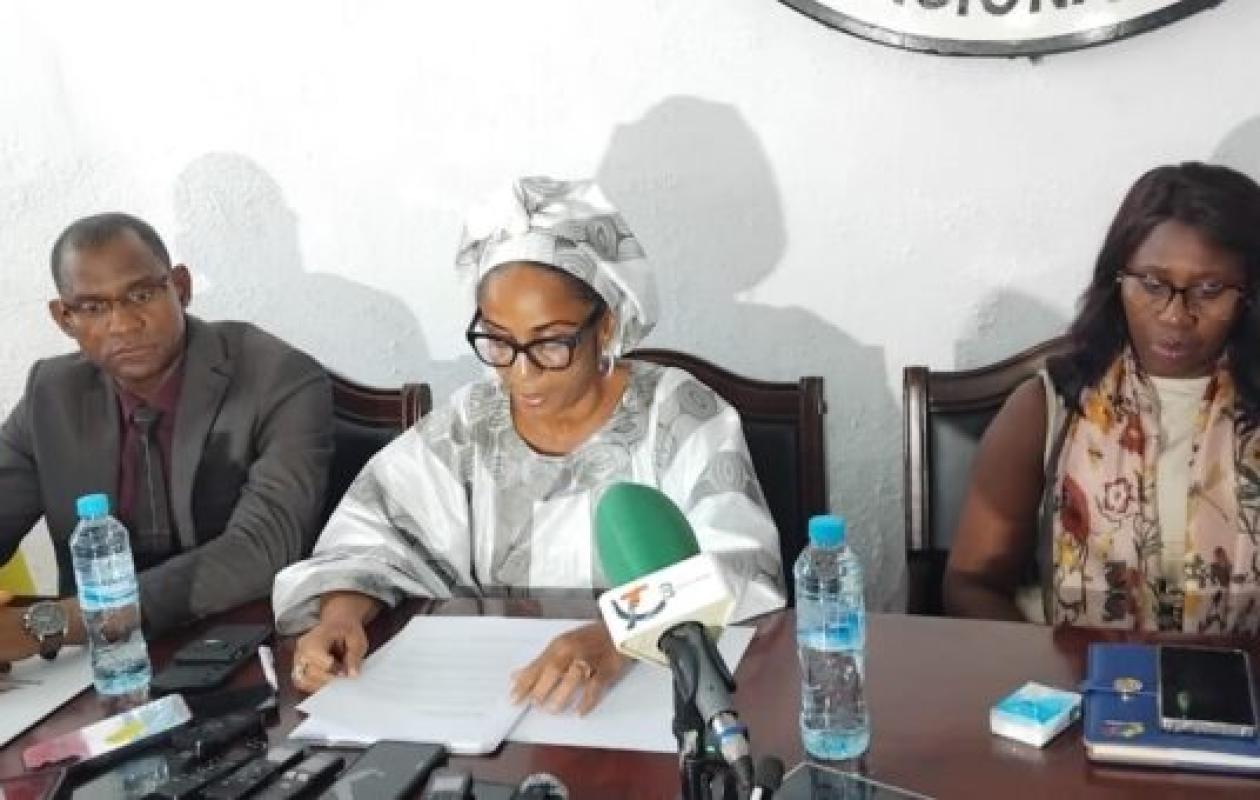
Réforme constitutionnelle en Guinée-Bissau : Victoire du « OUI » marquée par le rejet de Bissau et les appels au dialogue
Guinea-Bissau approved its new Constitution in the referendum of August 30, 2026, with 70% of votes in favor according to provisional results published by the National Electoral Commission (CNE). But behind this institutional victory, the moderate turnout and deep regional divisions reveal a deeply divided country, while the opposition calls for an inclusive national dialogue to restore democratic legitimacy.
A particularly contrasting election
Of the 914,428 registered voters, 572,712 went to the polls, representing a turnout of 63%, with a significant abstention rate of 37%. The "YES" vote garnered 383,116 votes, compared to 160,954 for "NO".
The territorial results reveal clear disparities: the regions of Gabú (90%) and Bafatá (85%) overwhelmingly supported the constitutional reform. Biombo and Quinara (79%), as well as Cacheu and Tombali (70%), also supported this momentum. In the areas of Oio (60%) and Bolama-Bijagós (58%), the "YES" vote prevailed more cautiously. Only the capital, Bissau, rejected the text with 52% of negative votes, establishing itself as the sole bastion of resistance to the reform.
An institutional shift towards presidentialism
The new constitution establishes a strong presidential system, consolidating the prerogatives of the head of state while reducing the number of seats in Parliament from 102 to 65. According to the National Electoral Commission (CNE), the electoral process was conducted in strict accordance with the legal framework, which validates any proposal obtaining an absolute majority of votes cast.
Fernando Dias: "Peace must be based on legitimacy."
Following the announcement of the figures, Fernando Dias da Costa, a leading figure in the Social Renewal Party (PRS) and a candidate in the aborted November 2025 presidential election, stepped forward to demand the convening of national consultations. "The people yearn for peace founded on justice and stability supported by legitimacy," he asserted.
The opposition leader argued that the high abstention rate reflected popular disapproval of a unilateral and opaque approach. He strongly warned of the risk of autocracy based on the political project of former president Umaro Sissoco Embaló.
Recalling that democratic practice cannot be reduced to the act of voting, he called for the active involvement of political actors, social partners, unions, representatives of the diaspora, and traditional authorities. "The Constitution must unite the country, guarantee fundamental rights and freedoms, and prevent any excessive concentration of power," he concluded.




















Commentaires (1)
Participer à la Discussion
Règles de la communauté
💡 Astuce : Utilisez des emojis depuis votre téléphone ou le module emoji ci-dessous. Cliquez sur GIF pour ajouter un GIF animé. Collez un lien X/Twitter, TikTok ou Instagram pour l'afficher automatiquement.
Se connecter
Commentez avec votre profil, votre photo, et soyez averti des réponses.