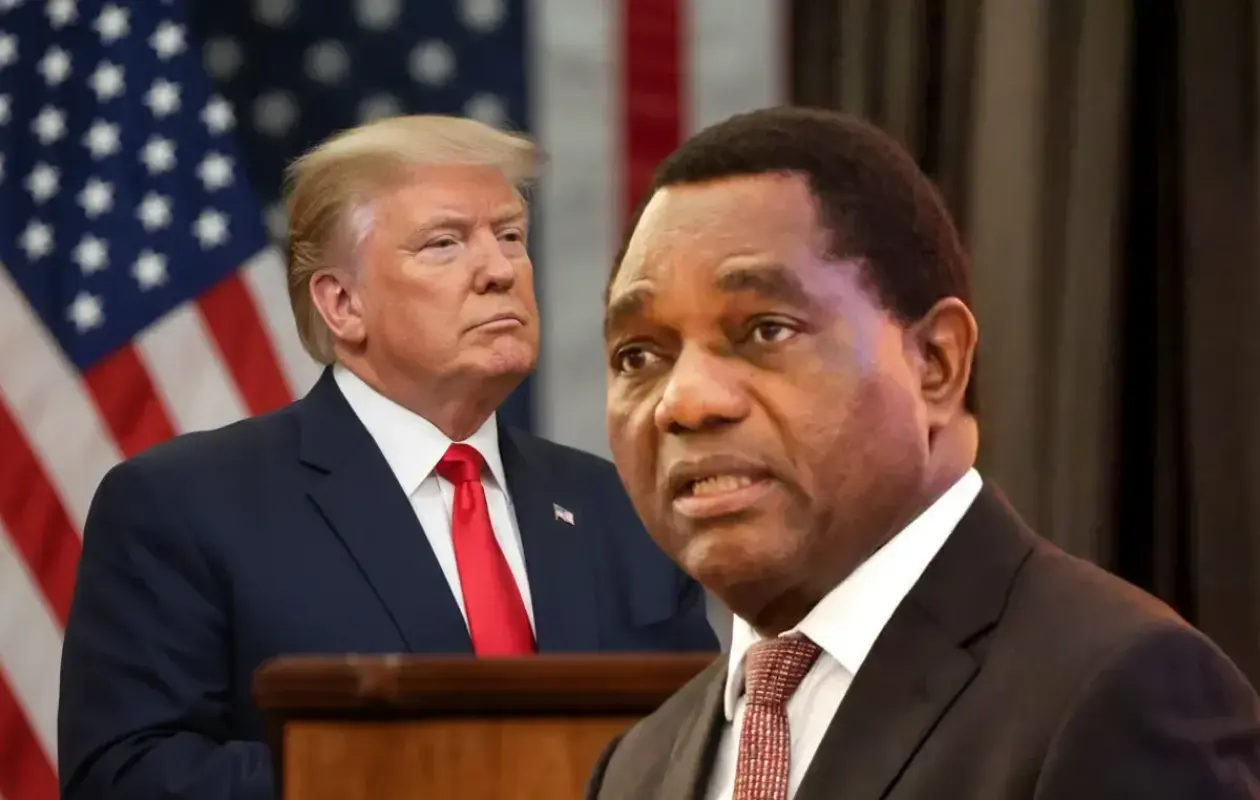
Souveraineté sanitaire : la Zambie tient tête à Washington et décroche 1,5 milliard de dollars
Zambian Health Minister Roma Chilengi confirmed on Tuesday, October 6, the granting of $1.5 billion in aid to the United States, following several weeks of an unprecedented standoff over the sovereignty of medical data. The official agreement will be signed this Thursday, October 8, at the Ministry of Finance. The exact content of the text will remain confidential until then.
The mining "barter" for medicines failed.
The stakes in these negotiations went far beyond humanitarian concerns. Initially, Washington attempted to use health aid as a geopolitical lever, freezing funds earmarked for pandemic relief until Lusaka agreed to "close collaboration in the mining sector." This was a deliberate barter strategy: access to Zambian copper and cobalt in exchange for the supply of antiretroviral drugs, a proposition to which the Zambian government firmly refused to yield.
According to Roma Chilengi, Zambia has prevailed on the most sensitive points: the clause relating to the transfer of biological samples has been removed, data sharing will be strictly limited to monitoring funded programs, and any mention of critical minerals has been banned from the final pact.
The emergence of an African front
Lusaka's resistance is part of a broader protest movement across the continent. By rejecting Washington's data blackmail, Zambia is following in the footsteps of Ghana and Zimbabwe, the latter having simply walked out of negotiations. Although no official joint strategy has been coordinated, a united front is emerging to refuse to allow African populations to be held hostage.
This report highlights the structural vulnerability of health policies on the continent. The real scandal lies not so much in the harshness of the negotiations conducted by American diplomacy, but in the fact that sovereign states are forced to choose between access to healthcare for their sick and control of their mineral resources. As long as African health systems depend on external funding, every act of aid will remain a power struggle. The surge of progress seen in Lusaka, Accra, and Harare will only be sustainable in the long term if Africa develops its own capacities for financing, sequencing, and vaccine production.
Pragmatic diplomacy
For President Hakainde Hichilema, this outcome stems more from economic pragmatism than from an ideological break. While refusing to sell off its resources cheaply, Lusaka continues to court American investment in the copper sector, all the while preserving its strategic relations with Beijing. Zambia is not turning its back on the West; it is redefining its terms.





















Commentaires (0)
Participer à la Discussion
Règles de la communauté
💡 Astuce : Utilisez des emojis depuis votre téléphone ou le module emoji ci-dessous. Cliquez sur GIF pour ajouter un GIF animé. Collez un lien X/Twitter, TikTok ou Instagram pour l'afficher automatiquement.
Se connecter
Commentez avec votre profil, votre photo, et soyez averti des réponses.