Mondial 2026 : La Coupe du monde la plus toxique de l'histoire
Record-breaking spectacle, record-breaking chaos. A look back at a tournament that thrilled stadiums as much as it sparked controversy.
A month earlier, no one would have bet on it: the 2026 World Cup ended with more headlines devoted to its scandals than its goals. Tickets costing over $10,000, an American president picking up the phone to overturn a red card, a mass brawl at the end of the final, accusations of racism amplified by millions of accounts... The football lived up to expectations. So did the chaos.
A football festival... under very high tension
From a sporting perspective, it's hard to imagine a better tournament. The expansion to 48 teams allowed new nations to emerge on the world stage, such as Cape Verde and the Democratic Republic of Congo, while Luis de la Fuente's Spain delivered a near-perfect performance. The result in the final: a hard-fought 1-0 victory in extra time before more than 70,000 spectators at MetLife Stadium, thanks to a goal from Ferran Torres in the 105th minute. A second World Cup title for La Roja, sixteen years after their first.
Trump, an American player, and a disappearing red card
Nothing illustrates the atmosphere of this World Cup better than the Balogun affair. Sent off for a dangerous tackle against Bosnia-Herzegovina, American striker Folarin Balogun faced an automatic one-match suspension, a rule applied without exception for over sixty years. However, Donald Trump personally called FIFA President Gianni Infantino to request a review. Forty-eight hours later, the suspension was lifted invoking an obscure Article 27 of the disciplinary code, and Balogun was able to play against Belgium. Belgium appealed, to no avail.
"Red cards cannot be overturned by a political phone call" — Sepp Blatter, former FIFA president
Source: Wikipedia, Al Jazeera, The Athletic/CNBC, Time
Tickets worth over $10,000
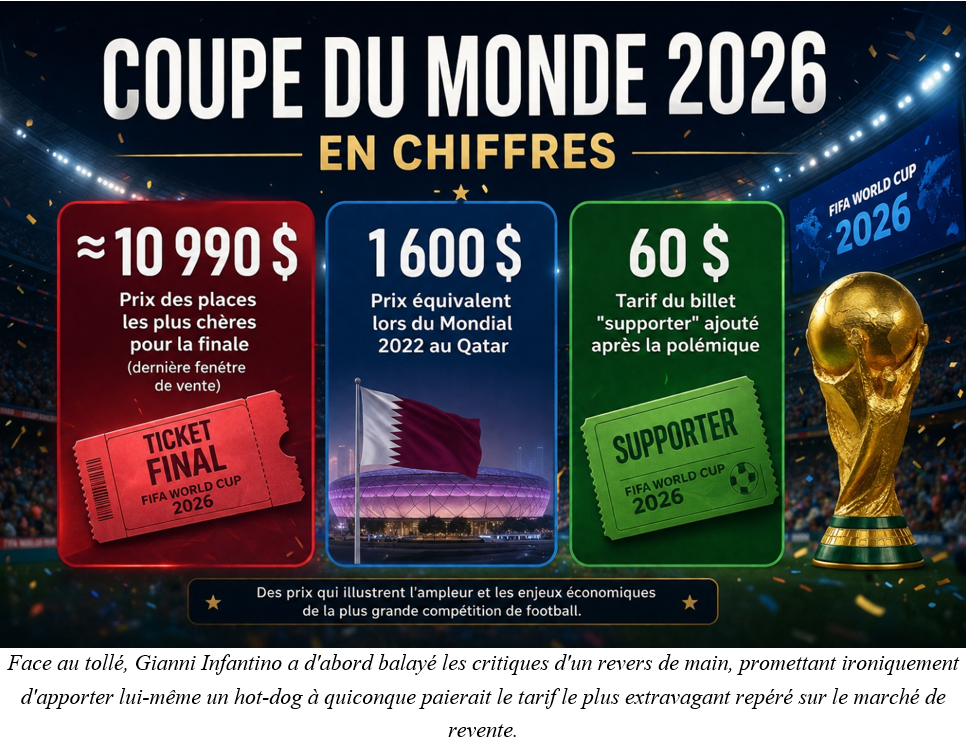
Never before had a World Cup seemed so inaccessible. For the first time, FIFA implemented dynamic pricing, modeled after airlines: the price climbs with demand. As a result, the most expensive seats for the final jumped from $6,730 to nearly $11,000 between the first and last sales windows, far exceeding the $1,600 paid for the final in Qatar in 2022. Fan groups filed a lawsuit, denouncing an abuse of dominant market position; the attorneys general of New York and New Jersey opened an investigation into FIFA's pricing practices.
An arbitration under fire
Technology was supposed to end the debates. Instead, it reopened them. The symbol of this VAR-era World Cup will remain the Argentina-Egypt round of 16 match: an Egyptian goal disallowed for a foul deemed invisible in real time, a spectacular Argentine comeback (3-2), and the Egyptian Football Association filing an official complaint against the refereeing. Former England internationals weighed in on social media.
"Either both are fouls, or neither is" — Alan Shearer, pundit and former England international
The return of old demons
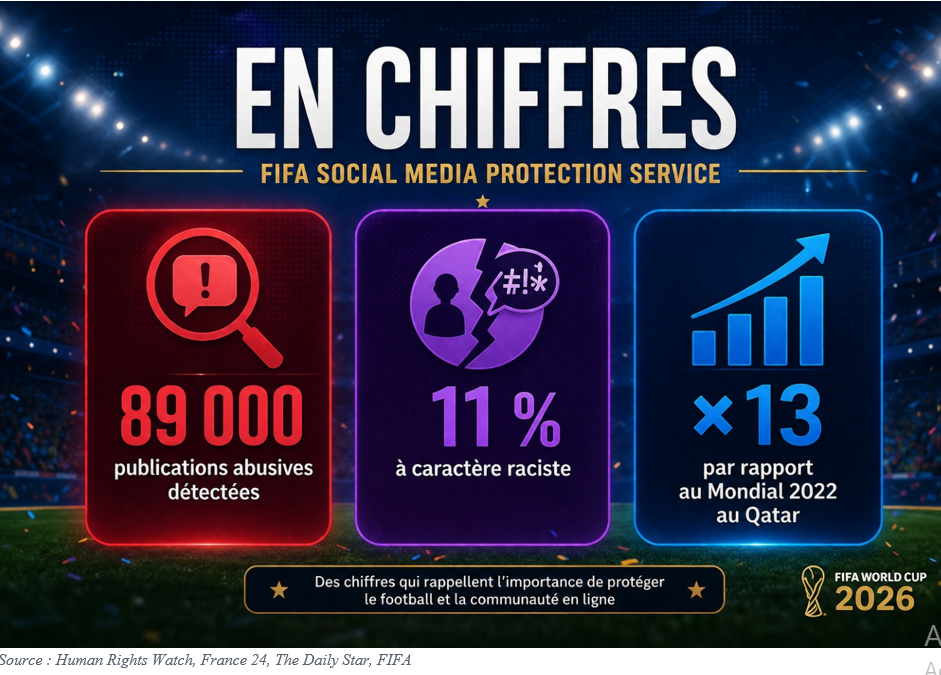
Racism hasn't disappeared; it has simply escalated. Following Paraguay's elimination by France, a Paraguayan senator published openly racist attacks targeting Kylian Mbappé's Cameroonian heritage. The French captain responded publicly; President Macron, UEFA, the UN, and Real Madrid condemned the remarks. FIFA's digital protection service, for its part, analyzed more than six million posts during the tournament.
The Super Bowl makes its way into football
Another historic first, and another controversy: a Super Bowl-style halftime show featuring Madonna, Justin Bieber, Shakira, BTS, and the Muppets, orchestrated by Chris Martin of Coldplay. The problem: the break lasted nearly 27 minutes, almost double the 15 minutes allowed by the IFAB's Laws of the Game. Players, journalists, and soccer legends didn't mince words.
"Honestly, my favorite moment was when it stopped" — Wayne Rooney, BBC pundit and former England international
The final of all excesses
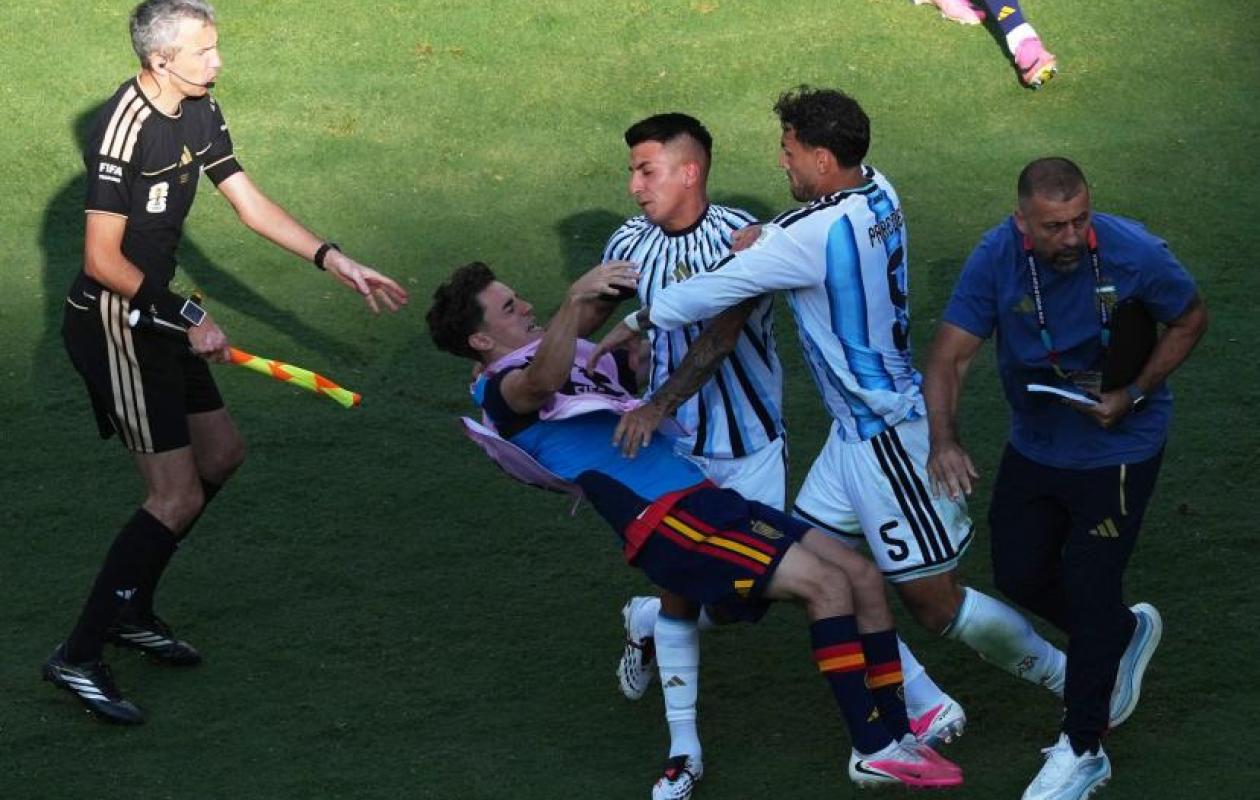
The climax of this tense World Cup came after the final whistle. Barely had Spain secured the title when Argentine defender Nahuel Molina confronted Spanish captain Rodri. The scene escalated: Leandro Paredes grabbed Eric García by the throat before fighting with Gavi, as Lionel Scaloni desperately tried to separate the two sides. Paredes was sent off, adding to the red card already received by Enzo Fernández during the match. FIFA has opened disciplinary proceedings.
"We are grateful in victory, and we must be grateful in defeat" — Lionel Scaloni, Argentina coach
My video to embed here: Altercation between Leandro Paredes and Eric García after Spain's victory against Argentina
FIFA more criticized than ever
At the end of the tournament, criticism was no longer directed solely at isolated incidents but at the governance of the institution itself. Human rights organizations, sports observers, and political leaders are calling for greater transparency, better protection against political interference, and a complete overhaul of the economic model before the 2030 World Cup.
Verdict
The 2026 World Cup will remain one of the most spectacular ever held. It will also be remembered as one of the most talked-about, and for all the wrong reasons. On the pitch, the football was often magnificent. Off the pitch, however, the controversies sometimes overshadowed the game. Perhaps the real question is no longer whether it was the most controversial World Cup in history, but how far FIFA can push the boundaries of its model without ultimately damaging its flagship competition.














Commentaires (0)
Participer à la Discussion
Règles de la communauté
💡 Astuce : Utilisez des emojis depuis votre téléphone ou le module emoji ci-dessous. Cliquez sur GIF pour ajouter un GIF animé. Collez un lien X/Twitter, TikTok ou Instagram pour l'afficher automatiquement.
Se connecter
Commentez avec votre profil, votre photo, et soyez averti des réponses.