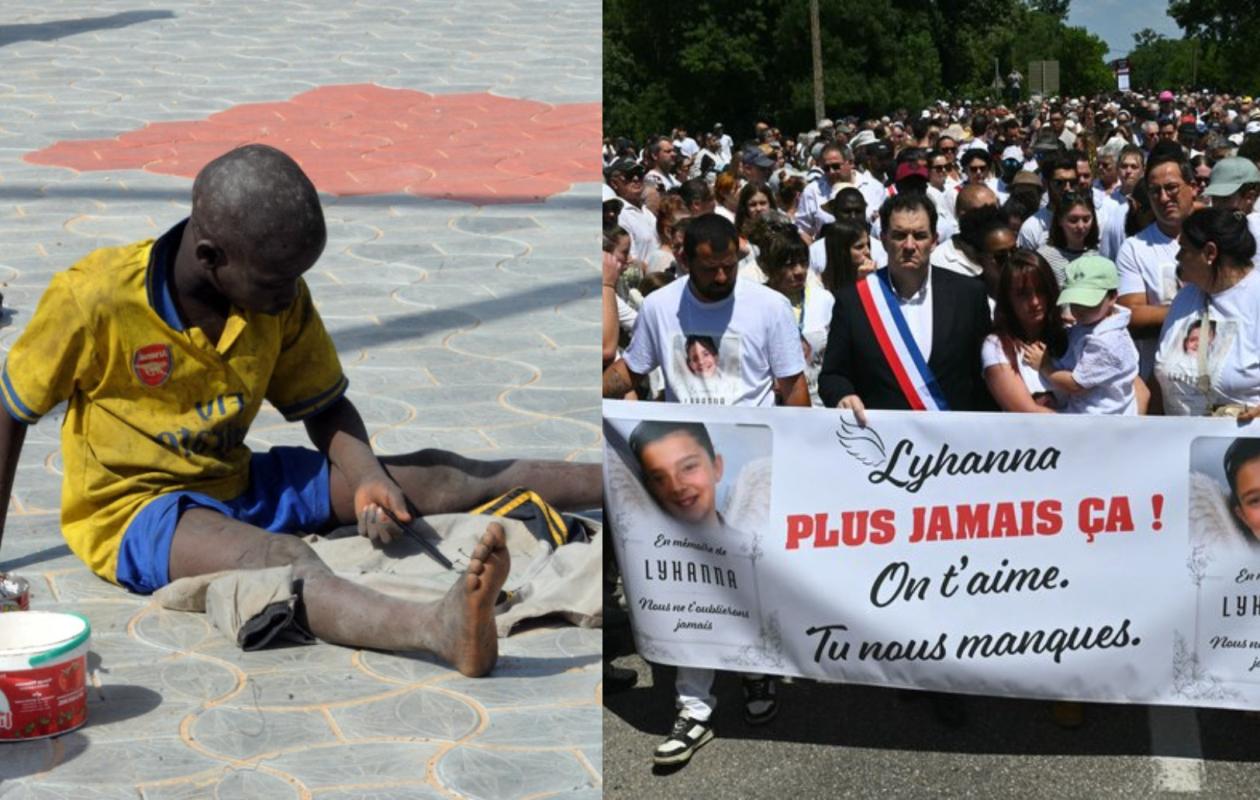
Nos enfants sacrifiés sur l’autel de l’impuissance d'État (par Adama Ndiaye)
The state, by definition, holds the monopoly on legitimate coercion. This is an elementary truth, taught from the very first days of law and political science faculties.
In Senegal, however, the reality presents a radically different picture: that of a public authority conspicuous by its chronic impotence over entire and crucial aspects of national life. Order, authority, and regulation seem to have been banished from the governing lexicon, appearing only as convenient empty rhetoric during election campaigns. The result? The population finds itself utterly helpless in the face of a daily accumulation of crises that the state abandons, alternately through weakness, a lack of political will, and, let's be frank, cowardice.
Take the real estate sector. Despite promises of regulation and grand pronouncements of self-congratulation, the authorities stand by passively as the law of the jungle prevails. In this anarchic rental market, landlords dictate terms to struggling tenants, without any effective regulation to curb this downward spiral.
Turn your gaze to our streets. The rampant occupation of public space has become the norm. In Colobane, Petersen, or even in the heart of the Plateau – from Rue Raffenel to Rue Escarfait – street vendors have literally colonized the urban landscape. In these pedestrian no-go zones, motorists and pedestrians vie for every last square inch in an explosive coexistence, generating daily altercations under the indifferent gaze of law enforcement.
This failure of public authority is also evident in another bastion of disorder: the university environment. Since the ill-conceived reforms implemented under Abdoulaye Wade, the state has demonstrated its inability to find a lasting solution to the overcrowded student body at Cheikh Anta Diop University of Dakar (UCAD) and the persistent issue of scholarships. This has resulted in ritualized violence within the university and recurring tragedies that devastate families. Through cowardice, none of the successive governments has managed to implement the necessary measures to pacify and restructure our higher education system.
But here we come to the heart of the problem, namely the most dramatic, the most culpable, let's say it, the most criminal impotence of the Senegalese state: the question of the protection of early childhood, and in particular of the most vulnerable children from the most disadvantaged backgrounds.
On this issue, the State is utterly defeated by the vetoes of corporations and lobbies whenever child begging is involved. We had dared to hope that after the trauma of the Pierre Robert case—this French national at the heart of a pedophile network exploiting street children—the government would finally tackle this scourge head-on, a scourge that should shame our civic conscience. Hope quickly gave way to despair. Rather than protecting vulnerable children, the authorities have preferred to saturate the political sphere and concentrate their energy on toughening legislation against homosexuality.
The state has clearly resigned itself to seeing thousands of poor talibé children invade public thoroughfares daily at their own risk, exposed to all kinds of predators. From Abdoulaye Wade to Bassirou Diomaye Faye, after a few superficial promises, they always end up turning a blind eye. It was one of the greatest thinkers on the human soul, Fyodor Dostoevsky, who wrote these words in The Brothers Karamazov, words that resonate like a terrible indictment of our collective passivity: “If all must suffer to buy eternal harmony through their suffering, what does that have to do with children? [...] This harmony is not worth the tears of a single martyred child.”
Yet, in our country, the tears and distress of these children have become the invisible price of a social peace negotiated with lobbies from another era.
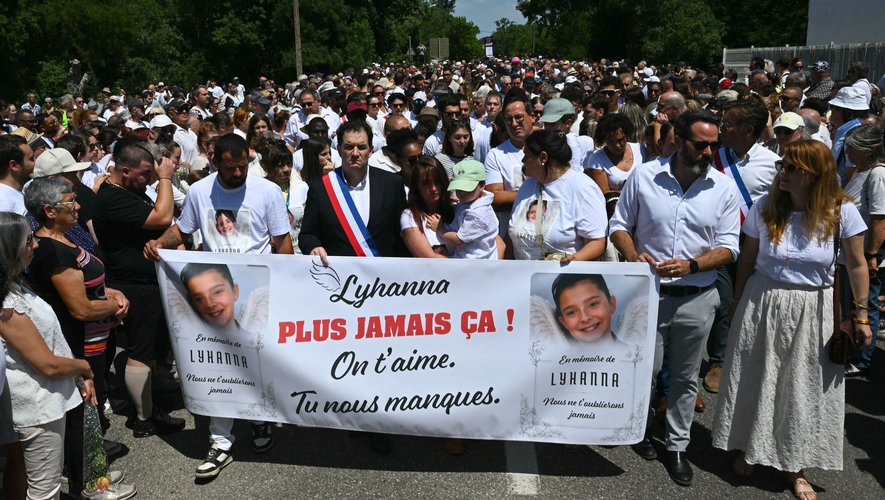
The contrast is striking with what is happening elsewhere. In France, the tragic murder of young Lyhanna, an 11-year-old schoolgirl abducted and found dead in the Gers region, immediately became a matter of national importance. Faced with the shortcomings identified in the judicial monitoring of the suspect, the Minister of Justice, Gérald Darmanin, is paying a heavy political price for this tragedy and must answer for it before Parliament, while the entire political class and presidential candidates are seizing upon the issue to push for reforms. What a chasm separates this hyper-reactivity from Senegal's lethargy! In our country, thousands of children are left to fend for themselves on the streets with the complicit gaze of a public authority that has abdicated its responsibilities. Unspeakable abuse and crimes are committed daily against these vulnerable young people without ever provoking the slightest lasting public outcry, nor the slightest resignation at the highest levels of the state apparatus.
Yet it is precisely in the ability to solve the concrete problems of daily life and to protect the most vulnerable that the true stature of a government is measured. Pastef, or the "Diomaye for President" coalition, which jumped on this bandwagon of state impotence, has hardly demonstrated the promised radical change. Two years after the now-former Diomaye-Sonko duo came to power, their impact on these social emergencies and on daily life remains negligible.
As the French statesman Pierre Mendès-France so aptly reminded us: "Courage in politics consists of speaking the truth and acting in accordance with it, whatever the consequences for oneself."
Being courageous in politics isn't about pandering to your base with tired slogans or passing radical laws that appear consensual because they're endorsed by 99.9% of the public—in a country where popular fervor has nonetheless driven a mob to exhume a corpse and burn books on mere suspicions of homosexuality. True political courage lies in embracing unpopularity, confronting dissent, and braving the wrath of special interest groups when the public good demands it. It means accepting the loss of voters to ensure the Republic's victory and the establishment of state order.




















Commentaires (44)
Participer à la Discussion
Règles de la communauté
💡 Astuce : Utilisez des emojis depuis votre téléphone ou le module emoji ci-dessous. Cliquez sur GIF pour ajouter un GIF animé. Collez un lien X/Twitter, TikTok ou Instagram pour l'afficher automatiquement.
Se connecter
Commentez avec votre profil, votre photo, et soyez averti des réponses.