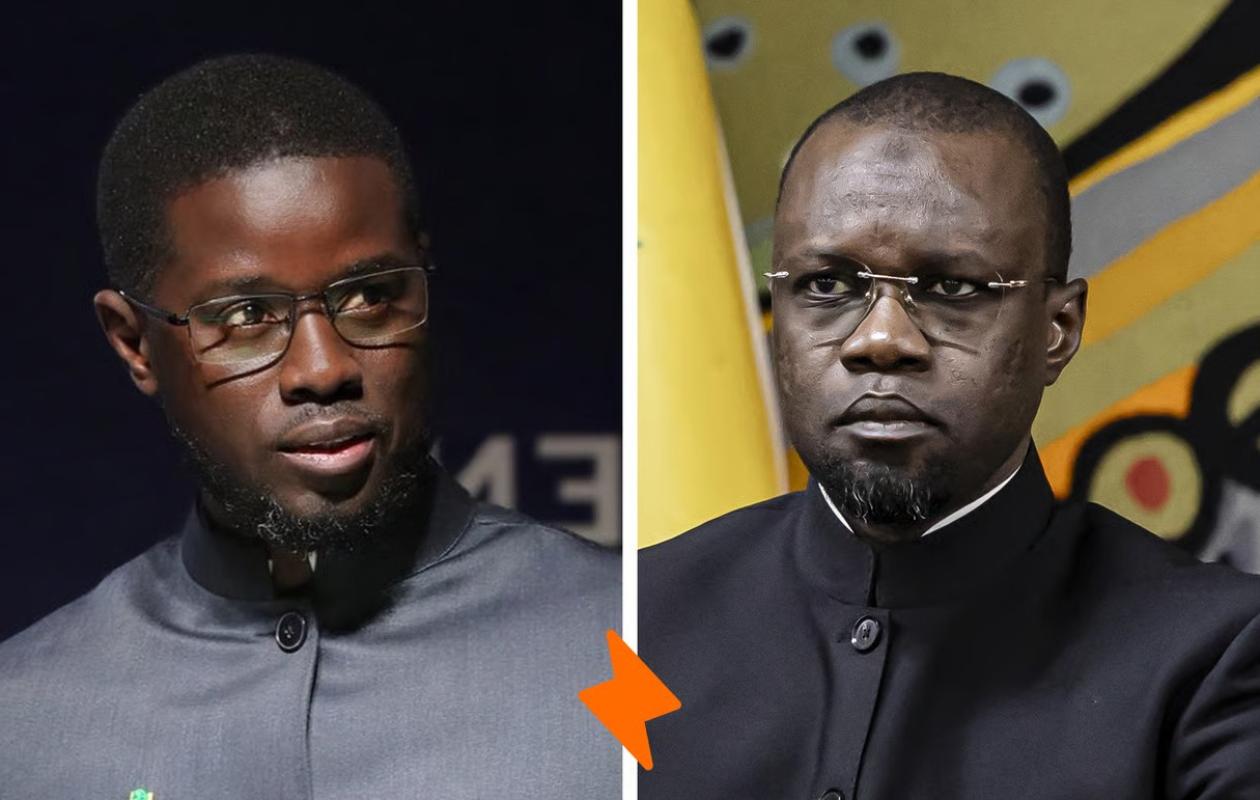
« Sa fitna », « xuntu »... : quand Diomaye parle Sonko !
In politics, words never fall from the sky. They are projectiles, markers, sometimes confessions. By launching the now-famous "Reew mii saa fitnë dootufi nanee ñeex," Bassirou Diomaye Faye didn't just fire an arrow at Ousmane Sonko. He chose above all to fight his former mentor with the weapons the latter had long wielded: the biting word, the striking phrase, and the innuendo that hits home.
A few weeks ago, the head of state already criticized Sonko for engaging in "xuntu," meaning speaking alone, without contradiction, in a kind of perpetual political monologue. This time, he's pushing the envelope even further. "Fitna," this constant unrest that has become, according to him, a mode of political operation, will no longer be tolerated.
The most surprising thing, however, isn't the presidential barb. It's the silence of the man who, just yesterday, was responding with the speed of a tweet before a speech was even finished. Ousmane heard. Sonko understood. But he held back. He, who excelled in verbal sparring, preferred to ask his supporters not to "fall into the trap." As if the best way to respond, this time, was not to respond at all.
The paradox is delicious. For years, Pastef's opponents criticized Sonko for his direct language, his sharp statements, and his pronouncements that made television studios tremble. Today, it is Diomaye who is adopting this political grammar. The president, long presented as a calm man, is discovering the virtues of verbal rebuttal. The mantle of head of state no longer prevents him from entering the arena of words.
Senegalese politics certainly has its share of surprising reversals. The one who was considered the most moderate now seems to be enjoying the thrill of the contest. The one who embodied the constant offensive has chosen, at least for the time being, restraint.
But behind these barbs lies a deeper reality: the battle between Diomaye and Sonko is no longer ideological. It has become symbolic. Each seeks to occupy the same ground, to speak to the same electorate, and to impose their narrative. Words have thus become electoral cards.
Ultimately, Diomaye isn't copying Sonko; he's challenging him on his own terms. And perhaps that's the real turning point. The student is no longer content simply to learn. He's now on familiar terms with the teacher… hoping that one day, the voter will forget who wrote the first manual.


















Commentaires (19)
Participer à la Discussion
Règles de la communauté
💡 Astuce : Utilisez des emojis depuis votre téléphone ou le module emoji ci-dessous. Cliquez sur GIF pour ajouter un GIF animé. Collez un lien X/Twitter, TikTok ou Instagram pour l'afficher automatiquement.
Se connecter
Commentez avec votre profil, votre photo, et soyez averti des réponses.