Inversion de la fuite des cerveaux : Quand l’élite africaine de retour d'expatriation mise sur la carte du terroir
Traditionally, African graduates trained abroad would aim for capital cities, international organizations, or the private sector. Now, a reverse trend is emerging: professionals are investing their skills in their home regions, even running for mayor. This transfer of human capital is beginning to have a significant impact on rural communities across the continent.
Much has been written about the African brain drain, this flow of talent trained on the continent or in Northern universities who pursue careers in Paris, London, New York, or, at best, in African capitals. Less has been documented the reverse trend, more recent and more discreet: that of graduates returning, not to government ministries and corporate headquarters, but to their home regions. Engineers taking over the family farm to modernize it, financiers creating agri-food SMEs in rural areas, and, increasingly, managers becoming involved in local public life, even running for municipal office.
This return to local governance is not merely a matter of sentiment. It coincides with a significant shift: decentralization has transformed African municipalities into centers of real power, endowed with budgets, responsibilities, and the capacity to take initiative. For a graduate of a prestigious university, the mayoralty of a rural municipality is no longer a dead end; it is a field where project engineering, finance, and international negotiation—everything taught in higher education—find immediate and visible application. Where an executive might blend into the organizational chart of a capital city, a trained mayor profoundly transforms their local community.
Because it is indeed a matter of skills transfer. Preparing a co-financing application with a United Nations agency, structuring an inter-municipal structure, negotiating a cooperation agreement with a European community, building a bankable municipal development plan: these are all exercises that bear a striking resemblance to what is taught in business schools and public management programs. Municipalities led by individuals trained in these disciplines have easier access to funding opportunities, whose complex procedures, written in the technical jargon of donors, typically discourage so many small communities.
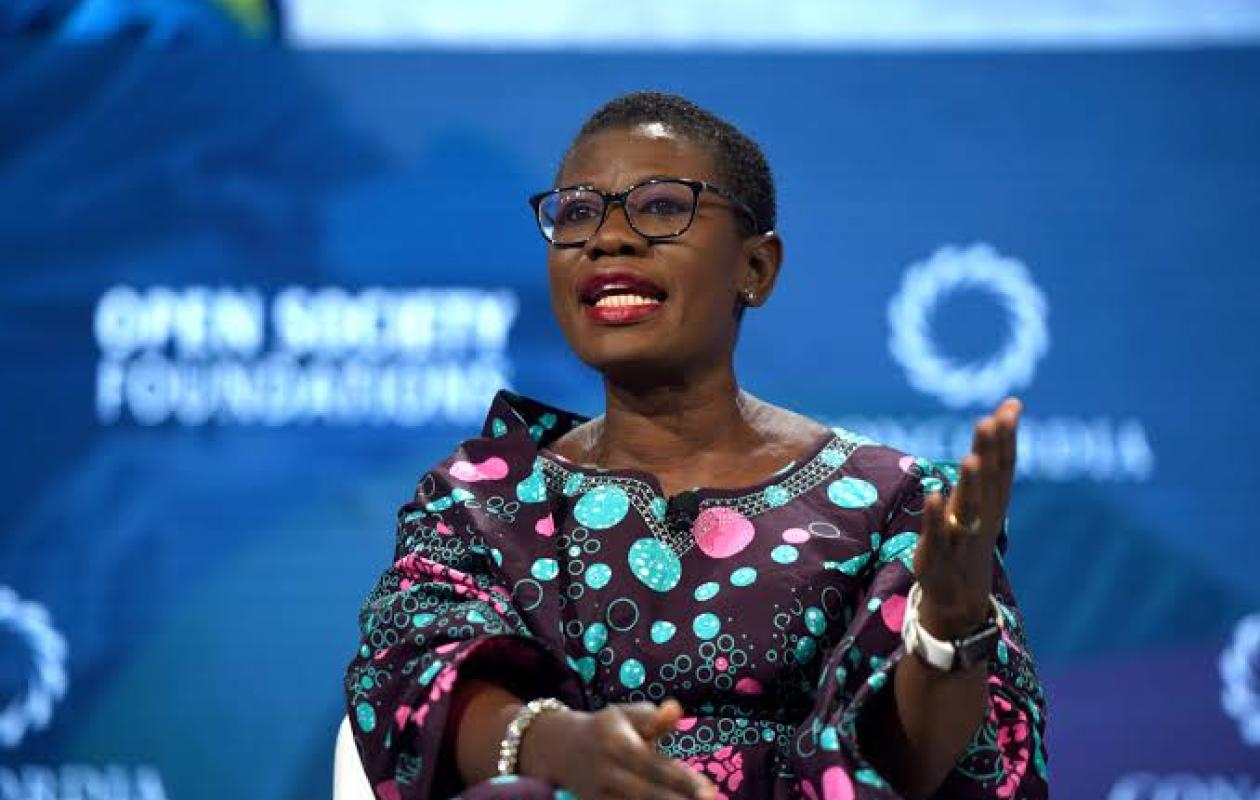
The most emblematic figure of this movement is undoubtedly Yvonne Aki-Sawyerr, mayor of Freetown. A finance professional who spent a quarter of a century in financial services in London, she returned to Sierra Leone at the height of the 2014 Ebola epidemic to lead the planning of the national response center, before being elected mayor of the capital in 2018 and re-elected in 2023. Her Transform Freetown plan , built on quantified targets and data-driven management, as well as her appointment as co-chair of the C40 global network of cities, illustrate what professional capital accumulated abroad can bring to an African city: methods, networks, and immediate credibility with international partners.
In a different vein, the election in 2022 of Doctor of Philosophy Babacar Diop as head of Thiès, Senegal, showed that the academic capital built up on the continent produces the same effects of professionalization.
Togo, where municipalities are only a few years old, allows us to observe this phenomenon in its nascent stage. In the Plateaux region, the trajectory of the mayor of Amou-Oblo, Meyebine Esso Gnassingbé , offers a characteristic example. A graduate of ESLSCA Business School and Sciences Po Paris, he is one of those individuals who preferred returning to their country of origin to settling in Europe, and engaging in their home territory rather than pursuing a traditional career in the ministries of the capital, becoming a member of parliament for the Amou prefecture in 2018, then mayor of the municipality of Amou-Oblo in 2019.
The record of his first term, from 2019 to 2025, bears the mark of this rigorous management culture. It includes the classic array of municipal achievements such as roads, schools, and street lighting, but also more revealing indicators of masterful project management. In particular, he established close collaboration with the UNDP for the development of the municipal development plan, strong partnerships with international NGOs like Plan International, an innovative inter-municipal waste management system with neighboring municipalities, the co-financing of 500 supplementary civil registration certificates, and decentralized cooperation agreements signed with French local authorities in the Vienne department. All of these initiatives require precisely the ability to understand and communicate effectively with multilateral institutions and development partners.
This example is not isolated, and that's what makes it a genuine underlying trend. In Senegal, Benin, Ivory Coast, and Ghana, similar profiles, graduates of European and North American universities or prestigious institutions across the continent, are taking the helm of small and medium-sized municipalities. Networks of African local authorities see this as a way to professionalize local government far more quickly than any continuing education program for elected officials. A mayor who can analyze a public-private partnership agreement or a project framework saves their administration valuable years.
The crucial question that remains is that of replicability. Not all regions are fortunate enough to see their graduates return, and local development cannot rely solely on the success of individual returns. This is why the most astute observers advocate for these trained mayors to become role models in the truest sense. By structuring their administrations, methodically training their municipal staff, and rigorously documenting their methods, they can transform a personal advantage into a lasting institutional capacity.
The return of brains will only change the Africa of municipalities if it leaves behind something more than just summaries of mandates: autonomous and deeply qualified local administrations, ready to act sustainably.






















Commentaires (3)
Participer à la Discussion
Règles de la communauté
💡 Astuce : Utilisez des emojis depuis votre téléphone ou le module emoji ci-dessous. Cliquez sur GIF pour ajouter un GIF animé. Collez un lien X/Twitter, TikTok ou Instagram pour l'afficher automatiquement.
Se connecter
Commentez avec votre profil, votre photo, et soyez averti des réponses.