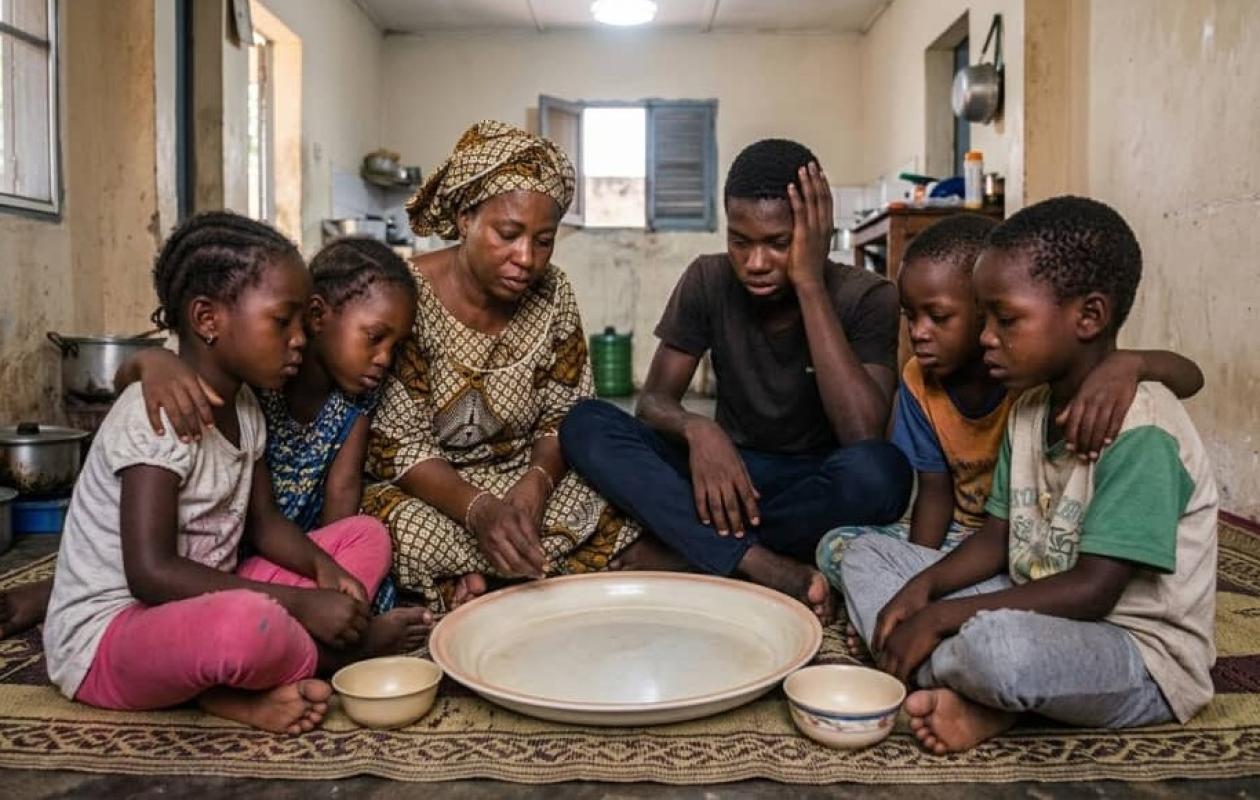
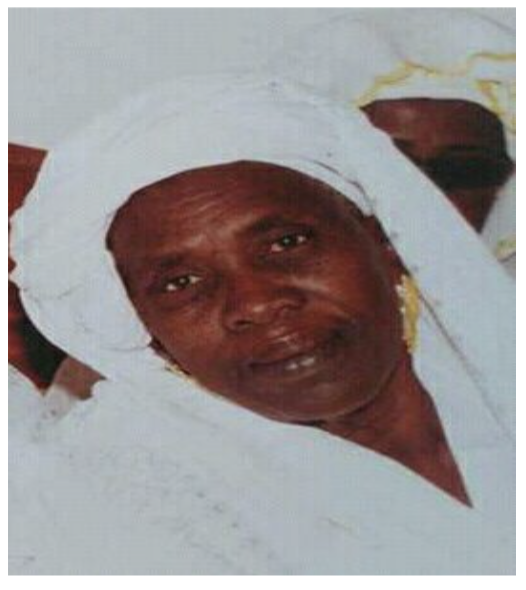
Généré par l'IA
In this first installment of a three-part series on the purchasing power crisis in Senegal, we delve into the heart of Dakar households where rising prices are disrupting meal planning. In Keur Massar, Pikine, and Ouakam, dinner is no longer a given: for many households struggling with inflation, it is now reduced, reheated, or simply skipped altogether.
In Keur Massar, Pikine, and Ouakam, dinner is no longer always a proper meal. For some households, it's skipped altogether, replaced by leftovers from lunch, or reduced to a few hundred francs' worth of fondé (millet porridge), thiakry , or thiéré (couscous). In large families as well as among single parents, every meal becomes a calculation. And behind the long lines in front of the fondé vendors, another reality of the high cost of living emerges: that of families who can no longer afford three meals a day.
When dinnertime arrives, Pa Sidibé no longer puts a pot on the stove. In his house, the evening meal now begins at noon. Some of the rice is set aside even before the family finishes eating. A few hours later, the dish reappears. It has to be reheated, shared, and made with what's left. Every spoonful counts.
In this house where his children, wives, nieces, and nephews live, dinner has become an expense the father can no longer afford. Pa Sidibé, a 50-year-old driver of a "Ndiaga Ndiaye" (a type of minibus), stopped preparing a special meal for the evening several months ago. Now, he rations lunch to try and feed the whole family until the next day.
For a long time, Pa Sidibé was still able to meet daily expenses. But with rising prices, the 15,000 francs that once covered three meals a day are no longer enough. His story is one of a family budget that, meal after meal, shrank until the evening meal disappeared.
“Before, I covered the daily expenses for breakfast, lunch, and dinner. I live with my whole family: my children, my wives, my nieces, my nephews. I used to spend 15,000 francs a day. Now, with 15,000 francs, you can't even make a good thiébou dieune . Times are really tough.”
Today, the budget has completely changed scale. Breakfast already absorbs a significant portion of resources, while lunch alone consumes tens of thousands of francs. Dinner, meanwhile, has become the extra expense.
“Just for breakfast, I spend 7,000 francs these days. For lunch, it’s between 20,000 and 25,000, sometimes almost 30,000 francs. For dinner, I used to spend nearly 10,000 francs. But for months now, I’ve stopped. We don’t cook at home in the evenings anymore. I can’t take it anymore. It’s hard, tiring, and suffocating.”
Faced with this reality, Pa Sidibé had to completely rethink their meal planning. Rather than cooking a new dish in the evening, the family saves part of their lunch and, when possible, looks for less expensive alternatives.
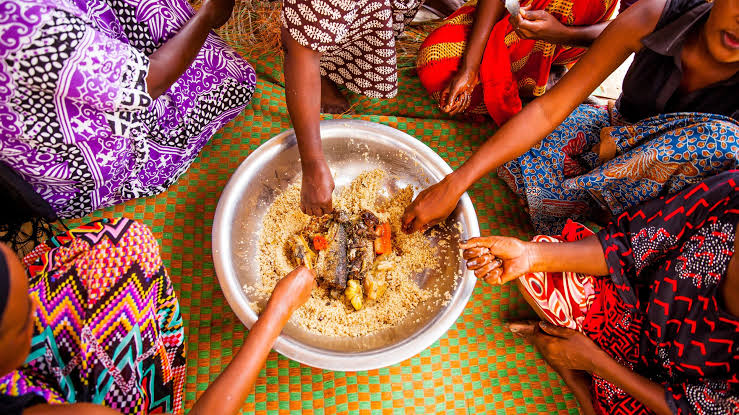
“We keep part of lunch for the evening and, at dinnertime, we reheat it. If not, we give 200 francs to the younger children so they can buy fondue or thiakry . With 100 or 150 francs, they can have something that satisfies them without spending too much. For months, we've been managing like this. No more home-cooked dinners,” he tells us.
In Pikine, Soda Ndiaye lives in a similar situation. A widow and mother of seven, this vegetable vendor no longer prepares three meals a day. Dinner has been eliminated from the family menu. When she manages to scrape together a little money, she buys fondue , thiéré , or thiakry for her children. But when she runs out of money, dinner is simply sacrificed.
This situation has ultimately disrupted the eating habits of the entire family. With meals skipped and portions reduced, Soda Ndiaye says she can no longer properly feed her children.
“We no longer have enough to eat. We don’t live like we used to, we’re just trying to survive. I no longer prepare three meals a day because I can no longer bear the burden. Life has become very hard. Dinner is no longer part of our daily routine. We manage with lunch, now our only real meal.”
When resources run out, even makeshift solutions become inaccessible. Children sometimes have to settle for a snack bought for a few hundred francs, or go through the night hungry.
“Sometimes, when I have a few coins, I give them to the children so they can buy thiéré or fondation . Other times, when I don’t have a penny, they sleep until morning. I raised them like that and they adapted. Since their father’s death, we have been living with this situation,” the widow confesses.
Behind this daily deprivation, Soda Ndiaye also describes another reality: that of a mother who alone bears the burden of expenses, in a context where solidarity is also becoming difficult to solicit.
“These are tough times. Everyone is suffering from this crisis that is hitting the country. We can’t ask anyone for help: everyone is under pressure. We try to suffer in silence, to maintain our dignity. But we, the destitute, are truly exhausted. We are hungry, we are at our wits’ end. We ask the State to take a look at us, to come to our aid.”
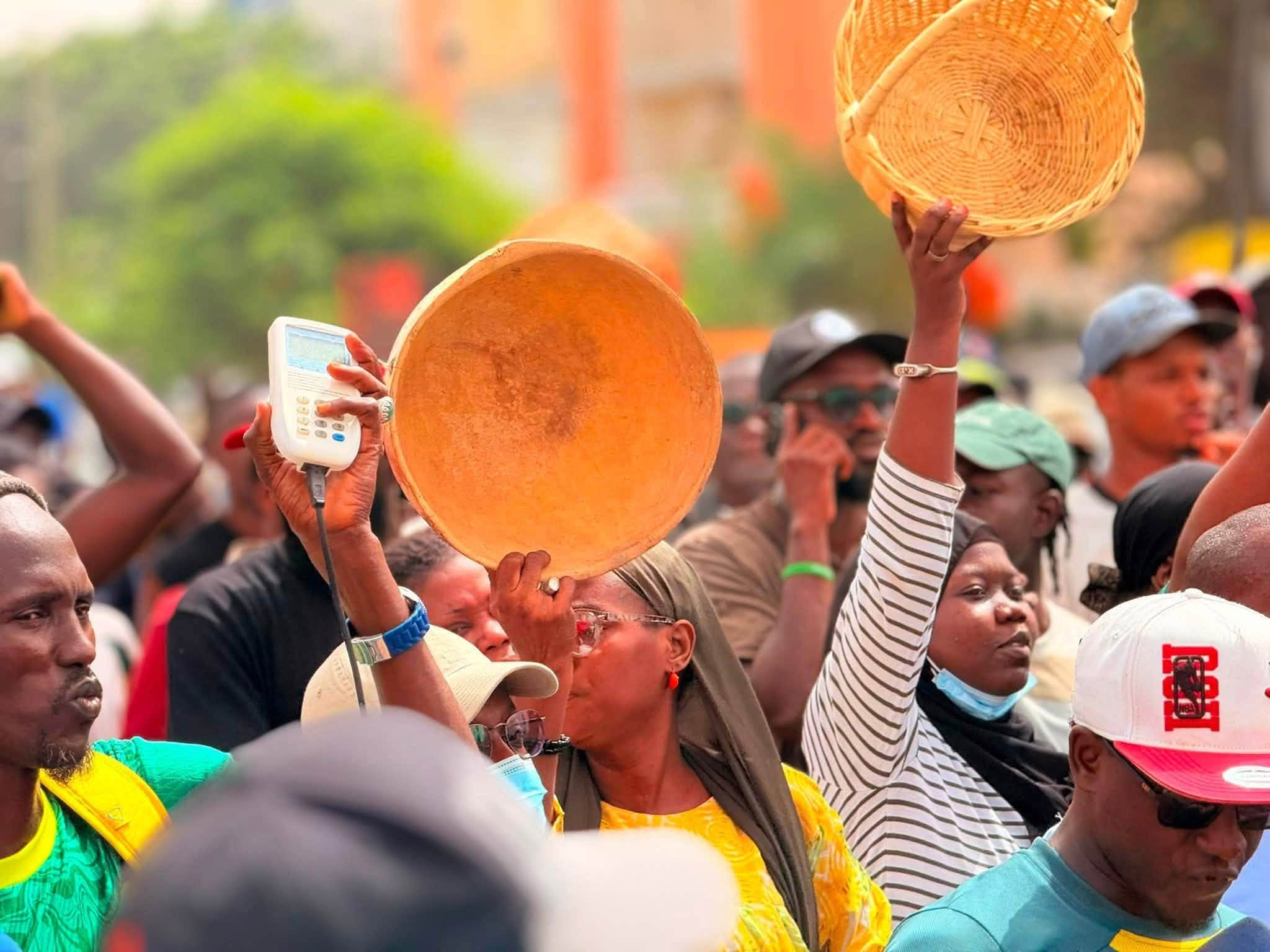
To measure the extent of this deprivation in the streets of Dakar, one only needs to go to Ouakam at the time when the cooking pots should be heating.
Here, in several neighborhoods we've explored, long lines of people waiting in front of the stalls selling fondant are a common sight. Men, women, and children patiently wait to buy portions of this dish, which for many households has become the only alternative to expensive meals.
What is really behind this influx? Both sellers and buyers describe the same reality: economic pressure that is weakening Senegalese households and eroding their purchasing power. Lacking the means to provide three meals a day, some are seeking temporary solutions simply to feed themselves.
It's 8 p.m. A long line has formed in front of Ndoumbé Faye's stall, where she sells porridge . More than thirty customers are waiting. Some leave with bowls, others with bags filled with porridge. The scene repeats itself night after night.
Ndoumbé Faye observes this transformation daily and measures the increase in demand through his own sales: "Before, I sold two to three buckets of foundation per night. Now, demand has exploded. I sell up to five or six buckets. There are significantly more customers."
For the shopkeeper, what has changed most is the status of the starter in family meals. Once consumed as a supplement or reserved for children, it now replaces dinner in some households.
“Before, people mainly bought the fondue for the children or as a snack. Now, many come directly here to get their dinner. Some openly tell me that they haven't cooked at home because it's too expensive. They buy a modest amount of fondue or lakh for the whole family.”
Ndoumbé Faye also notes a change in behavior among his buyers, who have become extremely vigilant about prices and quantities:
“Customers look at the price a lot before buying. They ask how much they can get for 100, 200 or 500 francs. Before, some would take several generous portions. Today, they are looking above all for what can fill their stomach at the lowest cost,” she says.
In this line that renews itself every evening, the profiles vary, but the stories overlap: the financial impossibility of preparing the evening meal. "There are mothers, workers who get home late, but also heads of households who admit to me that they don't have the means to cook in the evening. The ' fondu' or the ' lakh' allows them to cope with what they have."
The volumes sold by Ndoumbé Faye thus serve as a social barometer. Going from two or three buckets to six per night reflects a shift in consumption habits dictated by precariousness.
“People like porridge , but with the current situation, many buy it out of sheer necessity. This porridge is much cheaper than preparing a real meal. With 200 francs, you can get a full pot to fill your stomach, whereas cooking dinner can sometimes cost up to 5,000 francs. That's out of reach for many. Times are very tough,” she explains.
The paradox is striking: the market vendor is in higher demand because the traditional meal has become unaffordable, even though the ingredients cost the vendor more: “Sales are going well for us. When I sell my six buckets, I can make 25,000 to 30,000 francs in revenue. But raw materials like millet, sugar, and milk have increased sharply. We strive to keep prices affordable so people can eat, but we too are feeling the full force of inflation.”
In the queue, Fatou Sarr waits her turn. She has come to buy porridge for her two children. A single mother, she is not looking for a snack, but what will serve as an evening meal for her siblings.
“I buy food for my two children. If I don’t eat, it doesn’t matter. The important thing is that they eat. I haven’t had dinner for six months. I make sacrifices to feed my children because they are my priority,” she confides.
This statement alone sums up the ordeal these families are going through. The mother goes without so that her children can eat. But this last resort is not enough to dispel the anxiety of tomorrow.
“In truth, people are really hungry. This porridge doesn’t feed a person for long. If you buy it for dinner, it’s out of desperation. In these times, buying cheap ready-to-eat food is much more economical than cooking at home,” says Fatou Sarr.
Faced with soaring costs, home cooking becomes a constant trade-off, or even a luxury accessible to few.
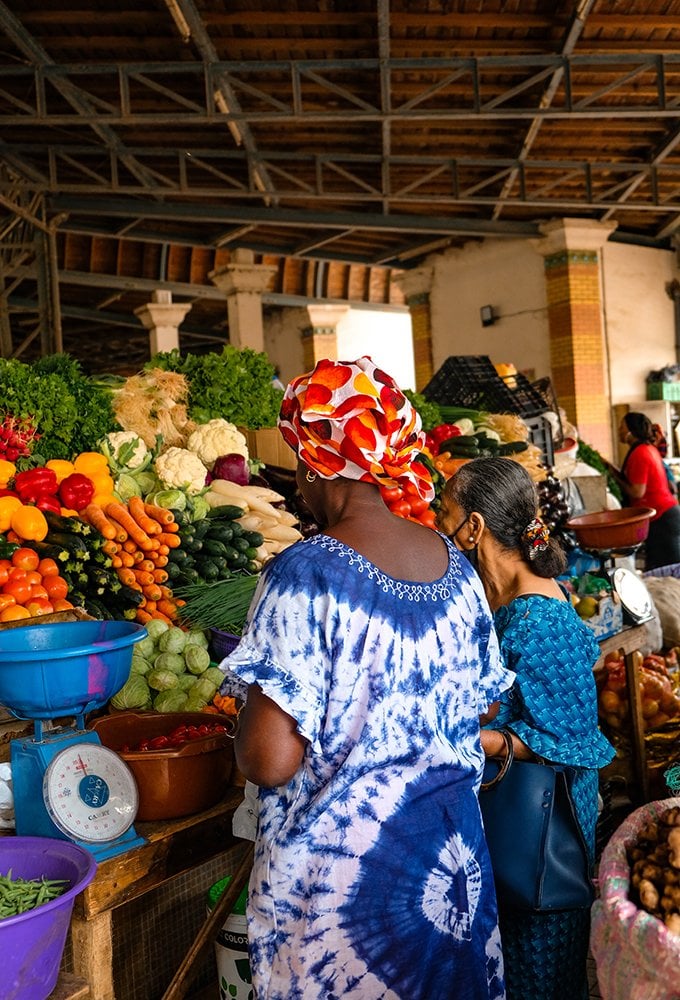
Fatou made her decision: "With 10,000 francs, we can't even prepare a proper lunch anymore. For dinner, you need at least 5,000 francs depending on the size of the family. It's become unsustainable. I prefer to spend 2,000 francs to buy two plates of rice from a Mousseu for lunch, and buy fondue or thiakry in the evening, rather than spending huge sums on groceries."
When meals are restricted or eliminated, the entire family balance is disrupted. In Dakar, ensuring three meals a day has become a real challenge.
“Cooking breakfast, lunch and dinner? Few families in Dakar still do that. Those who manage to do it daily deserve respect. The economic crisis is suffocating households, purchasing power is collapsing and life is becoming more and more expensive,” the mother insists.
The testimonies collected in Keur Massar, Pikine and Ouakam describe a practice now entrenched in many households: reducing the frequency of meals, decreasing portions, substituting prepared dishes with street food or reheating leftover lunch.
Institutional data confirms this field diagnosis. In its report on the economic and social situation of the Dakar region, the National Agency for Statistics and Demography (ANSD) indicates that reducing the number of meals constitutes a major adaptation strategy.
It affects 20.7% of households in the Dakar department, 20.7% in Keur Massar and reaches 22.3% in Pikine. In Guédiawaye and Rufisque, the proportions are 20.4% and 19% respectively.
The same source highlights the overwhelming weight of food in household budgets. In Keur Massar, 48.4% of households spend at least 65% of their resources on food. In Pikine, this proportion affects nearly 45% of homes.
Nationally, the Directorate of Forecasting and Economic Studies (DPEE) noted in the third quarter of 2024 that only 70.3% of surveyed households reported eating three meals a day, compared to 29.1% restricted to two meals and 0.6% reduced to just one meal a day. Inflation was the main shock experienced by households, cited by 74.8% of them.
These figures reflect a clear reality: the number and volume of meals have become the main variables for adjustment in the face of budgetary constraints.
On the ground, these statistics take on a human face: when the budget runs out, dinner is the first meal to be sacrificed. In Keur Massar, Pa Sidibé heats up lunch. In Pikine, Soda Ndiaye buys porridge when she can afford it or lets her children go to sleep hungry. In Ouakam, Ndoumbé Faye sees a steady stream of fathers and mothers coming to buy a few coins to feed their families. And Fatou Sarr has been skipping dinner for six months to protect her children.
Behind these queues, these packets of porridge, and these reheated meals, it is the social and nutritional balance of Dakar households that is being undermined. When night falls on the capital, the question is no longer what to serve, but how to make it to the next day.





















Commentaires (56)
Le planning familial a été inventé pour une bonne raison. Sinon, wakhoumala dîner rek, meme le repas de midi disparaîtra.
Moi reporter si un vieux me raconte ces bobards, j'allais lui dire par respect : "merci vieux senile". Et je vais ecraser l'enregistrement
Le pays est au bord du gouffre. Les gens souffrent à cause de cette secte de PASTEF. Macky aurait dû finir le job !
L'Africain a un gros problème avec les priorités.
C'est bien, bon travail Diomaye et consors !
Et au-delà de l'ia, je pense qu'il y a un vrai sujet sur les images que vous choisissez pour illustrer vos tribunes.
Je ne nie pas l'existence de la pauvreté ; c'est un problème mondial. Un gouvernement efficace peut faire beaucoup, mais l'État ne peut pas agir seul ; une participation citoyenne éclairée est également nécessaire, et nous, les femmes, pouvons apporter une contribution significative.
Voici quelques conseils pour une vie plus frugale et moins coûteuse. Je tiens à préciser que le mode de vie de nombreux Sénégalais serait impossible à reproduire en Europe, quoi qu'on vous dise. Je vis ici, et je vous dis la vérité.
1. Une femme par homme suffit. Cela permet d'économiser de l'argent et d'éviter la misère. Une femme n'est pas un objet de prestige.
2. N'ayez pas plus d'enfants que vous ne pouvez subvenir à leurs besoins. Sachez que vous devez gagner suffisamment pour les nourrir, les vêtir et les scolariser. Porter des enfants est aussi très éprouvant pour le corps.
3. Toutes les fêtes ne doivent pas durer une semaine et ne nécessitent pas toujours une tenue haute couture et les accessoires extravagants. Et que dire des séances photos ?
4. Respectez-vous en tant que femme noire. Mes sœurs noires en Europe sont toujours choquées par ce que les femmes africaines font à leur peau et à leurs cheveux. Comme si elles avaient honte d'être noires. Black is beautiful et moins cher aussi !
Plein d'amour à toutes ! ❤️
-Spaghetti 200frans
-Pain 300 frcs
-Brochette chez le guinéen ou haoussa 200 frcs
-huile 150
-oignon 50
-poivre 50
- Maggi ou sel 50frcs
Dara métiwoul, on se complique la vie di diaye mana pour rien. Aujourd'hui Spaghetti, demain macaroni, un autre jour ndambé ou lentille. A la place des brochettes, tu fais des œufs. Mes enfants me disent papa téy yay togg, se lokho safna😅😅
Pourtant le ndambé est excellent, avec autant de protéine que dans la viande à poids équivalent.
De plus beaucoup de citadins gagneraient à se faire un petit potager chez eux dans des bacs.
Je vis en Europe et, avec mon salaire, je ne pourrais jamais me le permettre. C'est pourquoi j'ai une femme et deux enfants. Ce n'est pas de l'égoïsme, c'est simplement une question de survie.
abdou diouf: deki ,agne, gouter ,djogonal ,reer ,sarakhe
ablaye wade ,deki ,agne ,reer ,boldoff
macky : agne , reer ,couchant
ouseynou ak assana : agne
Participer à la Discussion
Règles de la communauté
💡 Astuce : Utilisez des emojis depuis votre téléphone ou le module emoji ci-dessous. Cliquez sur GIF pour ajouter un GIF animé. Collez un lien X/Twitter, TikTok ou Instagram pour l'afficher automatiquement.
Se connecter
Commentez avec votre profil, votre photo, et soyez averti des réponses.