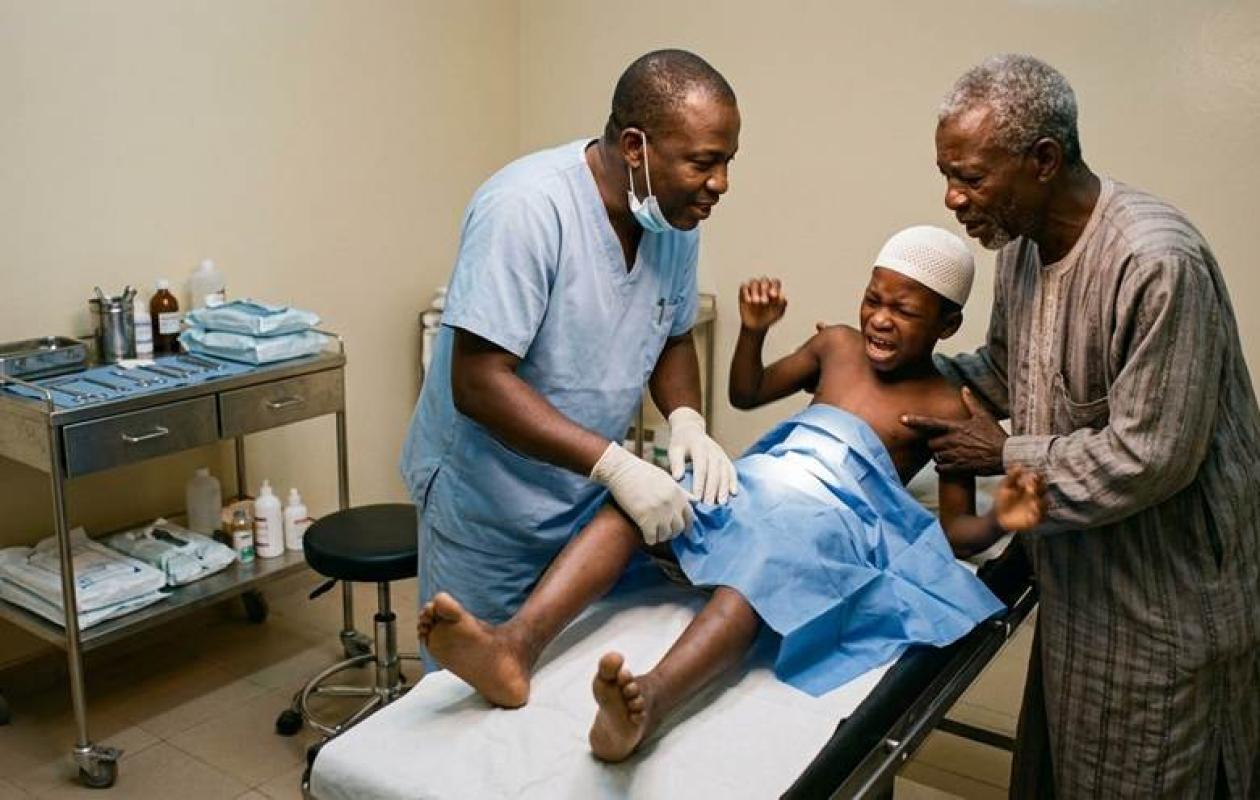
Du « Neegu Goor » à l'hôpital : La fracture générationnelle autour de la circoncision masculine
In Senegal, circumcision is no longer just a rite of passage inherited from ancestors. It has become the scene of a silent rift within families. While some parents wish to protect their children from the pain, those attached to their culture often oppose it.
“ Neegu Goor”
In many homes, the choice of when and how to circumcise children divides generations. On one side, young fathers anxious to spare their sons unnecessary suffering; on the other, older men convinced that pain is an integral part of learning about manhood.
Moustapha Ndiaye is a 46-year-old father. This executive in Dakar no longer hides his regret when he thinks back to his eldest son's operation.
“For my first son, we gave in to my father’s pressure and waited until he was four. It was a real trauma. The little boy understood everything, screamed in fear, and refused to let anyone near him for care. I felt so guilty.”
Having learned from this experience, Moustapha refused to repeat the same pattern with his second son. “I took responsibility in the second week: straight to the hospital. It was only afterward that I told them. At two weeks old, under local anesthesia, the operation was performed without a cry. In four days, the wound was healed. A man is not built on avoidable suffering in early childhood.”
This reasoning, however, is met with the categorical refusal of the guardians of traditional values. For this notable figure, Ousmane Gueye, raising a boy inevitably means confronting him sooner or later with the reality of suffering.
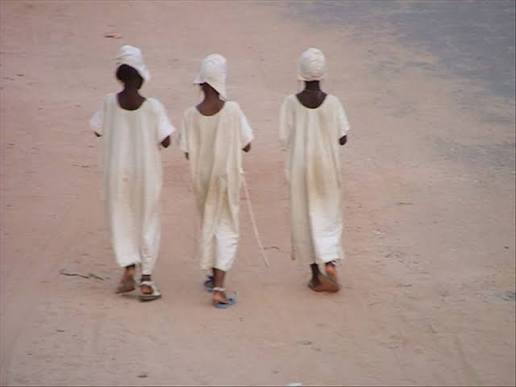
“Today, we want to numb everything and we are raising timid boys. Circumcision has never been a simple matter of cutting skin: it is the entry into the neegu goor (the men’s house),” explains the sexagenarian, who lives in Mbour.
“The boy must feel the bite of the iron, brave it without shedding a tear in front of his peers to learn courage, restraint and composure. If he is circumcised in the cradle under anesthesia, what will he learn from his passage to manhood?” he asks.
Refusal of medical care can turn into a family tragedy. Ibrahima Diop, 38, is a driver in the suburbs of Dakar. He has a bitter memory of the day he agreed to comply with the demands of those around him.
“At the insistence of the neighborhood elders, I agreed to have my 5-year-old son circumcised by an old man who hadn't studied medicine. On the third day, the situation completely spiraled out of control: the boy developed a high fever, his penis had tripled in size, and a foul odor was emanating from it.”
Faced with what he understood to be a critical superinfection, panic gripped the household.
“I rushed my son to the hospital. The diagnosis was devastating: the child was on the verge of septicemia. He needed emergency surgery and two weeks of antibiotics to save him. Seeing my son suffer like that because of me was the worst lesson of my life. Never again.”
Community campaigns
Faced with these risks, a peaceful transition is being organized under the leadership of religious and community leaders. In many localities, imams are gathering young boys for collective circumcision sessions, in partnership with healthcare professionals. Religious leaders are raising awareness among families, while doctors and nurses are setting up mobile operating theaters or equipping health centers with sterile equipment, anesthetics, and appropriate kits. This hybrid approach preserves the religious blessing and the community celebration while ensuring medical safety.
The expert's perspective, Dr. Hassan Hakim
Faced with these challenges, medicine provides a clinical framework to guarantee the child's safety. Dr. Hassan Hakim, a urologist-andrologist, reminds us that the procedure follows precise rules. Practitioners primarily use the Kocher clamp technique or the bell technique.
From an anesthetic standpoint, the protocol varies according to age. "For infants under 6 months, only local anesthesia is applied. For older children, three options exist: local anesthesia, gentle sedation with ketamine, or general anesthesia. To avoid any psychological trauma, doctors recommend ketamine," explains the doctor.
Healing also depends on the patient's age, requiring 4 to 5 days for those under 3 months and 7 to 10 days for those over 3 months. "The procedure is subject to strict medical contraindications, including blood disorders such as hemophilia or genital malformations such as hypospadias."
Regarding costs, the doctor explains that prices range from 25,000 FCFA in the public sector to over 150,000 FCFA in the private sector. However, he specifies that "the medical protocol requires the dressing to be removed the same evening, a healing cream to be applied twice a day, and a follow-up appointment one week later." If performed incorrectly, the doctor adds, "the procedure can lead to secondary infections, poor healing, and, in rare cases, amputation of the glans."
" Medical circumcision reduces the risk of HIV during heterosexual intercourse by nearly 60%", according to UNAIDS.
Beyond cultural and social dimensions, foreskin surgery is the subject of an international scientific consensus regarding its major health benefits, provided it is performed within a rigorous medical framework.
According to the official guidance document published in 2008 by UNAIDS and the World Health Organization (WHO), entitled "Safe, voluntary and informed male circumcision as part of a comprehensive HIV prevention program", three randomized controlled trials conducted in sub-Saharan Africa (South Africa, Kenya and Uganda) demonstrated that medical circumcision reduces a man's risk of acquiring HIV through heterosexual intercourse by almost 60%.
In addition to this significant protection against HIV, the procedure offers other proven health benefits. It reduces vulnerability to several sexually transmitted infections, including human papillomavirus (HPV), which causes cervical cancer in the partner, as well as genital herpes. In terms of general health, circumcision facilitates daily intimate hygiene, reduces the risk of urinary tract infections in young children, and prevents the development of later male pathologies such as phimosis or balanitis.
UNAIDS emphasizes, however, that this protection is only partial and cannot replace the use of condoms or other comprehensive prevention measures. To avoid serious complications, the international organization strongly reiterates that the act must be performed by qualified healthcare professionals, using sterile equipment and with the informed consent of the individual or their legal representatives.



















Commentaires (12)
Les anciens ont bâti certains rites sur la base de plusieurs siècles qui se ressemblent beaucoupdu point de vue moeurs. Les changements intervenus dans le siècle dernier sont sans précédent, il donc nécessaire de prendre les bonnes choses de la modernité
Les soldate ont leur parcours du combattant et certaines écoles ont leur bidouillage. Est-ce qu’on se demande si c’est nécessaire ?
J’ai appris durant la circoncision des choses que j’aurais souhaité que mes enfants aient appris et que je ne peux leur apprendre… car une expérience se vit on ne l’apprend pas par le récit.
Dommage que tout cela soit définitivement mort, car nous ne pourrons plus le refaire naître des cendres de la modernité
Avec le temps, la majorité des circoncis perdent la sensibilité au niveau du gland. Les histoires que ça protège contre le vih et autres c'est juste pour se donner bonne conscience, on ne ressentira jamais le plaisir de faire l'amour comme ceux qui ont gardé le prépuce. La nature sait pourquoi elle a protégé le gland d'ailleurs tous les animaux en possède y'a que l'homme qui le retire.
Participer à la Discussion
Règles de la communauté
💡 Astuce : Utilisez des emojis depuis votre téléphone ou le module emoji ci-dessous. Cliquez sur GIF pour ajouter un GIF animé. Collez un lien X/Twitter, TikTok ou Instagram pour l'afficher automatiquement.
Se connecter
Commentez avec votre profil, votre photo, et soyez averti des réponses.