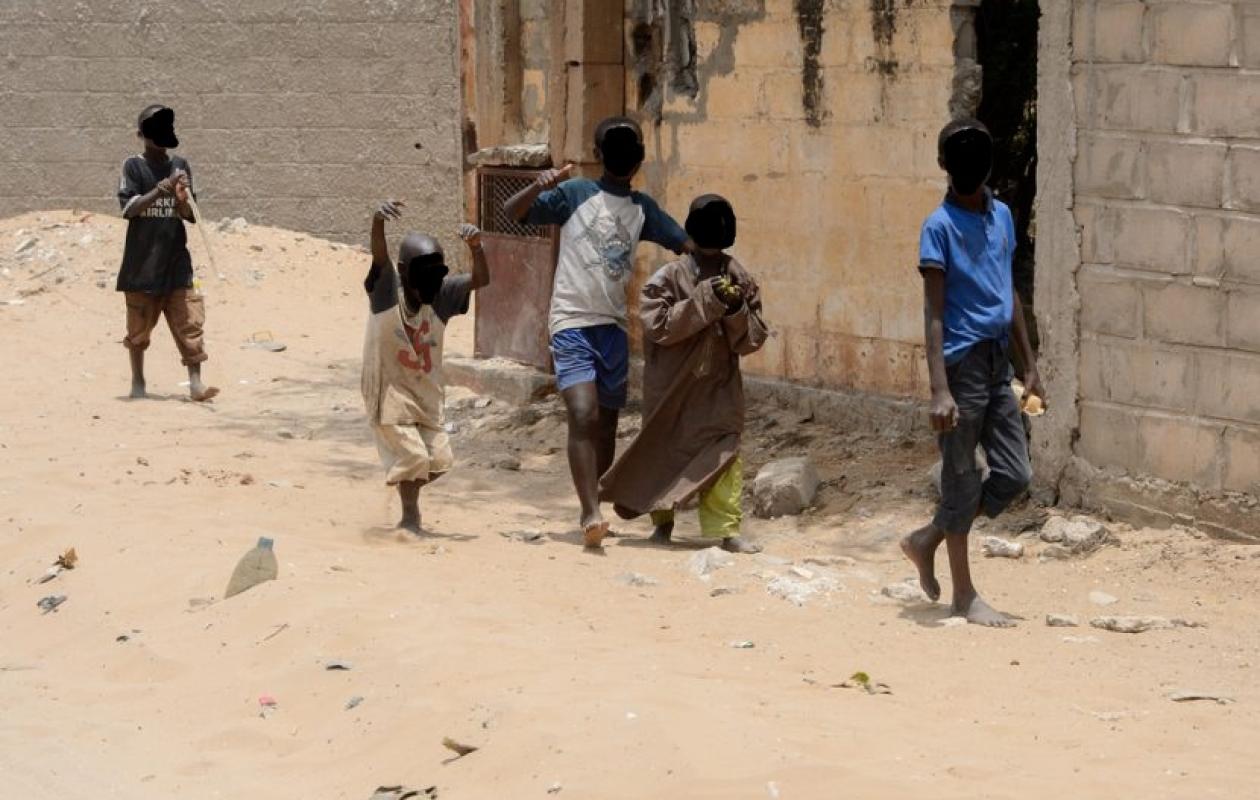
Enquête « Nés mais invisibles » (3/3) : « Un enfant sur cinq n'est toujours pas enregistré à l'état civil au Sénégal », les éclairages du DG de l'ANEC
After giving a voice to families and "invisible children," Seneweb concludes its major series of investigations by interviewing Matar Ndao, Director General of the National Civil Status Agency (ANEC). Late registrations, lack of birth certificates, paternity recognition, ongoing reforms, and digitalization: he addresses the main concerns on the ground and details the strategic solutions implemented to guarantee every child the fundamental right to a legal identity.
Mr. Ndao, the results of the RGPH-5 and the EDS show that many children are still not being registered. What is the exact extent of late registrations in Senegal today?
Matar Ndao: First, it's important to distinguish between a complete failure to declare and a declaration made after the 45th day, which is considered late. The legal deadline for direct declaration is 12 months. After that, obtaining a court order authorizing registration becomes mandatory.
Regarding the numbers, data from the 5th General Population and Housing Census (RGPH-5) reveal that 5.3% of the overall population does not have a birth certificate, a proportion that rises to 8.9% among children under five. For the most recent births, the 2023 Continuous Demographic and Health Survey (DHS) establishes that 81.4% of children under five are registered. This means that one in five children is still not registered on time. However, it is important to highlight the considerable progress made by Senegal: the national registration rate has increased from just over 50% in 2013 to over 81% in 2023.
Despite this progress, what are the underlying causes that still lead so many families to miss the legal deadlines?
Matar Ndao: The factors are numerous. First, there is the negligence of some parents or a lack of information about the procedures and the people authorized to make declarations. Often, awareness only arises when registering the child for school, during an exam, or for administrative procedures.
It is also important to highlight the difficulties of geographical access to civil registry offices in rural, island, border, or isolated areas. The distances to be covered, the cost of transport, the poor condition of the roads, and the unpredictability of the rainy season discourage already vulnerable households.
Finally, the lack of automatic interoperability between healthcare facilities and the civil registry is a significant obstacle. When a child is born in a maternity ward, the information does not always reach the civil registrar. To address this, ANEC has developed a pre-declaration platform that will allow healthcare facilities to directly and instantly notify the relevant center of each birth.
In our investigation, some mothers claim they were unable to register their child due to a lack of paternity recognition. Does the father's absence truly block the process?
Matar Ndao: This is a crucial point that needs clarification, as the confusion is persistent. A fundamental principle prevails: the absence of paternity recognition in no way prevents the registration of a birth. In Senegal, every child has the inalienable right to a legal identity, regardless of the parents' marital status.
Many mothers mistakenly believe they cannot register a child without the father's consent or presence. In such cases, the child is legally registered and takes the mother's name. If the father chooses to acknowledge the child later, the law provides well-defined mechanisms for regularization.
What are the concrete risks for a child who grows up without legal existence?
Matar Ndao: The absence of a birth certificate jeopardizes an entire life path. Without legal identity, access to school exams, national identity cards, healthcare, competitive exams, or formal employment becomes an obstacle course. Every year, thousands of students risk being excluded from exams due to a lack of civil registration documents. A birth certificate is a child's first right: it is the foundational document that gives them legal existence and guarantees their protection as citizens.
Traveling audiences have long served as a stopgap measure. What is your strategy for addressing the root cause of the problem?
Matar Ndao: ANEC does not organize mobile court hearings and has no intention of making this a permanent feature. Our goal is to build a civil registration system so efficient that mobile court hearings will become purely exceptional. We prioritize prevention over corrective regularization, through ongoing awareness-raising among all stakeholders.
What are the major reforms currently underway to modernize the sector?
Matar Ndao: We are finalizing the implementation of our 2026-2030 Strategic Development Plan, which includes a structural transformation of the sector. For example, we recently signed an agreement with the National Agency for Early Childhood and Childcare Centers (ANPECTP) to systematically screen and register children without birth certificates as soon as they enter preschool. We are also involving religious authorities to ensure they remind families of the obligation to register children during baptism ceremonies.
What role do community networks play in this system?
Matar Ndao: A central role. We work hand in hand with the municipalities, village chiefs, neighborhood representatives, community liaisons, Badiénou Gox, and health facilities. This local network is essential to inform families as closely as possible to their realities.
Doesn't the digitalization of civil registration risk widening the gap with rural populations who have little internet access?
Matar Ndao: Digitalization does not replace the physical register; it secures and modernizes it. Declarations continue to be received at the centers in accordance with the law, but the IT tool simplifies the work of the agents and speeds up the processing of requests.
Thanks to the National Civil Registry Software Remediation Plan (LGEC) and the deployment of the Sama Civil Registry platform , we have moved beyond the pilot phase. After Dakar and Thiès, our teams are currently deploying the system in the regions of Diourbel, Fatick, and Louga. To date, nearly 70% of the country's centers are digitized, and our goal is to achieve full national coverage by the end of this year.
What key message would you like to send to families?
Matar Ndao: Registering your child at birth is a civic duty and an act of love. It's the key that opens the doors to education, healthcare, and full citizenship. I urge all parents to complete this process within the legal timeframe of 45 days. Together, let's ensure that no child remains invisible to the Republic.
Interview by Adama Sy




















Commentaires (4)
... des bons à rien !
Ensuite, des enfants qui naissent comme des rats, avec des pères défaillants et des mères ignorantes !!! 😢
Participer à la Discussion
Règles de la communauté
💡 Astuce : Utilisez des emojis depuis votre téléphone ou le module emoji ci-dessous. Cliquez sur GIF pour ajouter un GIF animé. Collez un lien X/Twitter, TikTok ou Instagram pour l'afficher automatiquement.
Se connecter
Commentez avec votre profil, votre photo, et soyez averti des réponses.