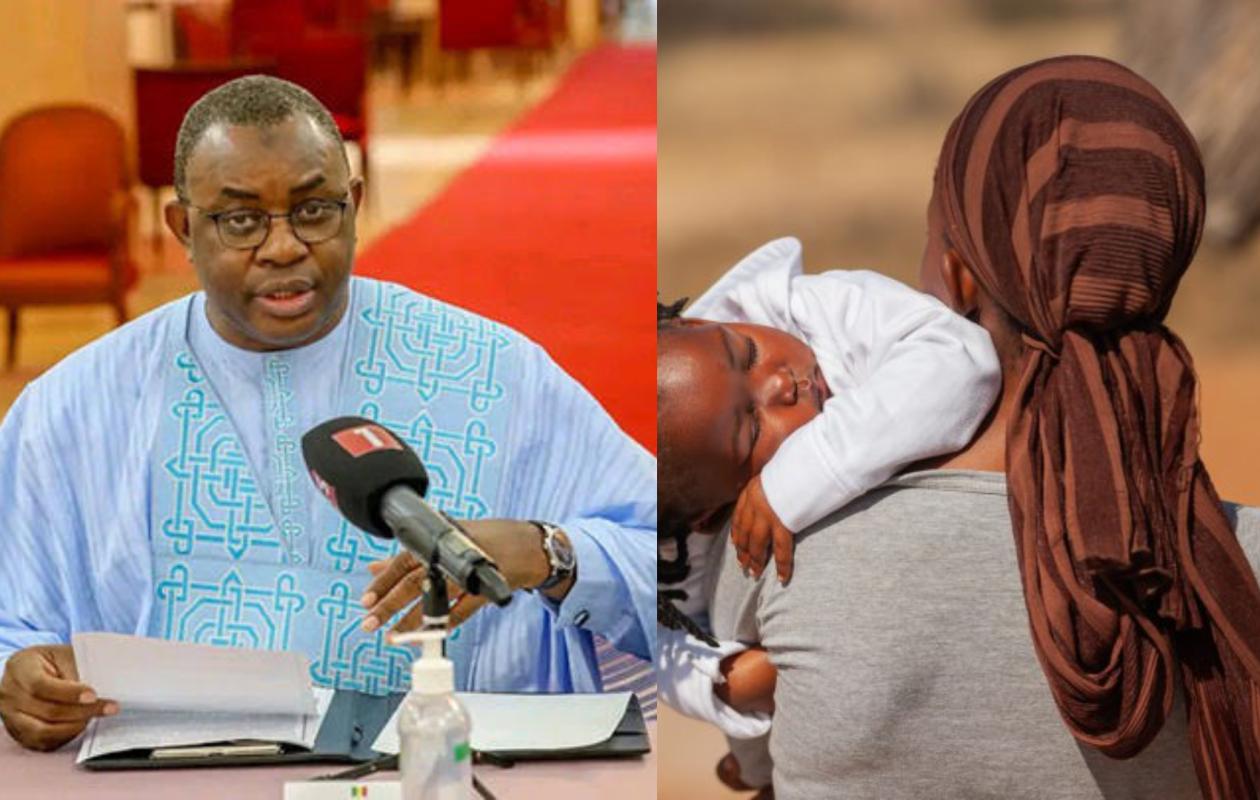
Mamadou Lamine Diante : « Aucune femme ne doit perdre sa place parce qu’elle a eu un enfant » (2/2)
Following the extension of maternity leave from 14 to 18 weeks, a new question arises: how can we ensure that this progress does not backfire on women in the labor market? In this interview with Seneweb, the Minister of Public Service, Labor and Public Service Reform, Mamadou Lamine Dianté, addresses these concerns and outlines the new rules.
Minister, the extension of maternity leave to 18 weeks is welcomed by women, but some fear it will lead employers to hire fewer women. Is this risk real?
This concern is legitimate, but the answer cannot be to reduce women's protections. The 18 weeks of maternity leave must never become a reason to exclude a woman from employment.
This is precisely why the new Code does not simply extend maternity leave. It also strengthens the fight against discrimination. Employers cannot use pregnancy as a reason to refuse to hire, terminate a contract, including during the probationary period, or decide on an unjustified transfer.
He is also prohibited from seeking or having someone seek information about the pregnancy status of a job applicant or employee.

So, practically speaking, can a pregnant woman be fired?
Under no circumstances can pregnancy be a ground for discrimination. Pregnancy cannot justify either a refusal to hire or a termination of the contract, even during the probationary period.
During the 18 weeks of maternity leave, the employment contract is suspended, not terminated. Any dismissal issued during this period is null and void.
Judicial protection is also strengthened. When an act is recognized as discriminatory, the judge can declare it null and void, order the reinstatement of the worker under penalty of a fine, and ensure the payment of wages owed.
Also read, part 1/2: Maternity leave: 14 weeks of ordeal, 18 weeks of hope… and a new fear among women
But upon returning after 18 weeks, what does the Code actually guarantee the mother? Can she regain her position and responsibilities?
The woman is not returning to ask for a new job. Her contract is still valid. Maternity leave suspends the contract, but does not terminate it.
She cannot be penalized upon her return because of her maternity leave by a reduction in pay, a demotion, a discriminatory assignment or a blocking of her career.
A woman should not have to return from maternity leave to discover that she has lost her position in the company because she had a child.
Of course, the business must continue to operate during her absence. The employer can therefore replace her to ensure business continuity. But at the end of her leave, the working woman returns to her position, as stipulated in her employment contract.
And what if, despite these prohibitions, an employer still decides to dismiss or discriminate against a woman?
Yes, very clearly. The new Code provides, for offences relating to discrimination and the protection of pregnant women, a fine of 500,000 to 10 million CFA francs, accompanied by imprisonment of three months to one year, or one of these two penalties only.
In addition to this, there are civil consequences: the discriminatory measure is declared null and void, reinstatement can be ordered and the victim's financial rights restored.
We therefore want to move from a logic where the right is only proclaimed to a logic where its violation leads to real consequences for the employer.

But who will enforce it? Does the Labour Inspectorate really have the means to enforce these new protections?
This is a crucial issue, because a right that is not enforced risks remaining merely theoretical. The new Code significantly strengthens the legal powers of the Labour Inspectorate.
But I also recognize that this strengthening must be accompanied by human, material, logistical and digital resources.
It must be acknowledged that the current staff of Labour and Social Security Inspectors and Controllers remains insufficient in view of the scale of the economic fabric and the new challenges that await them with this new Labour Code.
We will work to implement the necessary measures to address the identified difficulties.
Mr. Minister, after 18 weeks, the baby is still very young. How can we prevent the mother from being forced to choose between breastfeeding her child and keeping her job?
After maternity leave, the mother now benefits from daily rest for breastfeeding for 20 months, compared to 15 months previously.
She is entitled to up to one hour of rest per working day per infant. This time is considered working time and is paid as such.
During this period, she is also protected against dismissal due to pregnancy, childbirth, its aftermath, or breastfeeding.
And what about the issue of company-run crèches?
The government is also going further. An implementing decree makes it mandatory to install a crèche in any establishment employing at least 25 women, so that mothers can breastfeed and follow their child without being forced to be absent or give up their job.
Will 18 weeks really be enough if, upon returning, a woman is excluded from promotions, training, or responsibilities?
No. A woman can benefit from 18 weeks of leave and still be penalized for several years if, upon her return, she is excluded from promotions, training, responsibilities or salary increases.
That is precisely what we want to prevent.
The Code reinforces non-discrimination throughout the employment relationship: hiring, assignment, working conditions, remuneration, training, promotion and termination of contract.
In a few years, at what point could you say that this reform has truly succeeded?
I prefer to be very clear: a reform cannot be considered successful simply because we have added four weeks to a text.
She will have truly succeeded if, tomorrow, a woman can announce her pregnancy without fear of losing her job, go on maternity leave without fear for her career, return to work without being demoted and continue to progress professionally like her colleagues.
The true indicator of success will therefore be less the number of weeks stipulated in the Code than the number of women that motherhood will no longer exclude, make precarious or hinder in their professional career.






















Commentaires (8)
Signé : Femme salariée reconnaissante.
Participer à la Discussion
Règles de la communauté
💡 Astuce : Utilisez des emojis depuis votre téléphone ou le module emoji ci-dessous. Cliquez sur GIF pour ajouter un GIF animé. Collez un lien X/Twitter, TikTok ou Instagram pour l'afficher automatiquement.
Se connecter
Commentez avec votre profil, votre photo, et soyez averti des réponses.