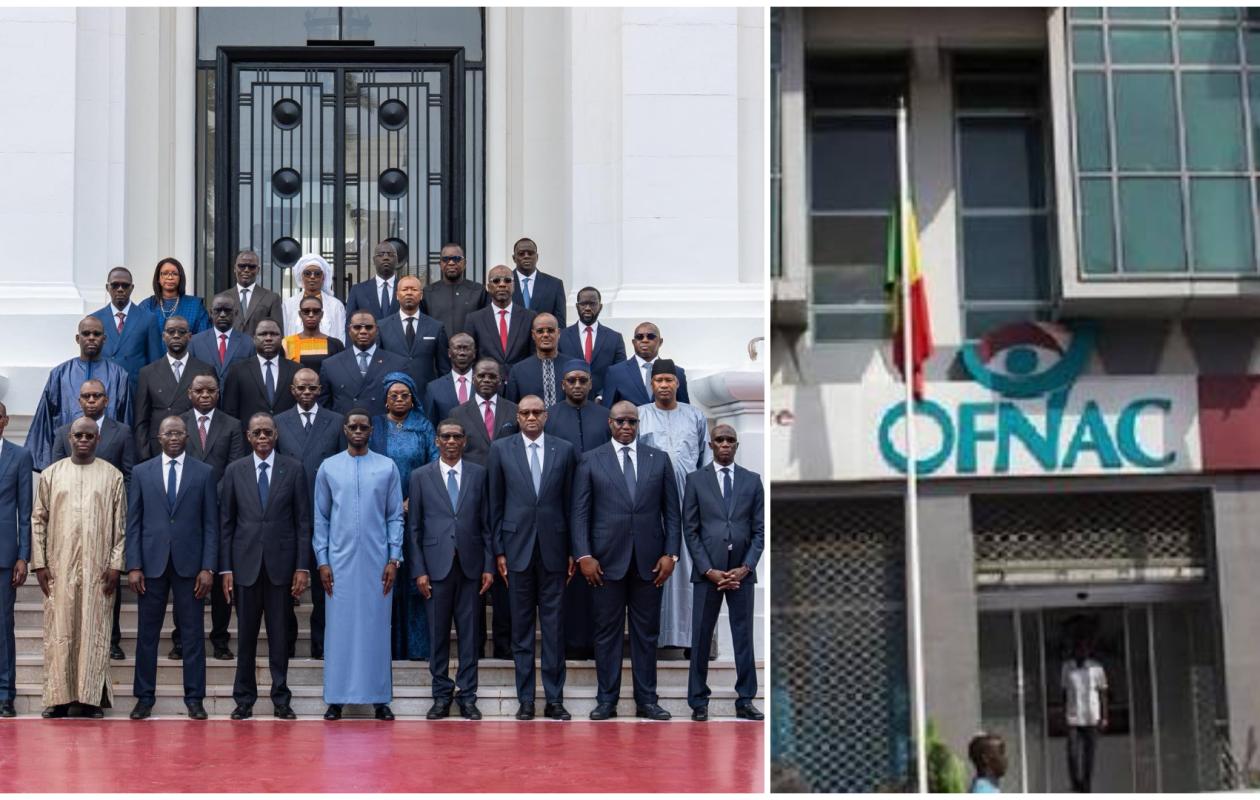
Patrimoine présidentiel public, secrets de l'OFNAC pour les ministres : Le grand paradoxe d'une transparence à deux vitesses
While the debate rages around a new bill proposed by Pastef (following the first failed attempt at a stillborn constitutional revision) aimed at compelling the President of the Republic to publish his assets at the end of his term, a blind spot remains. Can we truly speak of transparency when the rest of the state apparatus is protected by the secrecy of the OFNAC (National Office for the Fight Against Fraud and Corruption)?
It's a powerful image, etched in republican ritual. In Senegal, the newly elected president discloses his assets (including bank loans) in the Official Gazette, thus dispelling any suspicion of illicit enrichment before taking up residence at the presidential palace on Avenue Roume. This highly symbolic gesture is intended to mark a break with the past. But in recent weeks, a new demand—more aligned with Pastef's party than with the general public—has emerged: the demand to see the Head of State finish as he began. Hence the proposed law aiming to require the President of the Republic to submit a declaration of assets upon leaving office.
A commendable quest for transparency, certainly, but one that runs up against a systemic contradiction that civil society continues to highlight. While the spotlight is on the presidential assets, the vaults of the National Office for the Fight Against Corruption (OFNAC) remain hermetically sealed to the average Senegalese citizen.
The "double standard" of the law
The paradox is striking. On the one hand, the Constitution mandates full disclosure of the assets of the Senegalese president upon assuming office. On the other hand, the law concerning asset declarations shrouds the assets of the Prime Minister, the President of the National Assembly, ministers, directors general, and mayors in absolute secrecy. Article 18 of this law is unequivocal: "The asset declaration procedure [with OFNAC, editor's note] is confidential."
Article 12 emphasizes that, except upon request from the courts or oversight bodies, no one should know the assets held by those managing public budgets, sometimes amounting to hundreds of billions of CFA francs. It stipulates, in effect: "The information contained in the filed declarations may only be disclosed at the request of the taxpayer, their heirs, or upon request from judicial or administrative authorities against whom confidentiality cannot be invoked."
This asymmetry raises several questions in a national context marked by the recent adoption of the law on access to information. First, what is the point of scrutinizing the president's accounts if other links in the chain of execution—where multi-billion-dollar public contracts are negotiated with the risk of kickbacks—escape citizen oversight? Without this comprehensive transparency extended to all those subject to it (without exception), the fight against corruption risks being reduced to a selective transparency that imposes exemplary conduct on the head of state—who does not manage any budgetary funds in an operational sense—in order to better protect everyone else: heads of institutions, ministers, and others.
Privacy Protection vs. Transparency
Faced with this indictment, those who advocate for maintaining the legal status quo argue that opening the OFNAC register to the public would amount to exposing or publicly shameing hundreds of high-ranking officials and government members. For them, this constitutes an invasion of privacy, and OFNAC must remain an internal investigative body, not a people's tribunal. However, this line of defense is at odds with the evolving international standards of transparency to which Senegal has subscribed.
According to the World Bank, more than 150 countries have mandated asset declarations for their public officials. Many of these countries make these declarations public. Moreover, the World Bank Group adds, public access to these declarations enhances their effectiveness in the fight against corruption.
“The public disclosure of the private assets of civil servants and their families is not incompatible with the right to privacy and data protection,” it stated. “These rights are not absolute and can be restricted provided there is a legal basis and a legitimate public interest justifies the restriction. Preventing corruption and uncovering the undeclared assets of civil servants constitute serious and legitimate public interests,” the World Bank concluded.
International Benchmarking
More than 40 countries worldwide require the online publication, in whole or in part, of the asset declarations of their high-ranking public officials. In Ukraine, the United States, Canada, and Argentina, publicly accessible online platforms have been launched, allowing citizens and journalists to directly audit the wealth of leaders.
In France, the High Authority for Transparency in Public Life (HATVP) publishes the asset declarations of the President of the Republic and members of the government online and as open data. However, for members of parliament and senators, only their declaration of interests is available online. Furthermore, their assets can only be consulted by appointment at the prefecture.
In light of the above, should we limit ourselves to a bill requiring the President of the Republic to declare his public assets upon leaving office, or should this disclosure be extended to all those subject to it? The debate is open!



















Commentaires (34)
Participer à la Discussion
Règles de la communauté
💡 Astuce : Utilisez des emojis depuis votre téléphone ou le module emoji ci-dessous. Cliquez sur GIF pour ajouter un GIF animé. Collez un lien X/Twitter, TikTok ou Instagram pour l'afficher automatiquement.
Se connecter
Commentez avec votre profil, votre photo, et soyez averti des réponses.