Primes des Lions, étude économique (1/3) : ce que révèle les récompenses versées par Diomaye Faye
At the request of Seneweb , Professor Thierno Thioune examined the possibilities for streamlining sports awards in Senegal. The pretext? The generous bonuses awarded to the winners (on the field) of the 2025 Africa Cup of Nations (AFCON). In place of the current system, the professor of economics proposes alternative mechanisms with "multigenerational economic and social impact." His document is available in full on our website. We present the substance in three parts.
In the first part of his presentation, the economist lists the "virtues" and "areas for streamlining" government generosity. He will go into more detail in the next two parts.
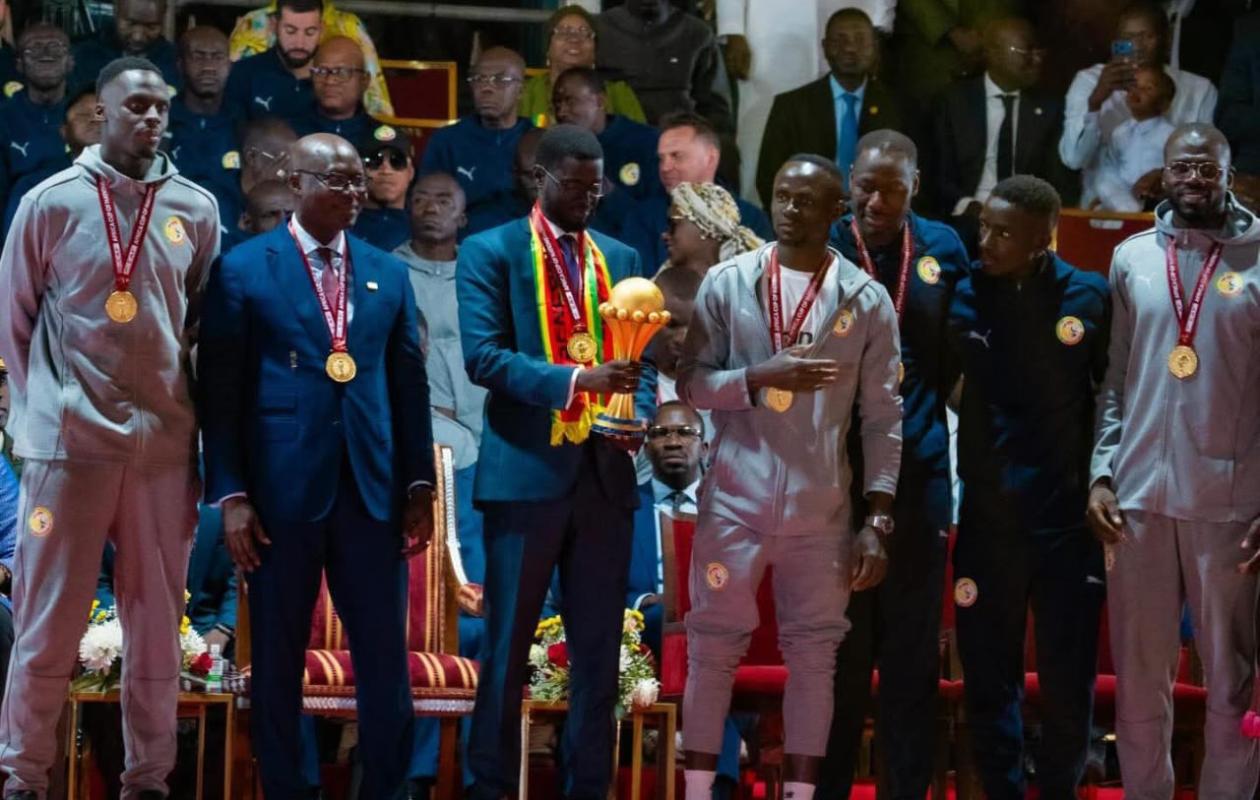
The transfers have reportedly gone through. According to the daily newspaper Source A, Sadio Mané and his teammates have received the 75 million CFA francs promised to each of them by President Diomaye Faye upon their return from the 2025 Africa Cup of Nations. Seneweb is unable to confirm the news, but it has not been denied so far. Unless there is further information to the contrary, the Head of State has therefore kept his word. And he did not wait for the outcome of the Court of Arbitration for Sport (CAS) ruling.
The Senegalese Football Federation (FSF) has appealed to the Court of Appeal in Lausanne, Switzerland, contesting the decision of the Confederation of African Football (CAF) appeals board to strip Pape Thiaw's team of the continental trophy, which they won on the field (1-0), and award it to Morocco, who were declared the winners by default. The court will not issue its verdict before the 2026 World Cup (June 11-July 19).
Regardless of the current situation, we questioned the system of rewards for Senegalese athletes, particularly the Lions A, who are accustomed to receiving substantial sums upon returning from each victorious campaign. With this in mind, we invited Professor Thierno Thioune, an associate professor of economics, to propose options for streamlining the system, suggesting two avenues for consideration. The first: instead of the 75 million CFA francs awarded to the winners of the 2025 Africa Cup of Nations (AFCON), they could receive shares in strategic public or semi-public companies. The second: instead of land on the Petite Côte, they could be granted plots in Community Agricultural Domains (DACs), which are already established in ten of the country's fourteen regions, or in agro-industrial parks, to boost agricultural sectors.
In Professor Thioune's view, these proposals constitute "an extremely relevant innovation ," a source of "multigenerational economic and social impact ." The economist claims to be convinced that the current reward system, while certainly "a legitimate recognition of the merit of champions , " "suffers from major structural limitations that considerably reduce its long-term impact ." Let's examine the first part of his analysis.
VIRTUES AND LIMITS OF LION BOUNTIES
Professor Thierno Thioune: "Each player received 75 million CFA francs, or approximately 115,000 euros, along with a 1,500 square meter plot of land on the Petite Côte. The members of the technical staff They received 50 million CFA francs, equivalent to 76,000 euros, along with 1,000-square-meter plots of land in the same area. The other members of the delegation received 500-square-meter plots and 20 million CFA francs (for the federation representatives), and a financial package to be shared among the Ministry of Sports staff. This arrangement reveals a nuanced situation that presents both undeniable merits and substantial areas for improvement. From a merit perspective, this approach has three undeniable advantages. First, it constitutes an unequivocal motivational signal. In efficiency wage theory , such bonuses significantly strengthen athletes' national loyalty and stimulate their performance by creating a strong emotional and financial link with their country of origin. Secondly, we observe a form of redistributive equity, as the recognition extends well beyond the players visible on the field to include the entire ecosystem that made this victory possible, from the physical trainers to the administrative staff who organized the logistics. Thirdly, these bonuses will generate a significant economic multiplier effect, with local economic benefits that I estimate at around 200 million CFA francs, through consumer spending, real estate investment, and various transactions resulting from this injection of liquidity into the economy.
BUDGETARY SUSTAINABILITY AND CROWDOWN-OUT EFFECT
“The question of budgetary sustainability must be addressed frankly. These awards amount to 3.5 billion CFA francs. They represent nearly 9% of the annual budget allocated to sport (42 billion CFA francs for the 2025 fiscal year). For comparison, Algeria, when it won the Africa Cup of Nations in 2019, distributed bonuses equivalent to approximately 6% of its sports budget, three percentage points less than the Senegalese proportion in 2026. This difference raises legitimate questions about the proportionality and long-term sustainability of such a level of reward in Senegal’s current economic context. The potential crowding-out effect also deserves particular attention. The equivalent of these considerable sums could be allocated to producing potentially more lasting impacts.” In concrete terms, with the same budget and concurrently, the State could have funded 150 sports excellence scholarships spread over four years between 2026 and 2030, allowing promising young talents to benefit from comprehensive support in their development. Such funds could also enable the renovation of 25 neighborhood football pitches to international standards, thus creating a sustainable infrastructure serving thousands of young players and contributing to the emergence of new generations of champions for decades to come.
PARADOX OF VALUATION AND STRUCTURAL INEQUALITIES
“The valuation paradox is another striking element of this economic equation. Our international players, who play for the biggest European clubs, earn on average a minimum of between 50,000 and 200,000 euros (32.5 million and 130 million CFA francs) per month at their respective clubs. The 75 million CFA franc bonus they receive therefore represents the equivalent of one to two weeks of their usual salary for the lowest earners, and only a few days for the highest-paid stars. Under these conditions, the symbolic value of the reward far exceeds its marginal financial value for these athletes. This suggests that a different allocation of these resources could generate a more significant impact without diminishing the symbolic recognition granted to champions . Finally, the issue of structural inequalities cannot be ignored. In Senegal in 2025, the monthly salary of a professional player in the local Ligue 1 ranges from 50,000 to 300,000 CFA francs, according to data from the Senegalese Professional Football League.” A single international player receiving 75 million CFA francs thus earns the equivalent of 250 months' salary for a local professional player, or more than 20 years' worth of compensation. This disparity, while reflecting the realities of the international football market, nevertheless raises questions about the internal consistency of the Senegalese football valuation system and its potentially demotivating effects on local leagues that struggle to attract spectators. (To be continued)
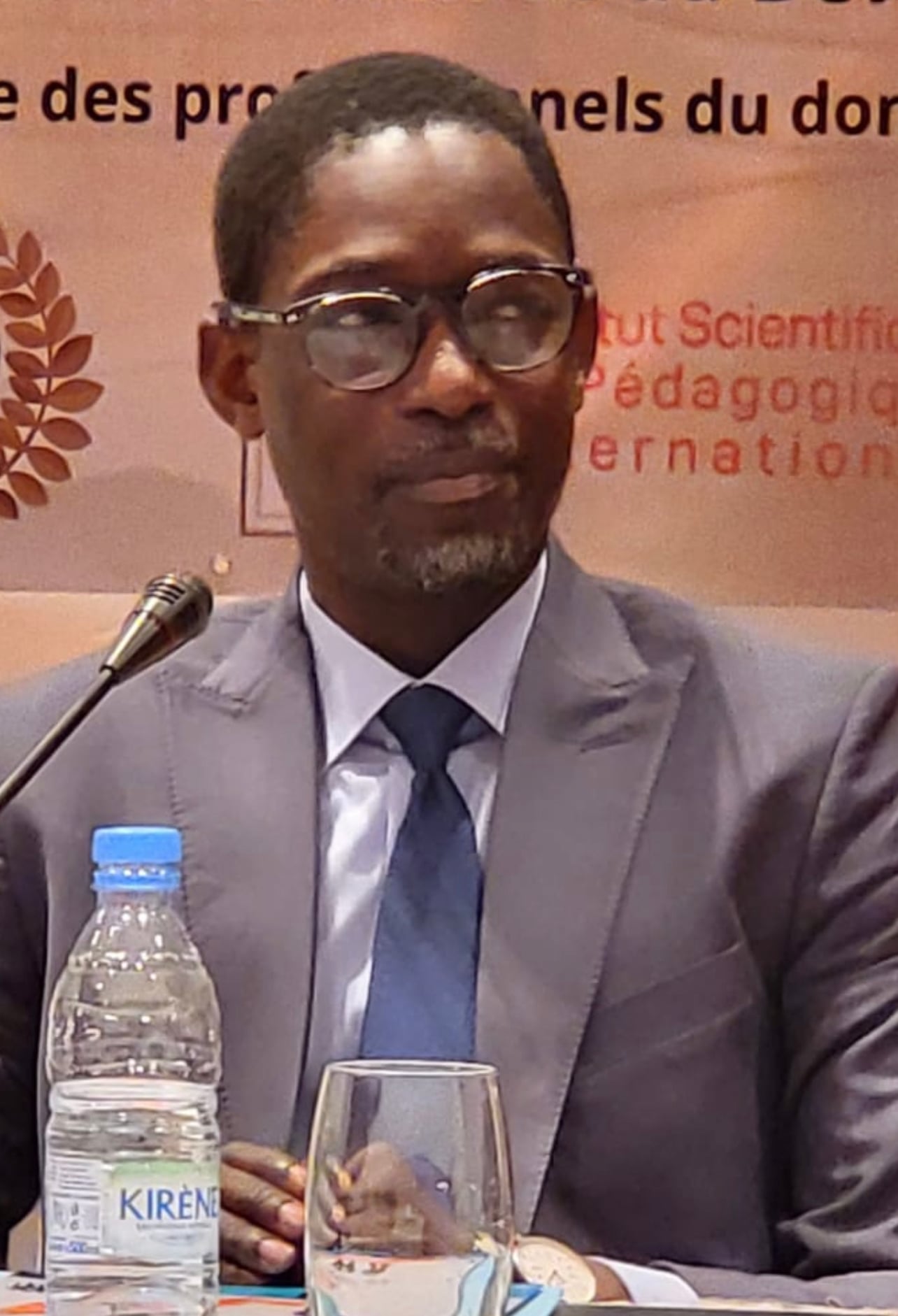
PR THIERNO THIOUNE
A graduate of the French university system, he was a tenured lecturer with CAMES ( African and Malagasy Council for Higher Education ) and earned a doctorate in Economics. The Council for the Development of Social Science Research in Africa (CODESRIA) also awarded his doctoral research as part of its doctoral grant program. Professor Thioune recently completed a postdoctoral research fellowship at Sciences Po Paris. He served as Director of the Center for Applied Economic Research (CREA) from 2022 to 2024, after having been Director of Studies at the Center for Research and Training for Economic and Social Development (CREFDES) from 2017 to 2021. He teaches at several public and private higher education institutions, including the Institute for Public Procurement Regulation (IRCOP) , the National School of Statistics and Economic Analysis (ENSAE), and the School of Law at BEM School of Management. His research areas encompass the economics of public policy, network economics, industrial economics, energy economics, natural resource economics, and institutional economics.