
« Bâtir un avenir culturel solide, inclusif et créatif pour la Guinée : la vision du programme Simandou 2040 », M. Moussa Moïse Sylla, Ministre de la Culture, du Tourisme et de l’Artisanat
In this interview, Mr. Moussa Moïse Sylla, a key figure in Guinea's cultural policy, discusses the initiatives undertaken to revitalize the cultural sector in Guinea. He notably addresses the Simandou 2040 program, presented as a vision for sustainable, inclusive, and integrated socio-economic development. The minister also responds to criticisms predicting the end of the regime of Guinean President Mamadi Doumbouya.
What is your vision today for Guinean culture and its influence in Africa?
Our vision rests on a fundamental conviction: culture is not an embellishment of development, but its lifeblood. Guinea is one of the richest nations on the continent in terms of living heritage, including Mandinka music, Fulani traditions, Susu heritage, and the diversity of our various ethnic groups. This wealth, long underutilized, must now be transformed into a lever of influence, national cohesion, and economic power.
Our approach is clear: we are making a firm commitment to promoting our heritage and, above all, to reclaiming our image through our own narratives. For too long, Africa has been confined to narratives constructed by others—narratives of poverty, instability, and dependence on aid. We want Guinea to tell its own story, with its own voices, its own images, its own artists.
In concrete terms, this vision rests on three pillars. First, the reconstruction of cultural infrastructure: we cannot speak of industry without equipment. Second, the training of talent: giving young Guineans the technical, legal, and entrepreneurial tools to make a living from their art. And finally, regional and international influence: positioning Conakry as a leading cultural hub in West Africa, capable of exporting its productions and attracting creative investment.
Beyond the walls and infrastructure, this project carries a greater ambition: to build a solid, inclusive, and creative cultural future for Guinea. This is the foundation of the Simandou 2040 program, a vision of sustainable, inclusive, and integrated socio-economic development, championed by the Head of State, His Excellency Mamadi Doumbouya.
Why has the restitution of African heritage become a major issue for the countries of the continent?
It is a question of justice, sovereignty, and identity: three inseparable dimensions. It is estimated that more than 90% of Africa's tangible heritage is currently located outside of Africa. These works were not simply "collected": they were torn from their lands, seized, and looted in the context of colonization. Their absence from African societies is a wound that continues to bleed.
The restitution of cultural property is an act of justice, peace, and cohesion among peoples. But it is also a profound educational and identity-related necessity. The goal is to enable Africans, particularly young people, to access their own heritage and the shared heritage of humanity in Africa (and not just in Europe).
When President Macron was asked why he had changed his position on this issue, he cited, in particular, the appeal from young Africans and West Africans who, through social media, were forcefully expressing their desire to access their own heritage—a generation conscious of its history. This signal is powerful: it is the young people who have put this debate back at the heart of the global agenda.
Progress has been made. On May 6 and 7, 2026, the French National Assembly and then the Senate definitively adopted the bill concerning the restitution of cultural property that had been illegally appropriated. This landmark legislation puts an end to decades of legal deadlock: it introduces into the French Heritage Code a general exception to the principle of the inalienability of public collections, which until now required the adoption of a specific law for each returned item, object by object, country by country. While this progress has been welcomed on the African continent, some voices point out that it does not specify which works will actually be returned, nor the timeframe for these restitutions: the legal framework is in place, but the real work of cultural justice remains.
This is therefore not a sentimental demand, but a requirement for cultural sovereignty, as serious as political or economic sovereignty.
How can African museums be transformed into vibrant spaces capable of reconnecting young people to their history and identity?
The African museum of yesteryear was too often a closed room, reserved for initiates only. That model is dead. The contemporary African museum is no longer simply a place to protect ancient objects. It is gradually becoming a space where the relationships between past and future, between heritage and globalization, between local memory and international visibility are negotiated.
To reconnect young people, a revolution is needed—architectural, educational, and technological. Architecturally, museums must be welcoming, accessible, and located in the heart of cities, not on the outskirts. Educationally, they must offer school programs, creative workshops, artist residencies, screenings, and concerts. The Zinsou Foundation, established in Benin in 2005, is the most striking example: in its eight years of existence, it has amassed over a thousand contemporary artworks and welcomed four million visitors, the majority of whom are schoolchildren. This figure speaks volumes: children instinctively understand the value of museums. Technologically, digital technology, virtual reality, and artificial intelligence now make it possible to bring historical objects and narratives to life in ways our ancestors could never have imagined. The National Museum of Guinea in Sandervalia, thanks to a strong partnership with the French Development Agency, aims to fully meet this requirement.
The Cinema Museum we are building in Conakry will highlight the richness and diversity of Guinean cinema, celebrating its works, talents, and iconic figures, while inspiring future generations to carry on the legacy of our great artists. This is precisely the approach we want to promote: a museum that not only preserves the past but also cultivates vocations for the future.

What do African cultural industries still need to become true economic drivers?
African cultural industries are booming, and the figures bear this out. In 2023, the 76th Cannes Film Festival featured a record number of African films in its official selections: six in the official selection, twenty across all sections, including two in competition for the Palme d'Or. This presence was hailed as a sign of a continental cinematic renaissance. However, to transform this vitality into sustainable economic power, several challenges remain.
The first, and undoubtedly the most urgent, is that of structured financing. African artists are still too dependent on one-off grants or foreign partnerships. We need sovereign wealth funds dedicated to culture, appropriate credit mechanisms, and African private investors convinced that culture is a profitable sector.
The second challenge is protecting rights and combating piracy. An artist who cannot make a living from their work gives up. The rampant piracy plaguing the continent destroys billions of dollars of potential value every year.
The third area of focus is the circulation of films within the continent. The development of these industries is part of the dynamics of economic transformation, cultural affirmation, and international influence. However, the sustainable structuring of these sectors is still insufficient. A Senegalese film should be able to be seen in Conakry, Abidjan, and Kinshasa, without the bureaucratic and logistical obstacles that currently hinder intra-African distribution.
We do hear some criticism regarding governance in Guinea. How do you react to these comments on social media?
I will be direct, because this subject demands that we address it clearly and without complacency. Political criticism is not only legitimate, it is necessary. In any state governed by the rule of law worthy of the name, the right to question its leaders is a fundamental democratic pillar. I have always respected it and will continue to defend it. But there is a line that any rigorous mind must recognize: the line that separates honest, well-documented criticism, supported by verifiable facts, from a destabilization campaign disguised as political analysis. Some cross this line with a nonchalance that should raise concerns far beyond our own borders.
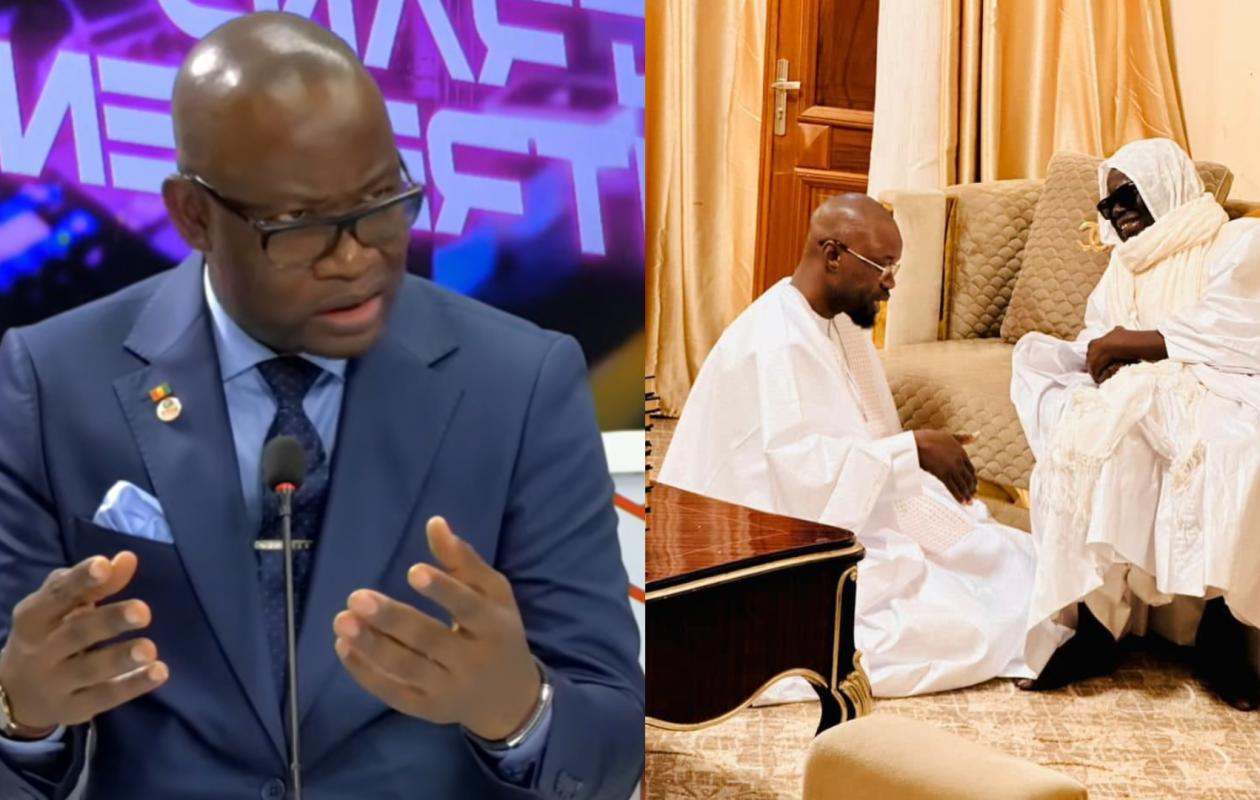
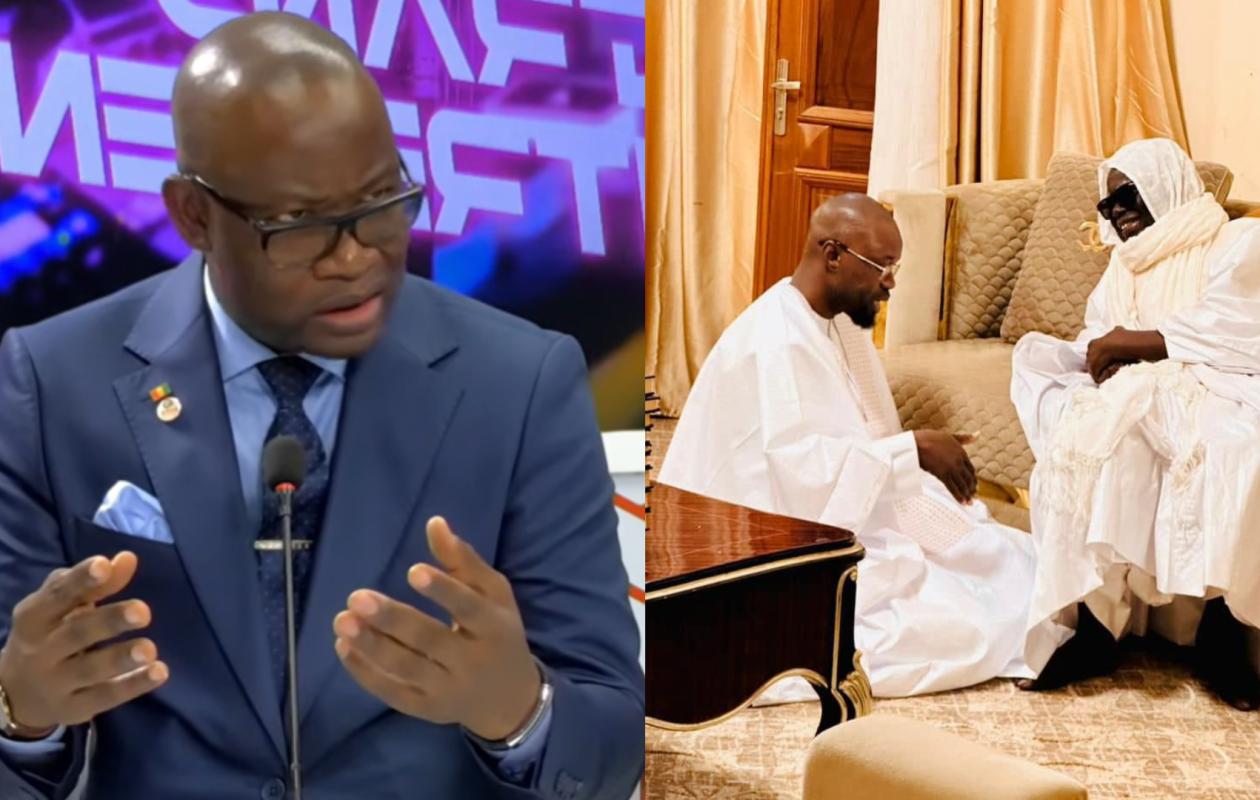
I will give a specific example, because Guineans and African public opinion deserve to know the true nature of certain actors who presume to lecture others. Cheikh Yérim Seck, a Senegalese columnist based in Dakar, claimed in April 2026 to predict the "very near end of the Doumbouya regime" without an identifiable source, without a usable document, without ever having conducted the slightest field investigation in the country he claims to analyze. This is not analysis. It is invective disguised as revelation.
But who is this man, really? In 2012, he was convicted by the Senegalese courts for rape and served sixteen months in prison. Since then, he has faced a string of legal troubles: spreading fake news in the Batiplus affair, accusations of performing an abortion on a minor. His own professional and media circles in Senegal have publicly distanced themselves from his methods. This picture does little to bolster the credibility of someone who now presents himself as the conscience of the sub-region. His mercenary approach has met with several rejections in Guinea. Everyone still remembers the incident with Captain Moussa Dadis Camara.
The mechanism is thus exposed in all its nakedness: this is not journalism, it's business. When the transaction fails, the pen turns back. Guinea is familiar with this practice, having already experienced it when the same individual attempted the same approach in Conakry before being expelled.
Government spokesperson Ousmane Gaoual Diallo stated it with irrefutable legal precision: these remarks do not fall under the umbrella of press freedom; they constitute defamation. I fully agree. Accusing a sovereign head of state without producing the slightest shred of evidence is not an act of journalism. It is the manipulation of a platform to serve interests that remain to be identified.
Guinea, for its part, is moving forward under President Mamadi Doumbouya. It is moving forward with over 86% popular support, sovereignly expressed at the ballot box in December 2025. It is moving forward with the Simandou 2040 program, championed with distinction before the most prestigious African economic forums, from Nairobi to Kigali. It is moving forward with a Cinema Center under construction, a National Museum undergoing renovation, and thousands of kilometers of roads opening up its territories. Those who have chosen to deny these realities know, deep down, why they do so. The facts, however, are undeniable.
Guinea is reviving its film industry with the Cinema Center project in Conakry. What impact do you expect for African filmmaking?
This project is historic in more ways than one. The choice of site is not insignificant. By building on the remains of the Cinéma Liberté, we are clearly affirming our commitment to rehabilitating and enhancing iconic sites of our cultural heritage, while resolutely integrating them into a dynamic of modernization.
This complex will include cinemas meeting international standards with the best projection technologies, spaces dedicated to training, production and post-production of audiovisual content (true incubators of talent), a Cinema Museum for the preservation and transmission of our cinematographic heritage, as well as commercial spaces contributing to the economic development of the district.
The expected impact is threefold. First, for Guinea: the creation of a complete film value chain, from screenwriting to distribution, capable of generating skilled jobs for our youth. Second, for West Africa: positioning Conakry as a creative alternative to Lagos and Dakar, enriching the diversity of African narratives produced on the continent. Finally, for African creativity: cinema, as the seventh art, occupies a strategic place in the development of cultural and creative industries. Every Guinean film shown in Africa and around the world is an ambassador of our identity, a concrete response to the negative narratives that have defined us for too long.
Can we speak today of an African cultural renaissance led by a new generation?
Yes, without hesitation. And it's a renaissance that doesn't need Western validation to exist. It's being built on digital platforms, in Conakry studios, in Dakar and Abidjan fashion workshops, in Nairobi editing suites, and in Kinshasa's creative spaces. Digital technology has made visible, measurable, and comparable flows that already existed, often operating outside the institutional radar.
This generation is distinguished by three major characteristics. It is pan-African in its references and ambitions; it does not identify with a single country but with an entire continent. It is entrepreneurial: it seeks not only to create but to build sustainable industries, brands, and cultural enterprises. And it is connected: it uses social media, streaming, and digital technologies to speak directly to its audiences, without intermediaries. Guinean companies are already developing video games, animated series, and films that draw inspiration from African cultural heritage. This is the true renaissance: when African identity becomes the raw material of contemporary innovation.

















Commentaires (2)
Participer à la Discussion
Règles de la communauté
💡 Astuce : Utilisez des emojis depuis votre téléphone ou le module emoji ci-dessous. Cliquez sur GIF pour ajouter un GIF animé. Collez un lien X/Twitter, TikTok ou Instagram pour l'afficher automatiquement.
Se connecter
Commentez avec votre profil, votre photo, et soyez averti des réponses.