
“Un appareil conçu pour négocier en position de force…”: Le super-ministère de Cheikh Diba passé au scanner par l'économiste Babacar Gaye
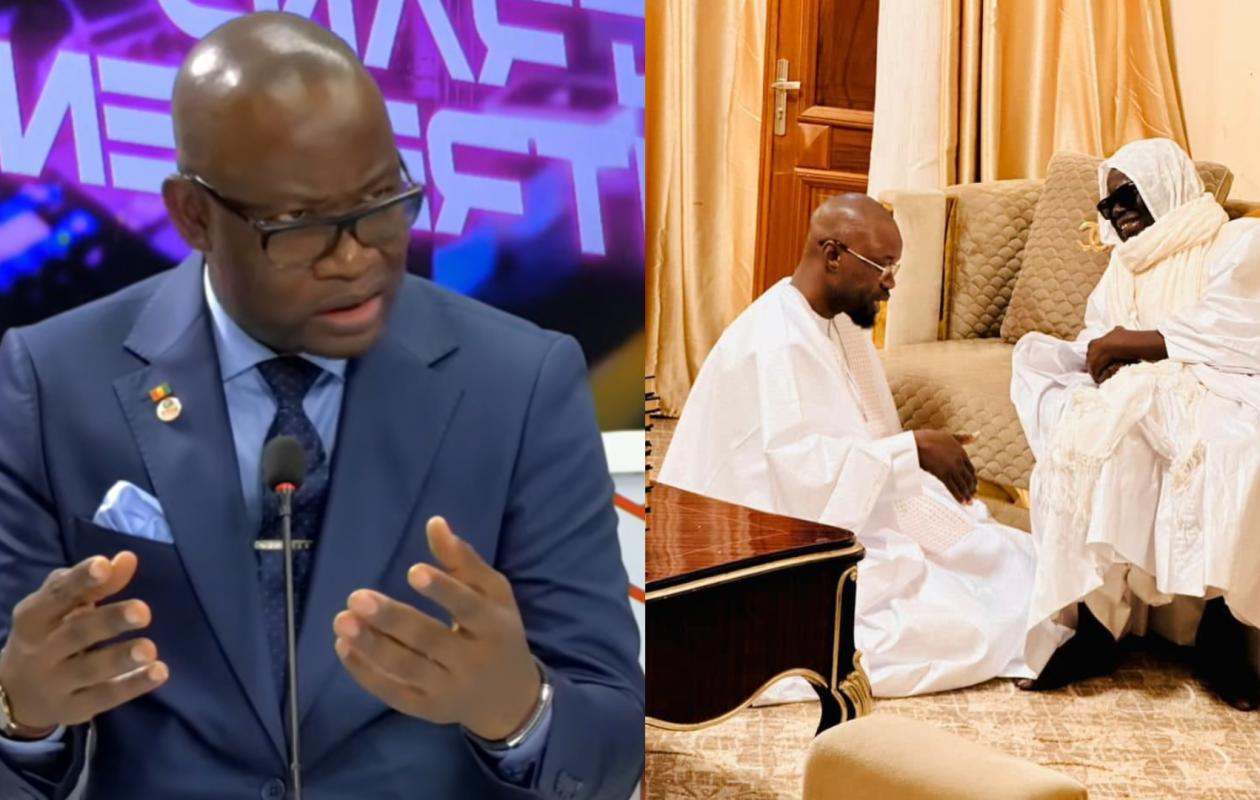
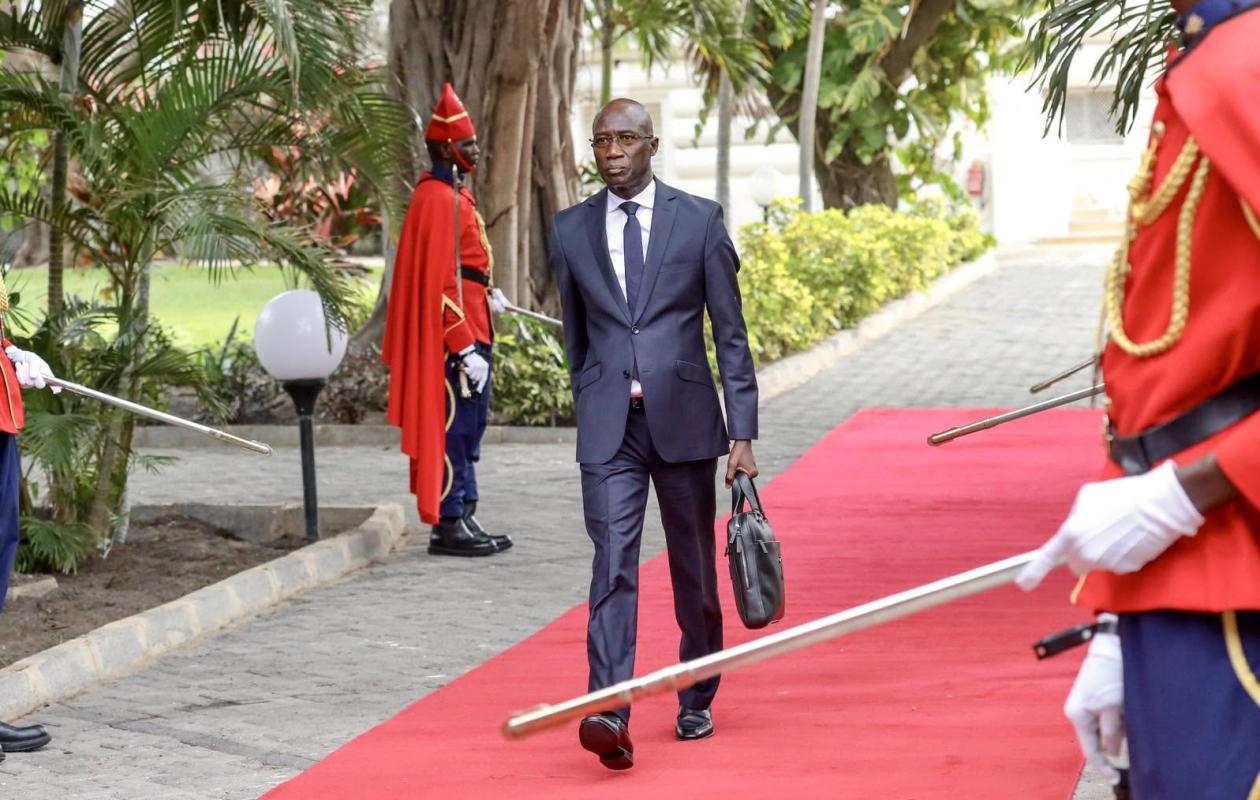
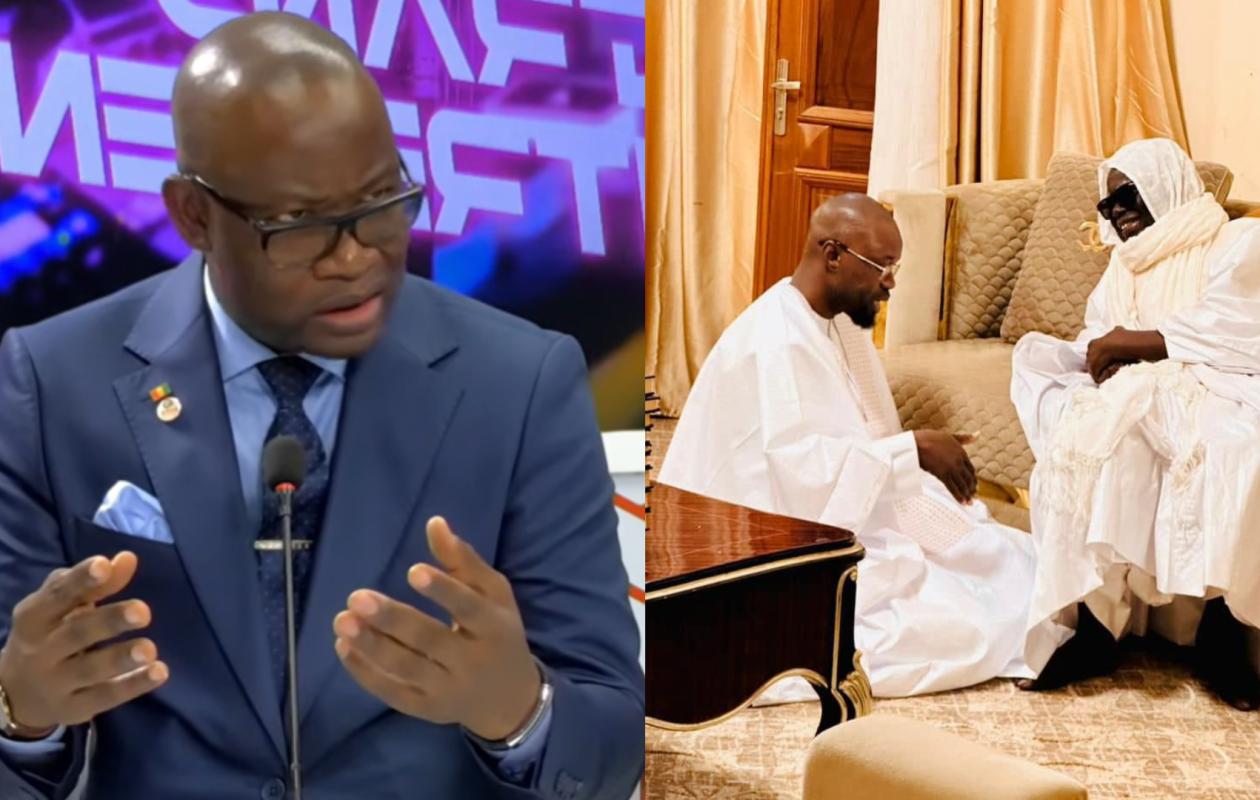
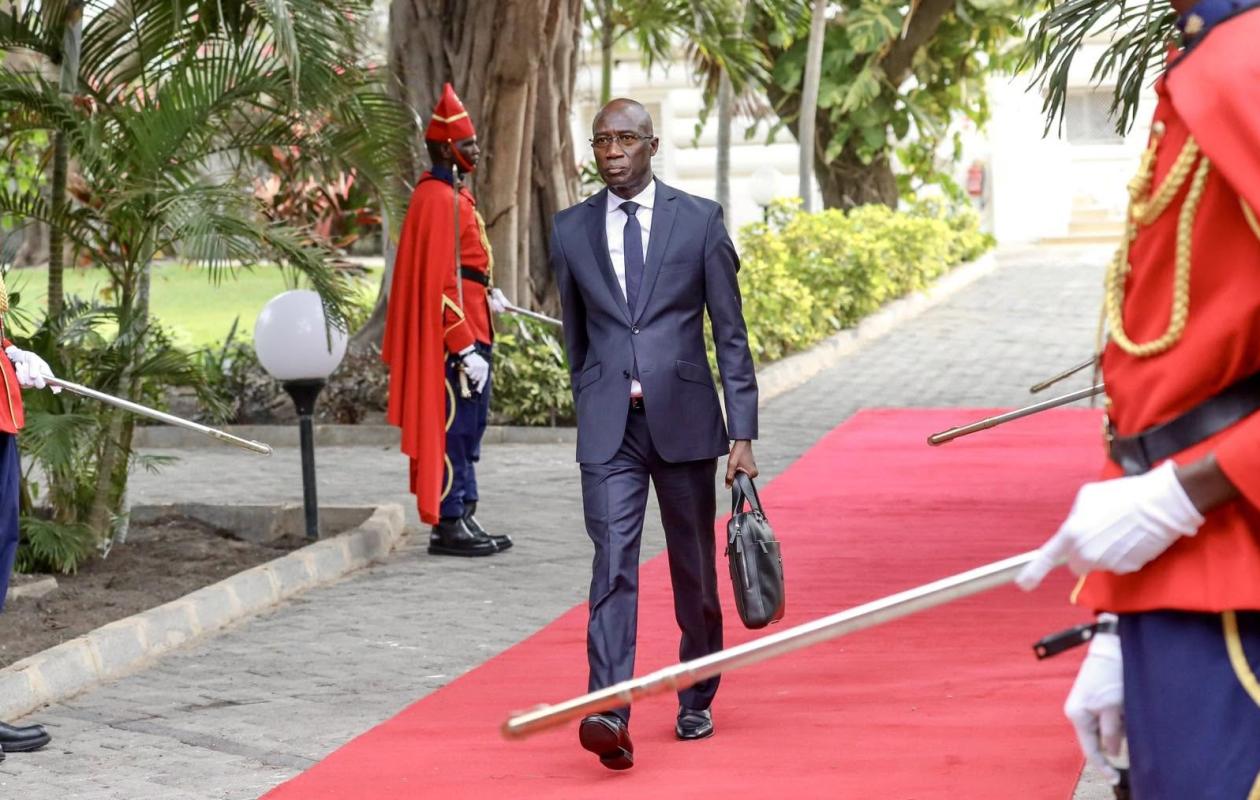
In the previous government led by Ousmane Sonko, these were two distinct departments. However, under Al Aminou Lô, the Ministry of Finance and Budget and the Ministry of Economy, Planning, and Cooperation have been merged into a single large department headed by Cheikh Diba. Under his authority, two "delegate" ministers will serve: one in charge of the Budget (Bassirou Sarr), and the other (Allé Nar Diop) in charge of Economy, Planning, and Cooperation. This is an unprecedented arrangement under the current regime. What does such a reorganization truly signify, at a time when Senegal is engaged in crucial discussions with the IMF and when the specter of debt restructuring looms? Economist and statistician Babacar Gaye provides crucial insights in this interview with Seneweb.
What is your initial assessment of this reorganization?
I don't see it as a mere reshuffle, but as a complete overhaul of economic decision-making. Until now, three functions were legally coordinated but institutionally distinct: budgetary standards, development strategy, and external financial relations. The decree places them under a single authority. This isn't a minor organizational detail; it's a fundamental shift in governance.
What could be the objectives?
Three objectives seem clear to me:
First, unity of command : putting an end to the cacophony that has often muddled Senegal's message to the IMF, markets, and donors. When dealing with partners, speaking with one voice is better than several valid but discordant voices.
Next, strategic coherence : bringing together long-term planning (the Senegal 2050 vision) and short-term budgetary constraints, which had been kept separate. You can't plan development without managing the finances, nor manage the finances without a clear direction.
Finally, the ability to negotiate : by concentrating relations with donors and conducting negotiations with international financial institutions, we have a single, credible negotiator capable of committing the State.
The downside, which I must point out in all honesty, is that a super-ministry also concentrates risk. It represents a single point of failure and a considerable burden. The two junior ministers are precisely there to absorb this operational risk.
In short: this is not a reshuffle, it is a recentralization of economic decision-making.
Is Sheikh Diba, today, at the head of a super-ministry?
Without ambiguity, yes. But the word needs to be defined, otherwise it's meaningless. A super-ministry isn't about a large budget; it's about bringing together, under one roof, the three levers of economic sovereignty: regulations (finance and budget), strategy (economy and planning), and external relations (cooperation, donors, negotiations with international financial institutions).
Bringing these three levers together makes this ministry the true center of gravity of the government for everything related to public funds and their allocation. This brings us closer to the model of large French ministries of the Economy and Finance, or the very powerful finance ministries seen in countries with development programs.
The two junior ministers do not dilute this power, they decentralize it: Diba sets the direction, they execute. He is the conductor; they hold the music stands.
True power lies not in the size of the perimeter. It lies in the fact that no major economic decision can now be made without going through it.
Should this system free him up a bit more and allow him to be more involved in strategy and the strategic search for resources?
That is precisely the function of the two delegates, and that is where the system is well thought out. By delegating day-to-day budget execution and planning coordination, the minister is freed from routine management to focus on high-level work: strategic decision-making, resource mobilization, and negotiation.
The phrase "strategic resource mobilization" is crucial here. In a context where access to concessional financing is partially lost and the Eurobond market is closed, mobilizing resources is no longer a routine treasury operation: it's an art. This requires active liability management (restructuring, buybacks, market operations), new instruments (sukuk, diaspora bonds, partnerships), and the optimization of internal revenue. It demands a strategist, not just an accountant.
The condition for success, I state clearly, is that delegation must be genuine. If the minister allows himself to be bogged down in micromanagement, the structure fails and the super-ministry becomes a bottleneck.
The system shifts the minister's role from that of state accountant to that of resource strategist. This is precisely what the current situation demands.
Is this a mechanism that could have been put in place to prepare for possible negotiations on a potential reprofiling or restructuring of the debt, particularly with the IMF?
Yes, it's a negotiating tool; that's its very purpose. We don't centralize donor relations and negotiations with international financial institutions under a single authority to manage routine matters. We do it to sit down at a difficult table with an interlocutor capable of committing the state.
But " negotiating apparatus " does not mean " intention to restructure ." And we must distinguish between three things that are too often confused:
However, recent signs clearly point towards the first two, not the third. The early repayments made just before the mission, and the "alternative to restructuring" that the President reportedly presented to the IMF director, are gestures from countries seeking to avoid formal restructuring, reassure markets, buy credibility, and negotiate a program and active liability management.
For my part, this super-ministry is designed to negotiate from a position of strength, and to keep restructuring as an option, not a program. It's an apparatus of optionality.
This machine wasn't built for nothing. But its primary purpose is to negotiate and keep the restructuring up its sleeve, without putting it on the agenda.
Could the State, in this post-Sonko era, be tempted to embark on the path of restructuring?
Let me correct the premise right away, because it dictates the entire answer: there is, strictly speaking, no "post-Sonko era". Sonko did not leave power, he became president of the National Assembly, with a comfortable majority.
Why is this crucial? Because any restructuring, especially one affecting domestic debt, requires parliamentary approval: the budget law, borrowing authorizations, and sometimes the processing of securities held by banks and the IPRES (Senegalese Social Security Institute). The obstacle to restructuring has therefore not disappeared with Sonko's departure from the Prime Minister's office. It has simply shifted from the executive branch to the legislative branch. And Sonko has already warned that institutional instability would jeopardize any agreement with the IMF: this is a clear assertion of leverage.
This moment should therefore be interpreted as a tension between two forces. On one side, the numbers point towards restructuring: 132% of GDP, gross financing needs approaching 26% of GDP in 2026, debt servicing around 5.5 trillion FCFA, and growth slowing to 2.2% to 2.5%. On the other side, politics resists, with the Speaker of the National Assembly making the rejection of restructuring a central tenet, and the executive branch sending numerous signals of good faith to avoid it.
The technocratic temptation exists, on the part of Diba and the President, perhaps because sustainability demands it. But parliamentary constraints hold it back. The most likely path, therefore, is one that avoids an explosive parliamentary battle: an IMF program coupled with a reshaping of the system, avoiding both the word and the act of formal restructuring.
The temptation is arithmetic; the resistance is political and now parliamentary. The outcome will depend on who, Diba or Sonko, imposes their interpretation of the risk.
What impacts could this restructuring have on the population, the economy, and our finances?
It all depends on when and how. An early, orderly, and negotiated restructuring (like that of Côte d'Ivoire in 2011, or Ghana's early implementation) provides budgetary relief without destroying credibility. A late and imposed restructuring produces the "Zambia effect": four years of negotiations, a default, exclusion from markets, and a collapse of confidence. Senegal must aim for the former and avoid the latter.
Before detailing the channels, there's a point most analyses overlook that changes everything for us: Senegal is in the CFA franc zone, with a fixed exchange rate with the euro. Therefore, we don't have the most brutal channel seen in Ghana or Zambia—the devaluation and imported inflation that devastated purchasing power. Currency will not be the channel for adjustment. Adjustment will come through the budget and the real economy. This is a major protection for households, and an argument that must be emphasized.
The actual impact channels, in order of severity:
The banking system is the number one risk. If the restructuring affects domestic debt, the government bonds held in large quantities by Senegalese and regional banks would suffer a write-down. This is a systemic risk; it was the banks that were wiped out in Ghana. This must be avoided at all costs, or addressed with a mechanism to protect bank capital.
Savings and pensions. A discount on securities held by IPRES, insurance policies, and long-term savings accounts represents a direct loss for retirees and savers. The social cost is measured there, not just in the Treasury's accounts.
Market access and credit ratings. Restructuring leads to selective default and exclusion from international markets for two to three years, followed by a return to high interest rates. Zambia has still not regained normal access.
The WAEMU regional market. Senegal is the Union's second-largest economy. A restructuring would destabilize the regional bond market and expose the BCEAO to a risk of contagion. This is not a problem confined to Senegal.
What about the potentially social consequences, particularly on the population?
In the short term, the austerity measures that accompany any such program (the end of fuel subsidies, which already exceed the budget by nearly $2 billion, and tax increases) weigh on purchasing power. However, a successful restructuring frees up the budgetary space currently absorbed by debt servicing (5.5 trillion CFA francs) and allows it to be redeployed towards health, education, and investment. This is the long-term benefit, provided the operation is well-designed.
The real question is not simply " should we restructure ?" but " who will pay "—external creditors, local banks, savers, or the taxpayer? A well-designed restructuring protects the citizen; a forced restructuring sacrifices them.
Interview by Youssouf SANE

















Commentaires (19)
Participer à la Discussion
Règles de la communauté
💡 Astuce : Utilisez des emojis depuis votre téléphone ou le module emoji ci-dessous. Cliquez sur GIF pour ajouter un GIF animé. Collez un lien X/Twitter, TikTok ou Instagram pour l'afficher automatiquement.
Se connecter
Commentez avec votre profil, votre photo, et soyez averti des réponses.