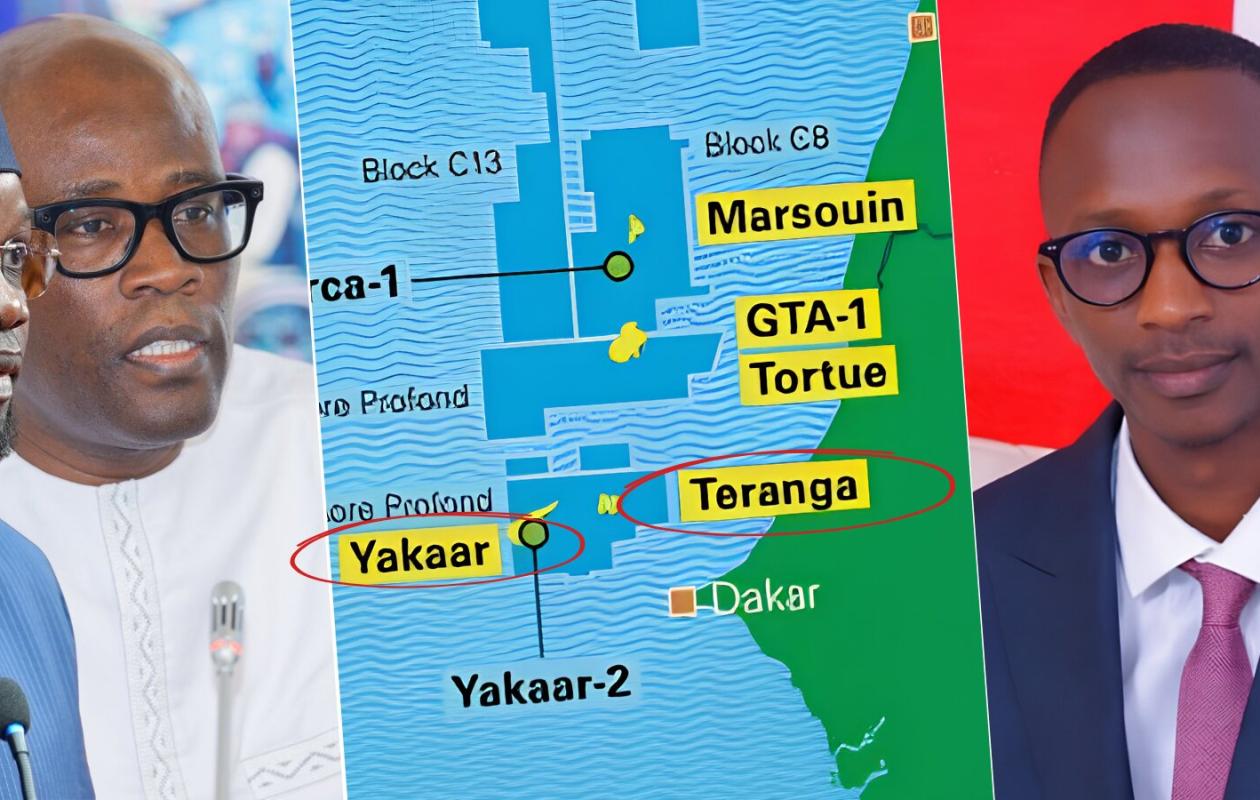
Yakaar Teranga, ce qui attend l’Etat et Petrosen, les opportunités qui s’annoncent : Les éclairages essentiels de Malick Dramé (Expert pétrolier)
The Prime Minister's announcement had polarized the debate. On Thursday, Ousmane Sonko announced the signing, without any financial compensation for Senegal, of a joint withdrawal agreement between Kosmos Energy and Petrosen from the Yakaar Teranga oil field. The State will thus grant an exclusive license to Petrosen, which will be in charge. But what awaits the State and Petrosen in the process of developing this asset? Are they ready to begin the development and production phase? What opportunities will be available to the country's businesses and households? Malick Dramé, an oil expert and consultant, provides important insights in this interview with Seneweb.
What is your comment on Prime Minister Ousmane Sonko's announcement regarding the Yakaar-Teranga deposit?
This announcement, attributed to Prime Minister Ousmane Sonko, marks a major symbolic and strategic turning point for the management of natural resources in Senegal. The most striking aspect is the assertion of regained sovereignty. By announcing the withdrawal of Kosmos Energy in favor of PETROSEN, the government signals its intention to no longer be a mere spectator or a minority partner, but the primary driver of its gas resources. It represents a shift from a rent-seeking economy—that is, collecting taxes and royalties—to a direct exploitation economy.
The text uses strong terms such as opaque conditions, plundered assets, and truth. This underscores two objectives:
By delegitimizing the previous era, linking this bloc to the Frank Timis affair and the Macky Sall regime, Ousmane Sonko places this victory within a logic of accountability.
Fulfilling an election promise and renegotiating oil and mining contracts was one of the pillars of the ruling coalition's program. This announcement serves as proof of the project's concrete implementation.
While the lack of financial compensation for Kosmos' withdrawal is presented as a diplomatic and economic victory, it raises logistical questions for the future.
What logistical questions arise?
Indeed, the development of Yakaar-Teranga requires billions of dollars. PETROSEN will need to find technical partners or massive financing to convert this gas into electricity or export revenue. Operating a deep offshore block is a technological challenge. Senegal will have to prove that it can manage this complexity without the direct support of the established oil majors during this critical phase.
The key takeaway is that this is a message of national pride and a strong signal to international investors: Senegal now intends to dictate its terms. For government supporters, it's the culmination of a long patriotic struggle. For economic observers, it's the beginning of a full-scale test of the Senegalese state's capacity to become a true oil and gas operator.
Now that the block will exclusively return to Petrosen, what should the next steps be?
Before any work begins, the State must secure the new management framework. As mentioned in the announcement, the first administrative step is to ratify Kosmos' withdrawal and formally grant the new license to PETROSEN, which will then have to revise the initial plans. The current government's objective is clear: to prioritize "Gas-to-Power" to reduce energy costs in Senegal before considering exports.
It must also be admitted that PETROSEN has expertise, but deep offshore exploitation requires massive technologies and capital that few national companies can bear alone.
It's also important to know that the Yakaar-Teranga development is estimated to cost several billion dollars. PETROSEN will have to either raise funds on international markets or forge alliances with development banks or private partners.
Although PETROSEN currently owns 100% of the shares, it could choose to sell a portion, for example 40% or 60%, to a new technical operator capable of providing drilling platforms and technological know-how.
What will the next steps be?
Once the financing is secured, the technical phase begins with FEED (Front-End Engineering Design) studies. This involves finalizing the detailed engineering of the facilities, i.e. the types of wells, subsea pipelines and onshore receiving terminals.
Next comes the Final Investment Decision (FID), which is the moment of truth where investors definitively validate the budget and launch orders for equipment such as FPSOs and pipelines.
For gas to truly benefit the Senegalese people, onshore infrastructure is essential. Construction of the pipeline network to transport gas from the coastal terminal to SENELEC power plants, such as those in Saint-Louis and Dakar, must be accelerated. In line with the government's vision, PETROSEN must ensure that Senegalese companies secure a significant share of subcontracting deals during this construction phase.
Finally, there's development and production drilling, the final phase before the first cubic meter of gas is extracted. Several wells will need to be drilled to extract the gas from the reservoir. The goal is to reach first commercial production, initially expected around 2027-2028, although a change of operator could affect this timeline.
The national company is transitioning from a passive partner, often holding a 10% stake in the majors, to a driving force. Yakaar-Teranga's success will depend on its ability to reassure financial markets while maintaining the sovereignty demanded by the new authorities.
Many are wondering if Senegal has the capacity to develop and exploit the Yakaar Teranga oil field. In your opinion, is Petrosen ready to exploit this deposit?
Frankly, from a technical and financial standpoint, PETROSEN is not yet ready to develop an ultra-deep offshore field on its own. The Yakaar-Teranga development requires colossal investments. Neither the Senegalese state budget nor PETROSEN's own funds are sufficient to cover such expenses without massive debt financing or partnerships.
While PETROSEN boasts brilliant engineers, the company has never operated a complex deepwater field. Until now, it has relied on the technological expertise of major players like BP and Kosmos. However, being ready doesn't necessarily mean doing everything alone. Being ready means knowing how to manage the project.
So how can Petrosen meet this challenge?
For PETROSEN to successfully navigate this historic transition, a three-pillar strategy is necessary:
- Owning 100% of the shares is an excellent trading position, but PETROSEN will probably not keep them all.
Selling off a portion of the shares, for example 40 to 50%, to a new technical partner in exchange for financing the development work. This allows for sharing the financial risk while retaining majority decision-making power.
- It will be necessary to attract the Senegalese diaspora's expertise and recruit international consultants to train local teams. Service contracts should be used to enforce the transfer of technological skills to PETROSEN's management.
- The State could structure a specific fundraising on international markets, guaranteed by future gas revenues, to allow PETROSEN to finance its share of investment.
In the event that its operation would be used to supply the local market, SAR, Senelec and Co., what would be the economic impacts?
If the gas from Yakaar-Teranga is primarily injected into the local economy, Senelec, SAR, and industries, the impacts would be transformative for Senegal. Currently, Senegal generates a large portion of its electricity from imported, very expensive liquid fuels. Switching to gas could reduce the cost of producing a kilowatt-hour by 30% to 50%. This would free up purchasing power for households and make Senegalese businesses more competitive.
The African Refining Company could use the gas for its own energy needs or to process certain derivatives. This would improve the refinery's profitability and reduce its dependence on imports of finished products.
Gas is a raw material for the petrochemical industry and a potential source of urea fertilizers for local production. For an agricultural country like Senegal, it guarantees greater food sovereignty and lower costs for farmers.
By replacing heavy fuel oil imports with local gas, Senegal reduces its foreign currency outflows. This will lead to currency stabilization and an improved trade balance.
The challenge is less technical than strategic. Success will not depend on PETROSEN's ability to weld the pipelines itself, but on its ability to choose the right partners while remaining in control of the political and economic game.
Interview by Youssouf SANE



















Commentaires (26)
Participer à la Discussion
Règles de la communauté
💡 Astuce : Utilisez des emojis depuis votre téléphone ou le module emoji ci-dessous. Cliquez sur GIF pour ajouter un GIF animé. Collez un lien X/Twitter, TikTok ou Instagram pour l'afficher automatiquement.
Se connecter
Commentez avec votre profil, votre photo, et soyez averti des réponses.