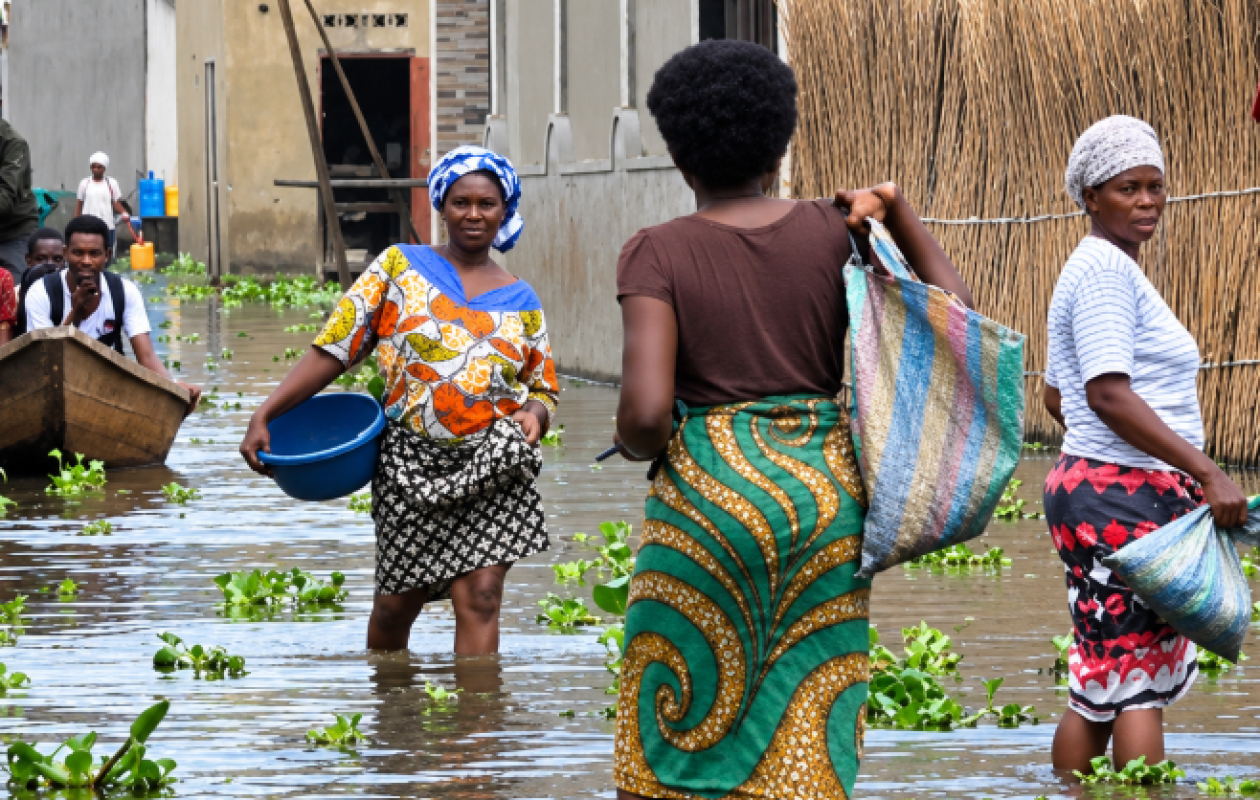
Changement climatique et droits des femmes : Quand la crise environnementale aggrave les violences et fragilise la santé maternelle
In Senegal, as globally, climate change is dramatically exacerbating gender inequalities, exposing adolescent girls to increased risks of violence and severe reproductive health deprivation. At the continental summit on women's and girls' resilience held in Dakar, Plan International's Country Director in Senegal, Salimata Bocoum, and Diouma Diouf, representing the office of First Lady Marie Khone Faye, sounded the alarm. Drawing on revealing data from the 2026 report, "Changing Our Futures," they advocated for a comprehensive response that integrates protection, medical monitoring, and the active engagement of boys as strategic allies.
Climate crises do not simply result in material destruction or economic losses; they significantly exacerbate pre-existing inequalities and expose girls to greater vulnerability to gender-based violence (GBV). This is one of the key findings highlighted by Salimata Bocoum, Country Director for Plan International in Senegal, at the continental summit dedicated to the resilience of women and girls. According to data from the organization's 2026 report, "Changing Our Futures," 28% of girls surveyed in Senegal reported experiencing an increase in gender-based violence in their communities, a proportion virtually identical to the global average.
Conducted with 5,000 girls and young women aged 15 to 24 across five countries, including Senegal, this in-depth study examines the impact of environmental shocks on fundamental rights, reproductive health and the living conditions of young women.
For Salimata Bocoum, these figures cannot remain mere statistics and must translate into concrete administrative and political decisions. She therefore advocates for integrated strategies combining education, health, protection, and economic empowerment—four levers deemed inseparable for building lasting resilience among adolescent girls. Present in Senegal since 1982 and operating in all 14 regions of the country, the NGO Plan International states that it has reached more than 14 million people over the past ten years and intends to continue its efforts alongside public institutions, civil society, and the girls themselves.
Floods and pregnancy monitoring: Daily health insecurity
Behind the abstract figures lie daily human suffering. Salimata Bocoum illustrated the impact of climate change on maternal health through the poignant testimony of a study participant. This young woman recounted how floods had inundated her home, forcing her to carry basins of sewage on her head every day, even though she no longer had adequate space for her personal needs and struggled to access prenatal care. She directly attributes the serious complications she experienced during her pregnancy to these degraded conditions.
Data compiled by Plan International confirms the widespread nature of these vulnerabilities: in Senegal, 88% of girls surveyed believe that climate change is putting considerable pressure on their survival, health, and the stability of their households (90% globally). Furthermore, access to reproductive health services is severely hampered: 68% of Senegalese participants reported increasing difficulties within their communities, compared to 76% internationally. For the NGO's country director, the conclusion is unequivocal: climate change is not gender-neutral and demands the urgent integration of reproductive health into crisis management.
Involving boys as allies to eradicate violence
Faced with these growing threats, the response cannot rely solely on the victims. Boys have a crucial role to play in preventing violence against girls and promoting adolescent and youth reproductive health (ARH). This is the powerful message championed by Diouma Diouf, a member of First Lady Marie Khone Faye's cabinet and a trainer in this national program.
According to her, the training sessions help boys understand that these issues extend beyond the strictly medical or feminine sphere. They are thus encouraged to respect their peers, reject irresponsible behavior, and become ambassadors for prevention. For adolescent girls, these programs strengthen self-esteem, bodily autonomy, and the ability to report violence they experience. For Diouma Diouf, education and awareness remain essential pillars for building protective and inclusive communities.





















Commentaires (0)
Participer à la Discussion
Règles de la communauté
💡 Astuce : Utilisez des emojis depuis votre téléphone ou le module emoji ci-dessous. Cliquez sur GIF pour ajouter un GIF animé. Collez un lien X/Twitter, TikTok ou Instagram pour l'afficher automatiquement.
Se connecter
Commentez avec votre profil, votre photo, et soyez averti des réponses.