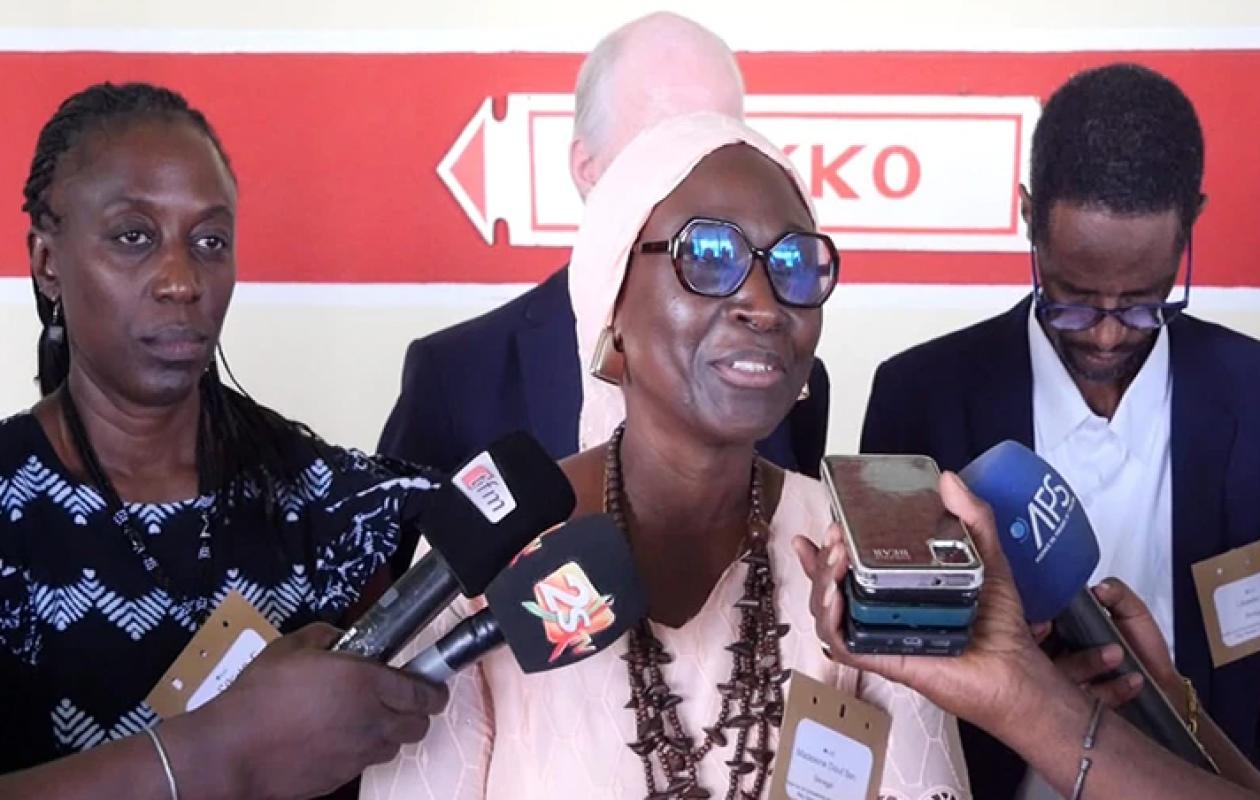
Transparence de la finance climat : Cinq pays africains réunis à Dakar pour certifier la traçabilité des fonds
Knowing how many billions are actually being mobilized to combat climate change, identifying where this money is going, and measuring the concrete results produced on the ground is now a major strategic challenge for the continent. To address this issue, the Senegalese Ministry of the Environment and Ecological Transition, through its Directorate for Climate Change, Ecological Transition, and Green Finance (DCCTEFV), organized a peer-to-peer exchange workshop focused on climate finance transparency. Under the theme "Implementing the ICAT Guide: Experiences, Best Practices, and Lessons Learned from Francophone Countries," this workshop brought together representatives from Senegal, Côte d'Ivoire, Cameroon, Niger, and the Comoros, under the auspices of the Initiative for Climate Action Transparency (ICAT).
The central objective of this meeting, bringing together officials from the Ministries of Environment and Finance, is to share national experiences and develop operational solutions to strengthen the monitoring, traceability, and transparency of financial flows. Indeed, the fight against climate change is no longer limited to the simple search for financial resources; it now requires tracking every investment and assessing its real impact on the daily lives of vulnerable populations.
Go beyond the billion-dollar announcements and certify each "climate franc"
Representing ICAT, Henning Wuester emphasized the urgent need to move beyond mere financial announcements and develop credible national strategies. He argued that simply presenting Nationally Determined Contributions (NDCs) with quantified needs in the billions of dollars is insufficient without monitoring mechanisms. Transparency must enable states to accurately assess their needs, map available funding, and address gaps, while also guiding both public and private investment. "Transparency is therefore not an end in itself," he reiterated, stressing that data must primarily inform policy decisions and strategic planning.
On behalf of the Senegalese government, Fatou Sagna Sow, representing the Minister of the Environment and Ecological Transition, highlighted the recurring paradox faced by African countries: the slow implementation of international commitments in the face of national monitoring mechanisms that are still being strengthened. For Senegal, she emphasized, climate finance remains an absolute priority.
“Clarity about what we receive, what we need, and how we spend each climate franc has become the cornerstone of our international credibility,” stated Fatou Sagna Sow. She strongly advocated for a more integrated approach to climate issues, calling for the direct involvement of finance ministries to track public spending, optimize budget allocations, and integrate the climate dimension into national economic models. She also highlighted Senegal’s progress, notably the development of a green taxonomy and the implementation of a consolidated data collection system.
Sustaining national tools in preparation for COP31
For Libass Ba, president of the National Climate Change Committee (COMNAC), the main challenge lies in the sustainable institutionalization of transparency tools. He warned that the mechanisms developed with the support of technical and financial partners must not disappear at the end of the projects, but must be permanently integrated into the core functions of public administrations.
This requirement is particularly crucial for Senegal, which is committed to implementing its NDC 3.0 and consolidating its Enhanced Transparency Framework (CTR).
At the conclusion of the work, the recommendations will focus on breaking down silos in financial information between ministerial departments and ensuring the sustainability of technical mechanisms. The conclusions drawn from this meeting in Dakar will directly inform a high-level parallel event scheduled for November 13th as part of COP31.




















Commentaires (6)
Un truc me traverse la tête. Bienvenus au pays de la soutoura aussi.
Soutoura et traçabilité sur la balance. Tann sa boula nekh !!!
Une chose est sûre ils ont bien choisi leur destination.
Deggatil li rek !!!
Tout l’argent détourné des fonds publics par les politiques et l’évasion fiscale des grandes entreprises qui exploitent les ressources naturelles du continent peuvent résoudre le problème lié aux réchauffement climatiques dans le continent africain !
Face aux immenses besoins liés aux déficits des Etats et aux investissements dans l’intelligence artificielle, Larry Fink, à la tête du premier gestionnaire d’actifs mondial, craint une « pénurie de capitaux », relève Isabelle Chaperon, chroniqueuse au service Economie du « Monde ».
Participer à la Discussion
Règles de la communauté
💡 Astuce : Utilisez des emojis depuis votre téléphone ou le module emoji ci-dessous. Cliquez sur GIF pour ajouter un GIF animé. Collez un lien X/Twitter, TikTok ou Instagram pour l'afficher automatiquement.
Se connecter
Commentez avec votre profil, votre photo, et soyez averti des réponses.