Arabie Saoudite : Washington conditionne l'accord sur le nucléaire avec Ryad à une reconnaissance d'Israël
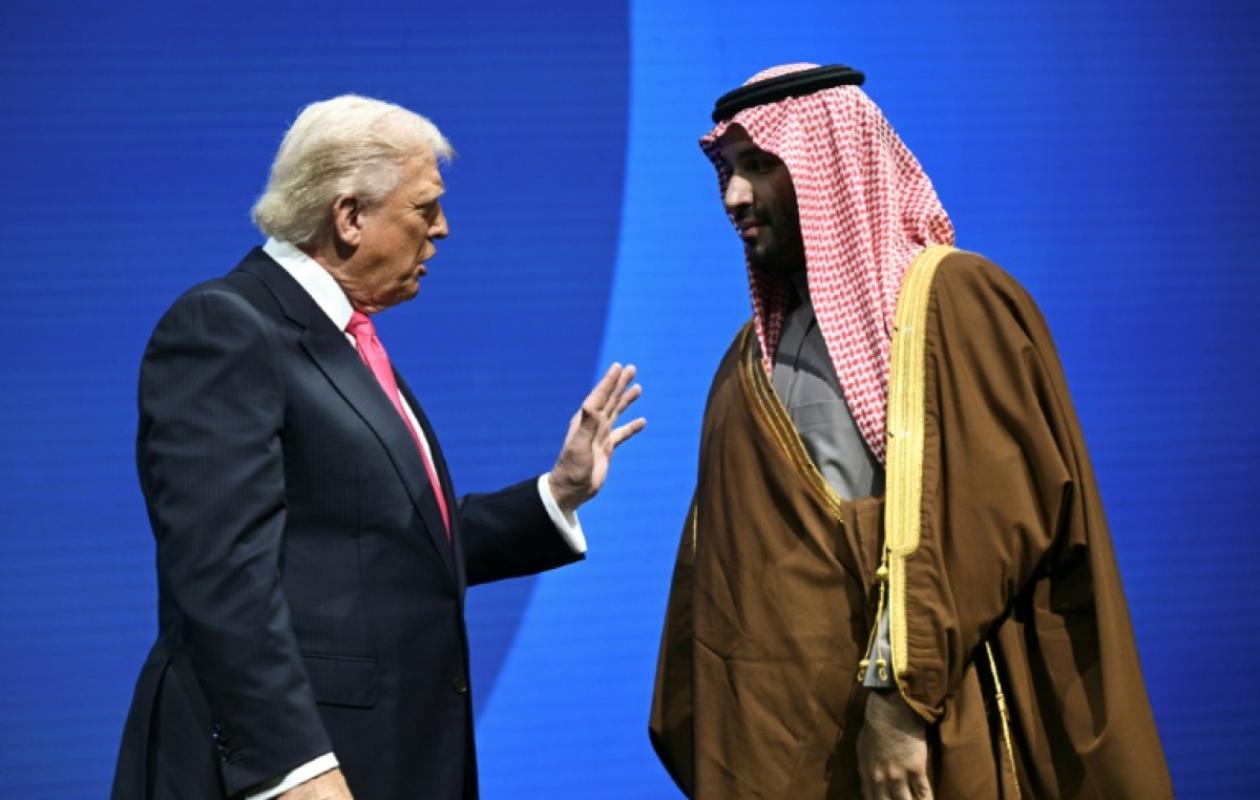
US President Donald Trump on Thursday made the agreement on a civilian nuclear program with Riyadh conditional on the normalization of relations between Saudi Arabia and Israel.
The agreement was announced overnight Wednesday to Thursday, amid renewed conflict between the United States and Iran, triggered in late February by Israeli-American attacks on Tehran in the name of preventing the Islamic Republic from acquiring nuclear weapons.
If it were finally sealed, the agreement could generate billions of dollars for American companies and would constitute a victory for Riyadh against its long-time Iranian rival.
But he has drawn a barrage of criticism over the risk of launching the region into a nuclear arms race.
In recent years, the United States had sought to link any agreement with Riyadh concerning nuclear power and a defense pact to the normalization of the kingdom's relations with Israel, a condition reaffirmed by the American president on Thursday.
The agreement "will be approved, but it is entirely conditional on Saudi Arabia's adherence to the (...) Abraham Accords," he wrote on his Truth Social network.
Israel, which had not yet reacted to the announcement of the agreement, deemed recognition by Riyadh a "historic leap" for regional peace. Saudi Arabia has not yet issued an official response.
Concluded in 2020 under the auspices of Donald Trump, the Abraham Accords led to the normalization of relations between Israel and three Arab countries: the United Arab Emirates, Bahrain and Morocco.
The text of the agreement announced overnight and signed by US Energy Secretary Chris Wright and his Saudi counterpart, Prince Abdulaziz bin Salman, still needs to be submitted to the Republican-majority US Congress.
It paves the way for the construction of nuclear power plants in Saudi Arabia, which currently relies on gas and oil power plants for its electricity.
From the moment it was announced, criticism focused on the prospect of Riyadh enriching uranium. "There will be no enrichment," President Trump asserted.
The Wall Street Journal had previously claimed that a clause provided for the construction of a uranium enrichment complex in the kingdom, if a joint study determined that it was justified.
When contacted by AFP on this matter, the US Department of Energy declined to comment.
On Wednesday, the minister had only stated that the agreement laid "the legal foundations for a multi-decade partnership" and respected "the highest standards in nuclear safety and non-proliferation".
Among the critical voices that have been raised, Democratic Senator Chris Murphy pointed to the risk of "triggering a nuclear race in the region, further deterring Iran from limiting its own nuclear program."
Senator Bernie Sanders, a leading figure of the American left, denounced the agreement as "absurd": while Donald Trump justifies "his war against Iran as a way to prevent an authoritarian country from enriching nuclear fuel", he "lets his best friends in Saudi Arabia - one of the most brutal dictatorships in the world - do exactly that," he wrote on X.
"Washington is right to strengthen its relations with Riyadh, but this must not be done at the expense of the effectiveness of its standards on the non-proliferation of nuclear weapons," Matthew Kroenig, a researcher at the Atlantic Council, had pointed out before the official American announcement, for whom it would be "a mistake to allow enrichment in Saudi Arabia."
US Secretary of State Marco Rubio argued on Thursday that Riyadh wanted a "peaceful and civilian" nuclear program and assured that the agreement included "guarantees to ensure that it cannot be transformed into a weapons program."
Like Tehran, which denies any intention of acquiring nuclear weapons but invokes its "right" to civilian nuclear power, Riyadh has long claimed to be developing this technology for civilian purposes.
For Allison Minor, a Middle East specialist at the Atlantic Council, Washington is sending a "powerful message" to Tehran with this announcement, while rewarding a major ally that has become wary of American security guarantees.
For Jennifer T. Gordon, director of the Atlantic Council's Nuclear Energy Policy Initiative, the agreement is "a victory for the United States against Russia and China".
Saudi Arabia "has made it clear that it will purchase nuclear energy-related technologies (...) The only question was whether the kingdom would choose (...) the United States and its allies, or turn to Russia or China," she said.
AFP


















Commentaires (5)
Participer à la Discussion
Règles de la communauté
💡 Astuce : Utilisez des emojis depuis votre téléphone ou le module emoji ci-dessous. Cliquez sur GIF pour ajouter un GIF animé. Collez un lien X/Twitter, TikTok ou Instagram pour l'afficher automatiquement.
Se connecter
Commentez avec votre profil, votre photo, et soyez averti des réponses.