Crise migratoire à Ceuta : l'Espagne impose à son tour des contrôles aux frontières aux voyageurs venant d'Italie
These controls, put in place "in the face of the persistence of irregular migratory pressure" that Italy is facing, will begin Saturday at 0 a.m. (Friday 22 p.m. GMT) and will last until September 7, the Spanish Interior Ministry said.
Spain will introduce temporary border controls at its ports and airports for travelers arriving from Italy, in response to similar measures imposed by Rome following the massive influx of migrants into Ceuta, the Interior Ministry announced Friday. These controls, implemented "in response to the continued pressure of irregular migration" facing Italy, will begin Saturday at midnight (Friday 10 p.m. GMT) and will last until September 7, the ministry stated.
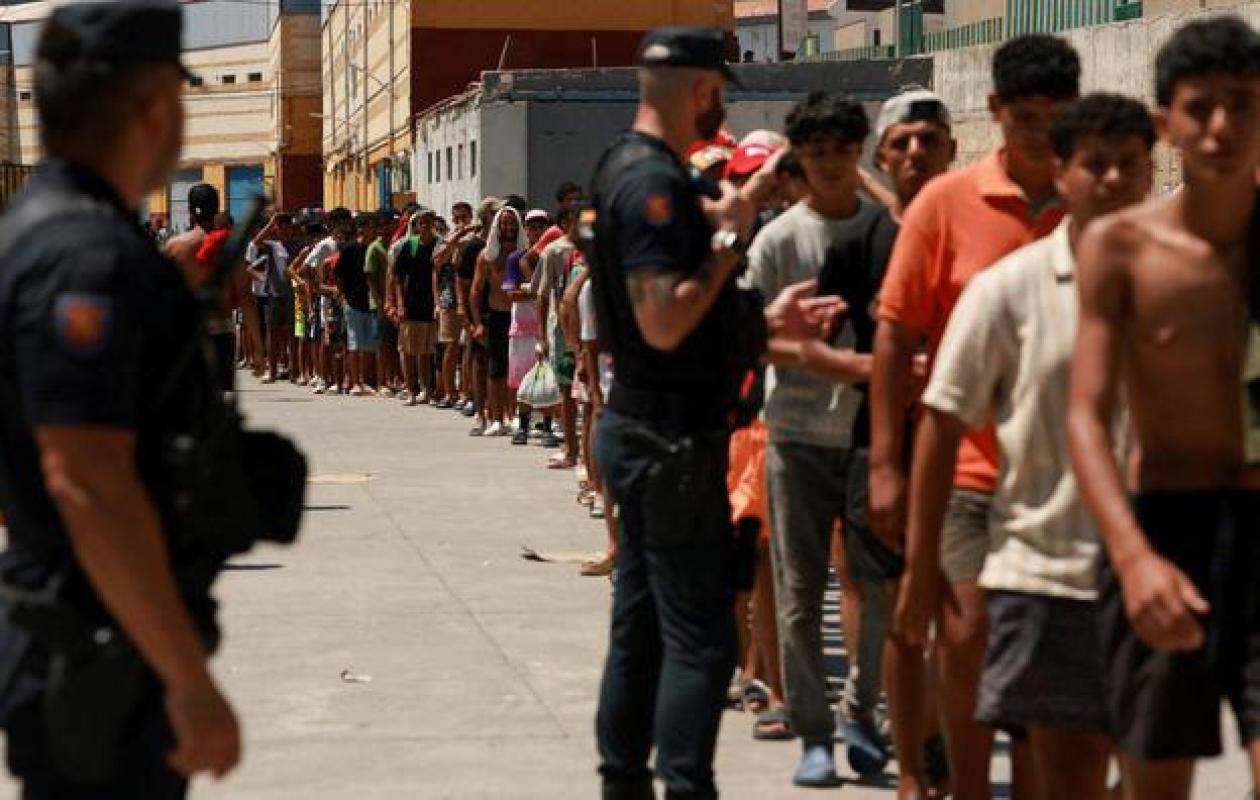
This rare spat between two EU and NATO allies comes after 72,000 migrants crossed the border from Morocco into the Spanish territory of Ceuta in North Africa last week, in an unprecedented movement. These scenes have been sharply criticized by other EU countries that advocate a hard line on irregular immigration and the protection of the bloc's external borders, including Italy's far-right Prime Minister Giorgia Meloni.
The Italian government asserted on Friday that it has "absolutely no intention of reversing its decision to suspend the application of the Schengen Agreement (on the free movement of persons) to third-country nationals arriving from Spain, at least until August 15." The Spanish government again condemned this Italian measure, describing it as "unfair, contrary to the interests of the EU, and discriminatory towards the Spanish population."
Internet rumors
According to local media, Spanish police are monitoring rumors circulating online and messages posted on social media regarding possible new migrant arrivals in Ceuta, the Spanish enclave on the African coast bordering Morocco. However, authorities have not explicitly stated that they expect a repeat of the influx seen last week.
Italy's suspension of the Schengen agreement with Spain, announced on July 31, is an "extraordinary measure" intended to "safeguard national security and prevent possible repercussions for our country," Ms. Meloni stated. "Only when we are certain that there will be no security or terrorism risks for Italy (...) will it be possible to review what has already been decided," according to her office, which nevertheless describes Spain as a "friendly country."
Giorgia Meloni is among the European leaders who called for Spain's suspension from the Schengen Area following the Ceuta crisis, although such a move is legally impossible. The Spanish government warned against "the creation of divisions and sterile conflicts driven by internal electoral motives" and stated that it had "confidence that pro-European sentiment, common sense, and good faith will prevail."
141 deaths according to the latest count
Of the 72,000 migrants who arrived in Ceuta, 70,000 have returned to Morocco, according to official Spanish figures. But those who remain—including hundreds of unaccompanied children—face disastrous living conditions, with very limited access to food, water, shelter, and sanitation.
Moroccan human rights organizations estimated on Friday that at least 141 people died last week trying to reach Ceuta, a toll that is likely to rise. Italy is also seeing the arrival of numerous migrants crossing the central Mediterranean from North Africa – the world's deadliest migration route, according to the International Organization for Migration.






















Commentaires (0)
Participer à la Discussion
Règles de la communauté
💡 Astuce : Utilisez des emojis depuis votre téléphone ou le module emoji ci-dessous. Cliquez sur GIF pour ajouter un GIF animé. Collez un lien X/Twitter, TikTok ou Instagram pour l'afficher automatiquement.
Se connecter
Commentez avec votre profil, votre photo, et soyez averti des réponses.