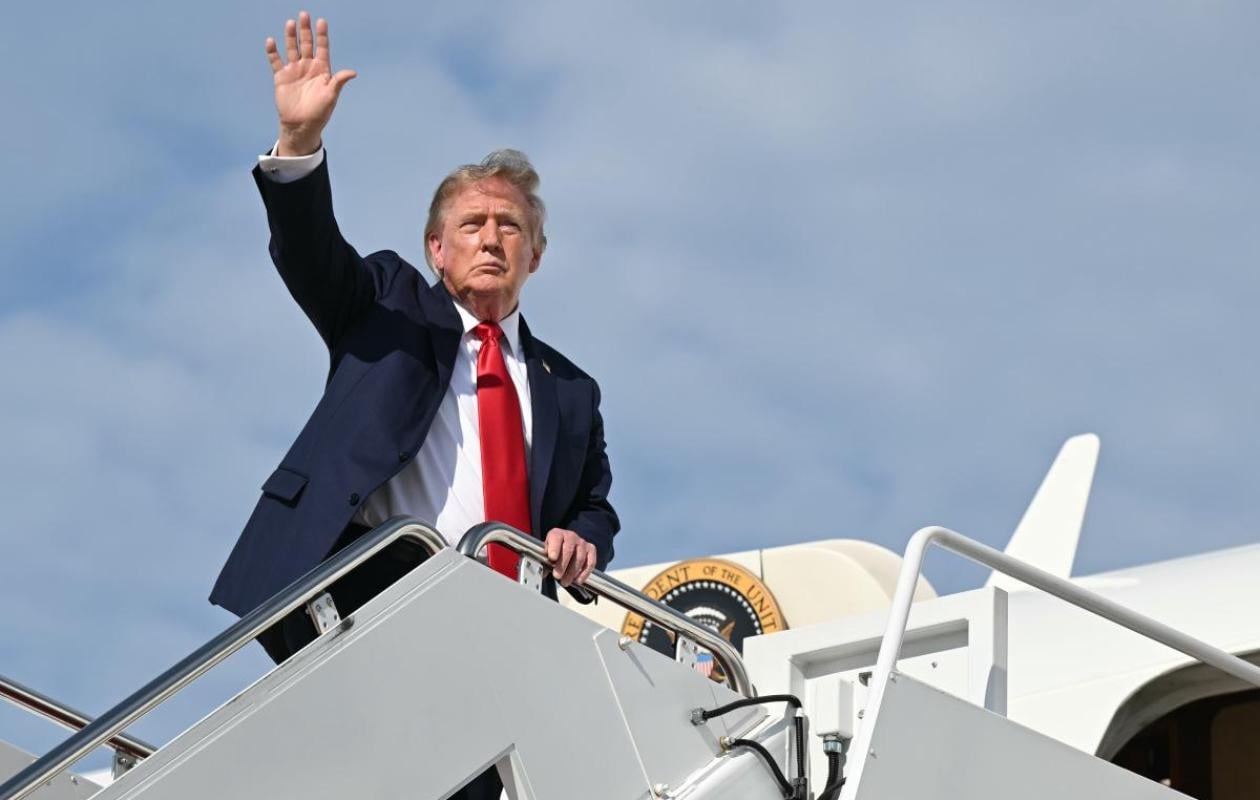
Les Etats-Unis visent "l'asphyxie économique" de l'Iran et menacent les alliés de Téhéran
The US government on Monday affirmed its intention to "cut off all economic resources" to Iran and issued a firm warning to countries that continue to support Tehran, which sees this as an "admission of defeat" by the United States.
At a press conference in Washington, Treasury Secretary Scott Bessent unveiled a new round of sanctions, targeting gold, technology, digital assets, aviation, and shipping.
"Iran faces a very clear choice, with only two possible paths: total isolation and a subsistence economy, or a return to normality with the opportunity to rejoin the global economy," warned Mr. Bessent.
But the warning is also addressed to the rest of the world since countries that do not participate in the American sanctions "will share in Iran's isolation," threatened the Treasury Secretary, considering in particular expelling recalcitrant countries "from the dollar system."
"We will hold everyone accountable. This marks the economic strangulation of this regime. No one should test our will" in this matter, added Scott Bessent, indirectly targeting China, Tehran's strategic partner.
"IRAN IS COMPLETELY COLLAPSING!!!" wrote Donald Trump on his Truth Social network, as diplomatic efforts to resolve the regional conflict, triggered on February 28 by an Israeli-American offensive against Tehran, are at a standstill.
Faced with an increasingly unpopular war in the United States and with the approach of the US midterm elections, the Trump administration is now prioritizing "economic warfare" over strikes on Iran.
"Is this a victory or an admission of defeat on the part of the United States?" Iranian Deputy Foreign Minister Kazem Gharibabadi feigned to ask, questioning why, in that case, it would be necessary to carry out "the greatest financial invasion in history" and to mobilize "all the institutions and all the powers" of the United States.
Even before Scott Bessent's press conference, Beijing had estimated that American "sanctions and pressure" would not resolve the conflict.
The United Arab Emirates had announced last week that they were suspending until further notice "all trade and financial transactions" with the country.
Iran's chief negotiator, Mohammad Bagher Ghalibaf, who is also the president of the Iranian parliament, received Pakistani army chief Field Marshal Asim Munir in Tehran on Monday, whose country is playing a mediating role in the conflict.
During this meeting, the Iranian leader stated that the country was working towards "implementing the terms of the memorandum of understanding" concluded in mid-June by Tehran and Washington to find a solution to the conflict, and considered that the United States, "by not respecting these commitments, has prevented the establishment of stability in the region."
At the heart of the conflict, the strategic Strait of Hormuz, through which a fifth of the world's hydrocarbons previously passed, has been sealed off by Tehran almost continuously for six months, which has led to a surge in oil prices and increased pressure on Donald Trump in the United States, as the November midterm elections approach.
Iran has ruled out any return to the pre-war situation in the Strait of Gibraltar and has been discussing an agreement with Oman, which borders the southern shore of the strait, for weeks regarding the terms of its crossing. Omani Foreign Minister Badr al-Busaidi is expected in Tehran on Tuesday.
Despite Tehran's stance, Iranian President Massoud Pezeshkian acknowledged that the country was facing "numerous economic difficulties" after decades of US and international sanctions.
"Iran should make compromises now," said Sarah Hassanbeigi, a pharmacist interviewed by AFP in Tehran. "The situation is really very difficult. I don't think people can endure this much longer."
On July 22, inflation reached 66% over twelve months in the country, compared to 46% in February, and the national currency continues its slide: one dollar was trading last week against 1.88 million rials, compared to 1.65 million just before the conflict.
And according to the maritime tracking company Kpler, the American blockade imposed on Iranian ports has led to a drop in Iran's oil exports, from two million barrels per day before the war to just 0.4 million in mid-August, their lowest since the start of the conflict.
AFP





















Commentaires (4)
Thank you Iran you have already won this war.
AMERICA HAS LOST SOMETHING IT WILL NEVER GET AGAIN .
the last word belongs to Allah swt
We all saw Trump diving like duck scare like a child when someone called Allah s swt Name during his speech.
Now you can play strong soon you ll find out you ain't nothing ask Lindey Graham .
Participer à la Discussion
Règles de la communauté
💡 Astuce : Utilisez des emojis depuis votre téléphone ou le module emoji ci-dessous. Cliquez sur GIF pour ajouter un GIF animé. Collez un lien X/Twitter, TikTok ou Instagram pour l'afficher automatiquement.
Se connecter
Commentez avec votre profil, votre photo, et soyez averti des réponses.