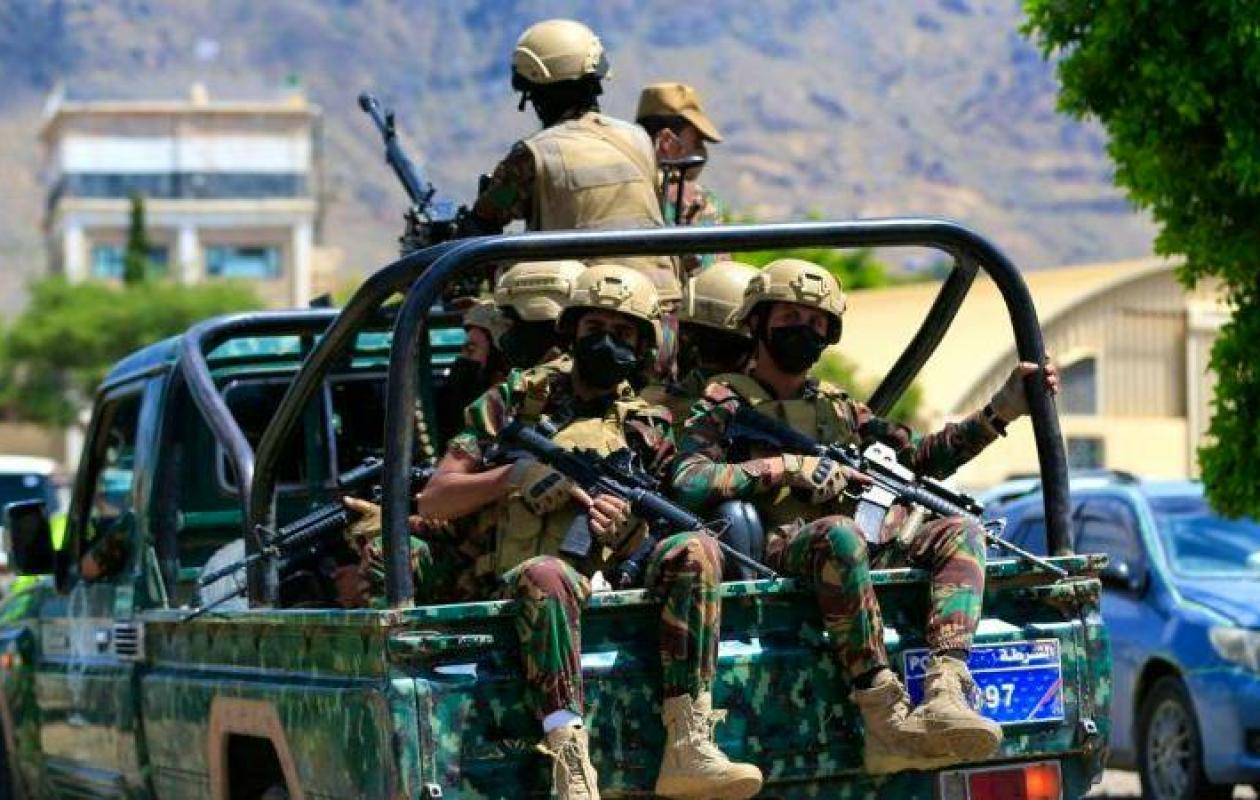
Les Houthis menacent les Etats-Unis de représailles en cas d'intervention en soutien à l'Arabie saoudite
Yemen's Houthis will strike at US interests in the Middle East if Washington sides with Saudi Arabia or intervenes in the strategic Bab el-Mandeb Strait, a military advisor to the pro-Iranian movement warned in an interview with AFP.
Riyadh has repeatedly asked its American ally to intervene to contain the latest advances of the Houthis, according to media in the United States, without success so far.
Iranian fighters have recently taken control of Yemen's entire western Red Sea coastline, strengthening their hold on the strategic Bab el-Mandeb Strait, which connects Asia to Europe via the Suez Canal.
On Sunday, as if to justify his decision not to strike them, US President Donald Trump had stated, according to Fox News, that the Houthis had agreed not to attack the United States.
If the United States "dared to support Saudi Arabia with airstrikes or air support (...) we would consider all American interests around us as targets," said Abed Mohammed al-Thawr, advisor to the defense minister of the self-proclaimed Houthi government, in an interview Tuesday in Sanaa, the Yemeni capital under their control.
Hostilities between Yemeni government forces and Houthi fighters, who have been in power in much of Yemen for more than a decade, resumed in July after years of relative calm.
After the latest offensive launched in early September by the Houthis, Saudi Arabia, which supports the Yemeni government based in Aden and recognized by the international community, retaliated with regular strikes on areas controlled by the Houthis, without managing to make them retreat.
- "A single bloc" with Iran -
The Houthis have targeted neighboring Saudi Arabia several times, including Riyadh last Saturday. They are also imposing a maritime blockade on its ships, significantly affecting the world's leading crude oil exporter, which is already impacted by the severe restrictions imposed by Tehran on navigation in the Strait of Hormuz on the other side of the Arabian Peninsula.
During the interview with AFP, the military advisor described a possible American intervention in the Bab el-Mandeb Strait as a "red line".
He also asserted that the Houthis and Iran formed "a single bloc".
Iran has recently denied any involvement in the war in Yemen, with Iranian Foreign Ministry spokesman Esmail Baghai stating last week that the Houthis were "completely independent actors (who) make their decisions according to their own interests".
Since the beginning of September, fighting between government forces, backed by Saudi aircraft, and the Houthis has left hundreds dead in Yemen, according to sources on both sides.
In total, according to an AFP estimate based on these sources, some 750 fighters were killed, as well as dozens of civilians mainly in the bombings.
In the past 24 hours, 10 civilians have been killed and about ten others wounded in strikes in the province of Taiz and Al-Jawf, Houthi TV Almasirah reported on Wednesday.
The war in Yemen broke out in 2014 when the Houthis took control of the capital Sanaa and then other regions, triggering the intervention of a Saudi-led military coalition in 2015.
A truce had been agreed upon in 2022 but fighting resumed in July, in the wake of the regional conflict triggered by the Israeli-American offensive launched in Iran in February.
More than 130,000 people have been displaced in Yemen since the beginning of September, according to the United Nations High Commissioner for Refugees (UNHCR), which said on Tuesday it expects further mass displacements in the coming months.






















Commentaires (3)
Participer à la Discussion
Règles de la communauté
💡 Astuce : Utilisez des emojis depuis votre téléphone ou le module emoji ci-dessous. Cliquez sur GIF pour ajouter un GIF animé. Collez un lien X/Twitter, TikTok ou Instagram pour l'afficher automatiquement.
Se connecter
Commentez avec votre profil, votre photo, et soyez averti des réponses.