L'Iran attaque radars et systèmes de défense américains en riposte à des frappes
Iran on Tuesday targeted US radar and air defense facilities in the Gulf, warning Washington of "even more powerful" attacks to come, in a conflict that threatens to expand with the involvement of Houthi rebels from Yemen.
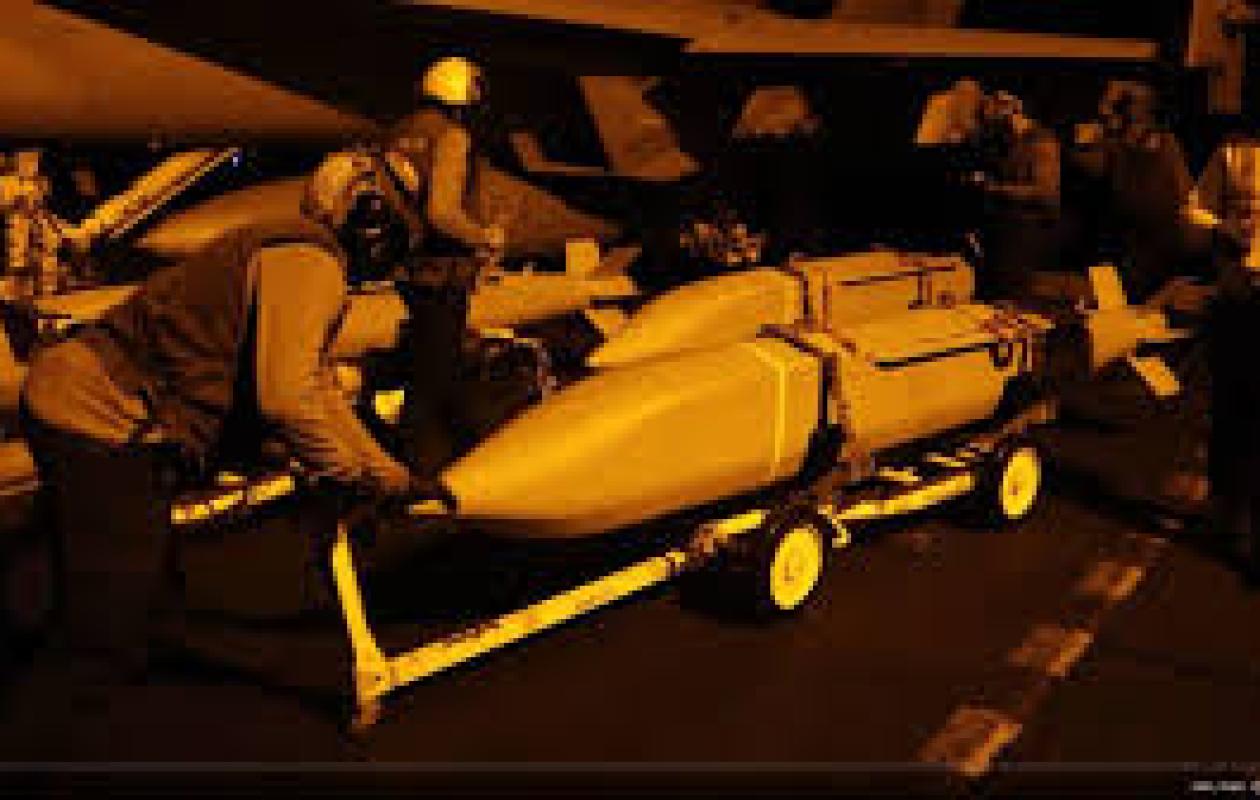
For its part, the US military announced that it had concluded a tenth consecutive night of bombing against the Islamic Republic, including attacks on military command centers and maritime targets, "in order to diminish Iran's ability to continue attacking commercial ships transiting through the Strait of Hormuz."
Iran's Revolutionary Guards, the ideological army of Iran, indicated that two oil tankers had been stopped in this strategic route, while they were taking a route not recognized by Tehran off the coast of Oman, "after explosions caused major fires on board."
The British maritime safety agency UKMTO had earlier reported that a vessel had been struck by an "unidentified projectile" 8 nautical miles (approximately 15 kilometers) northeast of Limah, Oman. In a subsequent report, it stated that the crew had abandoned ship.
Already at the heart of the conflict between the United States and Iran, maritime traffic in the region threatens to seize up even further since the Houthi rebels in Yemen announced a maritime blockade of Saudi Arabia, the world's leading crude oil exporter. This threatens its ability to bypass the Strait of Hormuz, which is itself blocked.
Faced with the threat from the pro-Tehran Houthis and the intensification of hostilities between Washington and Tehran, oil prices reached their highest level in over a month on Monday. After this surge, they were trading slightly lower on Tuesday.
Just over a month after the signing of the memorandum of understanding that was supposed to lead to peace, Donald Trump claimed that Iran would pay "many times" the price for each American soldier killed in the Middle East, while Tehran considered that it was facing "total war".
Since the start of the conflict in February, 17 American soldiers have died, including three recently in Jordan and Iraq, the first since the resumption of hostilities on July 7.
And nearly 100 have been injured since that same date, most of them slightly, according to the Pentagon.
On the Iranian side, the latest official figures from Friday list at least 50 dead and more than 500 wounded since the resurgence of clashes.
On Tuesday, Iranian armed forces announced new strikes in the Gulf, in retaliation for American attacks.
The Revolutionary Guards claimed to have struck two air defense systems and a radar installation at two US outposts in Bahrain, as well as defensive missile, radar receiving and satellite devices in Kuwait.
After this attack on these tracking tools, "the enemy should prepare for even more decisive and powerful waves of drones and missile attacks," they warned in a statement released by the official news agency Irna.
The army, for its part, said in a statement carried by state television that it had struck "three important bases" used by the United States in Kuwait, Arifjan, Al-Udairi and Ahmad Al-Jaber, with suicide drones.
On Monday, Iranian Foreign Ministry spokesman Esmail Baghai nevertheless assured that diplomatic efforts were continuing through mediating countries.
The Islamic Republic's Interior Minister, Eskandar Momeni, is in Pakistan, where he is due to meet with Prime Minister Shehbaz Sharif and Army Chief Asim Munir, according to Islamabad.
The Strait of Hormuz, through which a fifth of the world's hydrocarbon trade passed before the war, remains a major point of contention, and the memorandum of understanding provided for its reopening.
But Tehran has locked it down again after the resumption of hostilities, with the United States reimposing a blockade on Iranian ports.
In addition, Lebanese President Joseph Aoun is due to meet with his American counterpart Donald Trump on Tuesday, whose administration is pressuring Beirut to disarm the pro-Iranian Hezbollah, which has dragged Lebanon into the war.
For Israel, the disarmament of the movement is a condition for its withdrawal from the south of the country, which Iran demands by requesting that any peace agreement also concern the Lebanese front.






















Commentaires (1)
Participer à la Discussion
Règles de la communauté
💡 Astuce : Utilisez des emojis depuis votre téléphone ou le module emoji ci-dessous. Cliquez sur GIF pour ajouter un GIF animé. Collez un lien X/Twitter, TikTok ou Instagram pour l'afficher automatiquement.
Se connecter
Commentez avec votre profil, votre photo, et soyez averti des réponses.