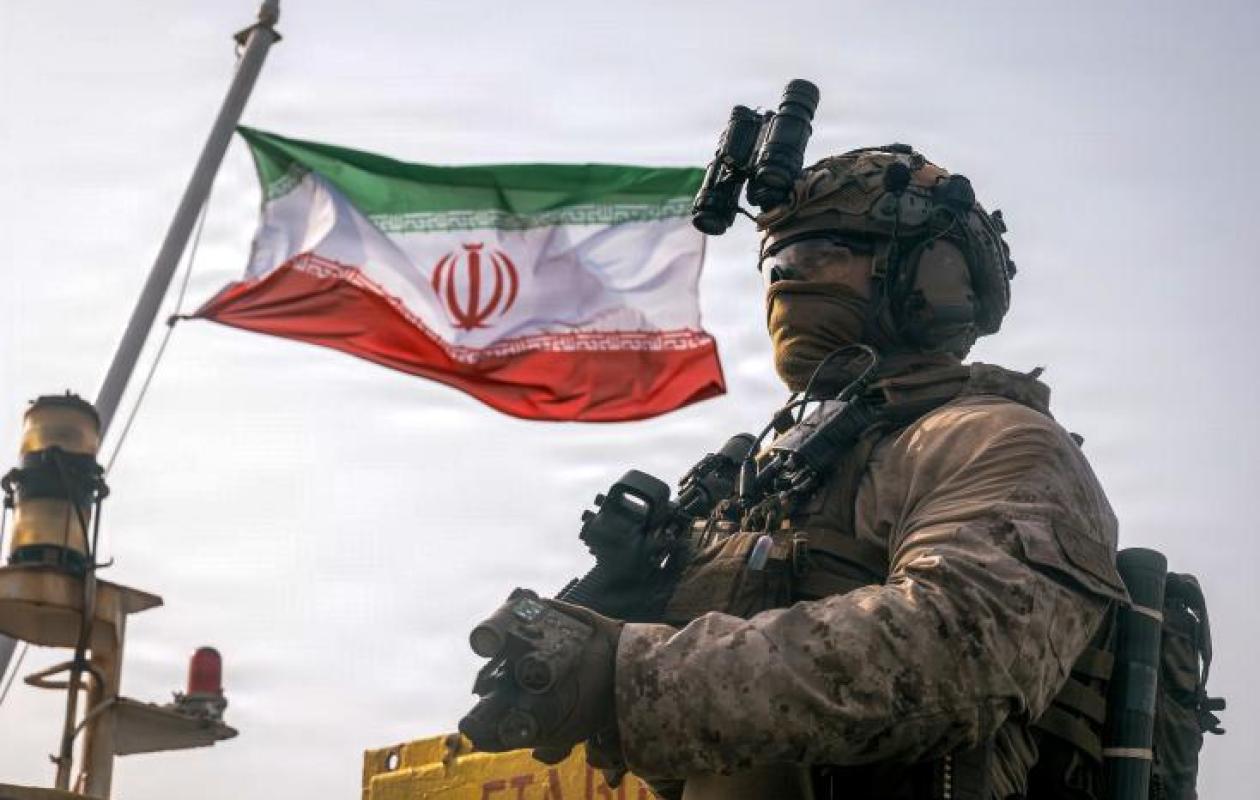
L'Iran face à une "guerre totale" avec les Etats-Unis après une nouvelle nuit de bombardements
Iran said on Monday it was facing "all-out war" with the United States, which struck much of its territory overnight, on the ninth consecutive day of unprecedentedly intense hostilities since the April ceasefire.
"The reality is that today, the Islamic Republic of Iran is facing total war" waged by the United States, said President Massoud Pezeshkian, adding that Iranians must "accept the natural consequences of this resistance," according to remarks reported by the presidential website.
For the past week, the specter of American bombings has extended far beyond the southern regions of Iran where they had been confined since the resumption of hostilities on July 7, to reach central and northwestern Iran, according to local officials.
On Monday, one person was killed and several others were wounded in US airstrikes in Tabriz (northwest), more than 1,000 kilometers from the Gulf. Several others were wounded in strikes in the city of Urmia, located in the neighboring province, according to officials.
Washington claimed to be targeting military sites. Tehran reported new strikes on Monday in several cities, including Bushehr, home to the country's only operating nuclear power plant. The Darkhovin plant, under construction, was also targeted on Sunday, according to Iran.
Three American soldiers were recently killed in the Middle East, the first since the latest surge in violence: two on Friday in Iranian airstrikes in Jordan—another is still missing—and a third during the destruction of enemy munitions in Iraq. President Donald Trump stated that the strikes were carried out "in honor" of the fallen soldiers.
In total, 17 American soldiers have died since the start of the war on February 28. On the Iranian side, the latest official figures released on Friday report 50 dead and more than 500 wounded since the resumption of fighting.
The bombings have reached an unprecedented level since the ceasefire agreed in April to end the war triggered by the Israeli-American offensive on Iran on February 28, breaking the memorandum of understanding signed on June 17 to lead to peace.
In response, Tehran struck its Gulf neighbors, Kuwait and Bahrain, allies of the United States, while on Monday, through its diplomatic spokesperson, it assured that it was continuing its exchanges with the United States via mediating countries.
"The diplomatic apparatus has been active in recent days," said Esmail Baghai, during a press conference in Tehran.
Iranian Interior Minister Eskandar Momeni is due to visit Pakistan on Monday, one of the mediators along with Qatar and Oman, AFP learned from a source at the Pakistani Interior Ministry.
In Bahrain, civilian air navigation systems were targeted on Monday by Iranian drones, according to authorities, who earlier said they had "intercepted" air attacks.
The Kuwaiti army also said it was facing a new attack by Iranian drones.
The Islamic Revolutionary Guard Corps, the ideological army of the Islamic Republic, claimed on Sunday to have destroyed American aircraft in Aqaba, Jordan, and attacked American military infrastructure in Al-Tanf, Syria.
Iran has also tightened its grip on the Strait of Hormuz, a strategic waterway for global trade: the Revolutionary Guards announced on Monday that they had stopped two oil tankers that "exploded" while trying to cross the strait, after having "immobilized" four ships on Sunday.
"Late last night, two unauthorized oil tankers (...) attempting to enter and exit through what has been described as the dangerous and risky southern route of the Strait of Hormuz exploded and were immobilized," according to a statement from the Revolutionary Guard cited by an official media outlet.
The British maritime safety agency UKMTO reported that a ship hit by a "projectile" was on fire 8 nautical miles (about 15 km) northwest of the Omani village of Kumzar.
"We must not allow this sea route to be diverted from its original purpose again to threaten Iran's security and national interests," Baghai said on Monday, adding that his country was "determined to take the necessary steps" to ensure its sovereignty.
On Sunday evening, US Secretary of State Marco Rubio urged the international community to stand with the United States to "protect maritime transport" in the Strait of Hormuz.
Oil prices, which had calmed down after the signing of the memorandum of understanding on June 17 before jumping, stabilized on Monday, with the barrel of Brent crude from the North Sea, the world reference, trading at $88.55 (+0.51%) around 11:20 GMT.
The Strait of Hormuz, through which a fifth of the world's hydrocarbon trade passed before the war in the Middle East, has once again been blocked by Iran since the resumption of hostilities with the United States. In retaliation, the US has reimposed a blockade of Iranian ports.




















Commentaires (2)
Participer à la Discussion
Règles de la communauté
💡 Astuce : Utilisez des emojis depuis votre téléphone ou le module emoji ci-dessous. Cliquez sur GIF pour ajouter un GIF animé. Collez un lien X/Twitter, TikTok ou Instagram pour l'afficher automatiquement.
Se connecter
Commentez avec votre profil, votre photo, et soyez averti des réponses.