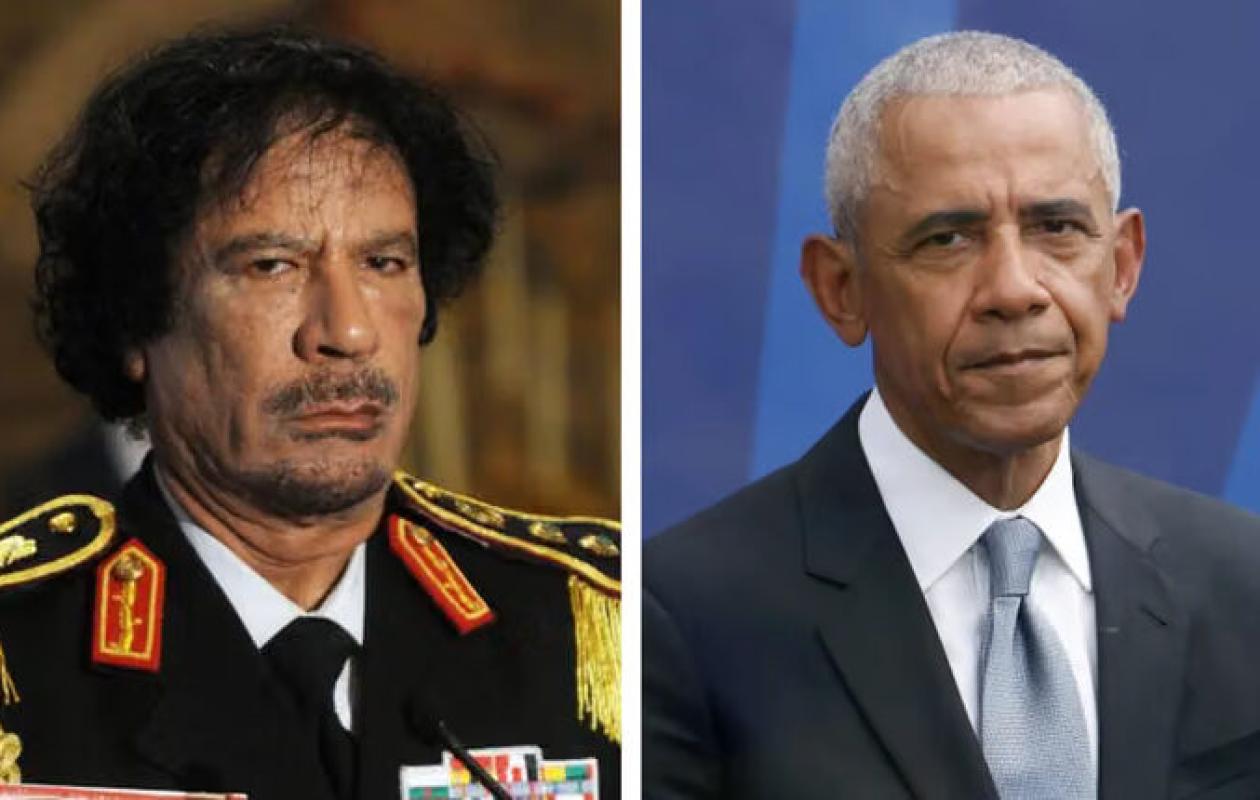
Obama a qualifié la Libye de sa « pire erreur » — 15 ans plus tard
Fifteen years after NATO helped to overthrow Gaddafi, North African military powers appear to have learned a lasting lesson from the collapse of Libya, spending over $320 billion to bolster their armies, acquire advanced weapons and deepen their alliances so as not to find themselves so vulnerable in a future crisis.
In 2016, US President Barack Obama was asked to identify the biggest mistake of his presidency. His answer focused on Libya, where a NATO-led intervention had helped end Muammar Gaddafi's 42-year rule five years earlier.
In an interview with Fox News, Obama described his "worst mistake" as "probably not preparing for the day after what I thought was the right thing to do in intervening in Libya."
He nevertheless defended the intervention, arguing that it "prevented widespread civilian casualties and averted what would almost certainly have been a prolonged and bloody civil conflict."
Obama also acknowledged failures in the handling of the aftermath of the event, conceding that there was "room for criticism" regarding the international follow-up.
Although he defended the military operation, he eventually acknowledged the outcome.
"And despite all that, Libya is in complete chaos," Obama said.
Fifteen years after the fall of Gaddafi, Libya remains divided, while North Africa has entered a much more militarized era.
North Africa is no longer the same
Since 2011, the main powers in the region have invested heavily in modernizing their armed forces, including advanced fighter jets, attack helicopters, drones, air defense systems, missiles and warships.
Algeria and Morocco, in particular, have become the main importers of major conventional weapons in North Africa, while Egypt has also undertaken a major military modernization program.
Together, the major powers in the region now possess stealth fighter jets, Rafale and F-16 aircraft, Apache attack helicopters, advanced air defense systems, drones, missiles and modern naval platforms.
In total, between 2011 and 2025, Algeria, Morocco, Tunisia and Egypt spent more than $320 billion on their armed forces, according to calculations based on SIPRI data.
This military buildup took place against a backdrop of growing regional insecurity, with instability spreading from Libya to the Sahel, Sudan and the Middle East, while the major North African powers forged different security alliances to consolidate their positions.
These expenses cannot, however, be attributed solely to Libya. The Algerian-Moroccan rivalry over Western Sahara predates the 2011 war, while Egypt faces broader security pressures throughout the region.
However, the fall of one of Africa’s richest and most heavily armed states served as a powerful warning to governments across North Africa.
Obama called Libya his "worst mistake" — 15 years later. Obama's regret over the fall of Gaddafi still resonates in a North Africa that has spent over $320 billion to strengthen its armed forces.
The African oil giant remains divided
The contrast is all the more striking given that Libya was among the richest countries in Africa per capita at the beginning of 2011.
Just before the uprising, the IMF estimated that the economy had grown by about 10% in 2010, while non-oil growth reached about 7%.
The country also recorded a current account surplus of about 20 percent of GDP, while the combined net foreign assets of the Central Bank of Libya and the Libyan Investment Authority amounted to about $150 billion.
At the time, the IMF described Libya's macroeconomic performance as solid and its outlook as favorable, while warning of high youth unemployment and dependence on oil.
In terms of GDP per capita, Libya was among the richest countries in Africa around 2010, with World Bank data estimating this figure at around $12,000, well above Egypt, Morocco, Algeria, Nigeria and South Africa.
Fifteen years later, despite the fact that Libya still holds Africa's largest proven reserves of crude oil, estimated at around 48 billion barrels, its GDP per capita had fallen to around $6,449 by 2025.
In 2026, Libya's nominal GDP was around $52.5 billion, placing it around 17th in Africa, far behind Egypt ($430 billion), Algeria ($317 billion) and Morocco ($194 billion).
Even more significantly, the IMF warned in April 2026 that Libya's fiscal trajectory had become "unsustainable".
It estimated that the budget deficit would reach about 30% of GDP in 2025, while public debt would amount to about 146% of GDP, alongside double-digit inflation and increasing pressure on reserves.
Libya is becoming a warning to the West
Paradoxically, Libya has also become an example to ponder in Western foreign policy debates, invoked as a warning against regime change without a clear plan for the future.
More recently, US Vice President JD Vance warned of the risk of letting Iran become "another Libya".
Earlier in 2026, the US ambassador to NATO, Matthew Whitaker, had clearly expressed this concern when he stated: "We do not want another scenario like Libya," as the Trump administration sought to distance itself from a forced regime change in Iran.
Fifteen years after the fall of Gaddafi, Libya is no longer cited solely as an example of military intervention.
The expression has also become synonymous with the risks that can arise from the collapse of a state's political and security order, while its consequences have contributed to making North Africa the most heavily armed region on the continent.

















Commentaires (11)
En réalité, c'est une simple commande d'ISRAËL.
Participer à la Discussion
Règles de la communauté
💡 Astuce : Utilisez des emojis depuis votre téléphone ou le module emoji ci-dessous. Cliquez sur GIF pour ajouter un GIF animé. Collez un lien X/Twitter, TikTok ou Instagram pour l'afficher automatiquement.
Se connecter
Commentez avec votre profil, votre photo, et soyez averti des réponses.