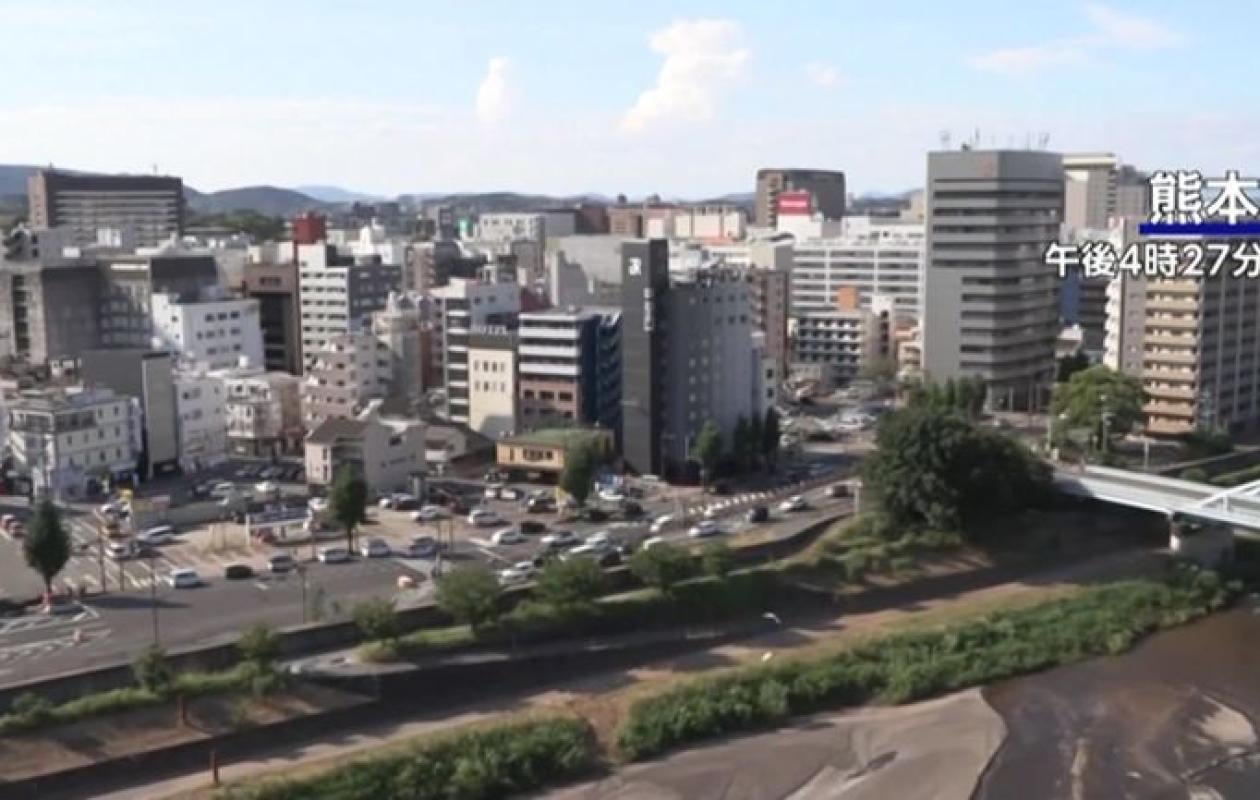
Séisme de magnitude 7,1 au Japon: plusieurs dizaines de blessés, des bâtiments effondrés
A powerful earthquake struck southwestern Japan on Tuesday, injuring dozens, collapsing buildings and causing fires, while the tsunami warning issued after the quake was lifted.
The earthquake that occurred at 4:27 PM (7:27 AM GMT) in Kumamoto Prefecture, on the island of Kyushu, was of magnitude 7.1 according to the Japanese Meteorological Agency (JMA).
"We are still assessing the extent of the injuries and material damage," Prime Minister Sanae Takaichi said in a televised address.
"Power outages and fires are occurring in some areas, roads and bridges have been damaged, and buildings have collapsed," she added.
The NHK television network reported at least 50 people hospitalized after the earthquake and 12 collapsed homes near the city of Yatsushiro, in the center of Kumamoto prefecture.
The JMA initially issued a tsunami warning for a possible tsunami that could reach one meter in height, but lifted this warning around 6:10 p.m.
"This earthquake occurred inland and no tsunami activity has been observed so far," said a spokesman for the Agency.
The quake, which violently shook the region, also reached the maximum level (7) on a separate scale used in Japan, which measures the strength with which earthquakes are felt in a given location, the JMA said.
Television footage showed partially destroyed road bridges, gutted buildings, and overturned freight train cars.
"When the earthquake occurred, the shaking was so strong that I could not stand up," an NHK employee in Kumamoto Prefecture, where the quake occurred, told television half an hour after the earthquake.
"It was really very strong. The tremors are still continuing as I speak to you. Some people, myself included, felt their heart race," he added.
No immediate anomalies were detected at nuclear power plants in the region, according to the Japanese Nuclear Regulatory Authority.
Some 45,000 homes and facilities are without power in Kumamoto Prefecture, according to operator Kyushu Electric Power, which said three nuclear reactors in the region continued to operate normally.
Taiwanese chip giant TSMC, which opened a semiconductor factory in Kumamoto in 2024 and is building another in the region, told AFP that it had evacuated its staff as a precaution after the earthquake.
Kumamoto was struck in 2016 by two devastating earthquakes -- one of magnitude 6.5, followed two days later by another of magnitude 7.3. They left 273 dead and more than 2,800 injured.
A magnitude 7.2 earthquake also struck northern Japan on June 25, without causing any deaths or significant damage.
Japan is one of the most earthquake-prone countries in the world, located at the junction of four major tectonic plates along the western edge of the Pacific "Ring of Fire".
The archipelago, which has about 125 million inhabitants, generally records several hundred tremors each year and accounts for about 18% of the earthquakes recorded in the world.
The vast majority of them are of low intensity, although the damage they cause varies depending on their location and the depth at which they occur below the Earth's surface.
The country remains marked by the gigantic 9.0 magnitude undersea earthquake that occurred in 2011, which triggered a tsunami that killed or left missing some 18,500 people and caused the Fukushima nuclear power plant disaster.
On April 20, a 7.7 magnitude earthquake struck the north of the country, injuring at least ten people and shaking large buildings in Tokyo.
The authorities had then issued a special advisory warning of an increased risk of earthquakes of magnitude 8.0 or higher. This advisory was lifted a week later.






















Commentaires (0)
Participer à la Discussion
Règles de la communauté
💡 Astuce : Utilisez des emojis depuis votre téléphone ou le module emoji ci-dessous. Cliquez sur GIF pour ajouter un GIF animé. Collez un lien X/Twitter, TikTok ou Instagram pour l'afficher automatiquement.
Se connecter
Commentez avec votre profil, votre photo, et soyez averti des réponses.