[ENQUÊTE (1/3)] "Nés, mais invisibles" : Ces enfants fantômes que l'État ne connaît pas
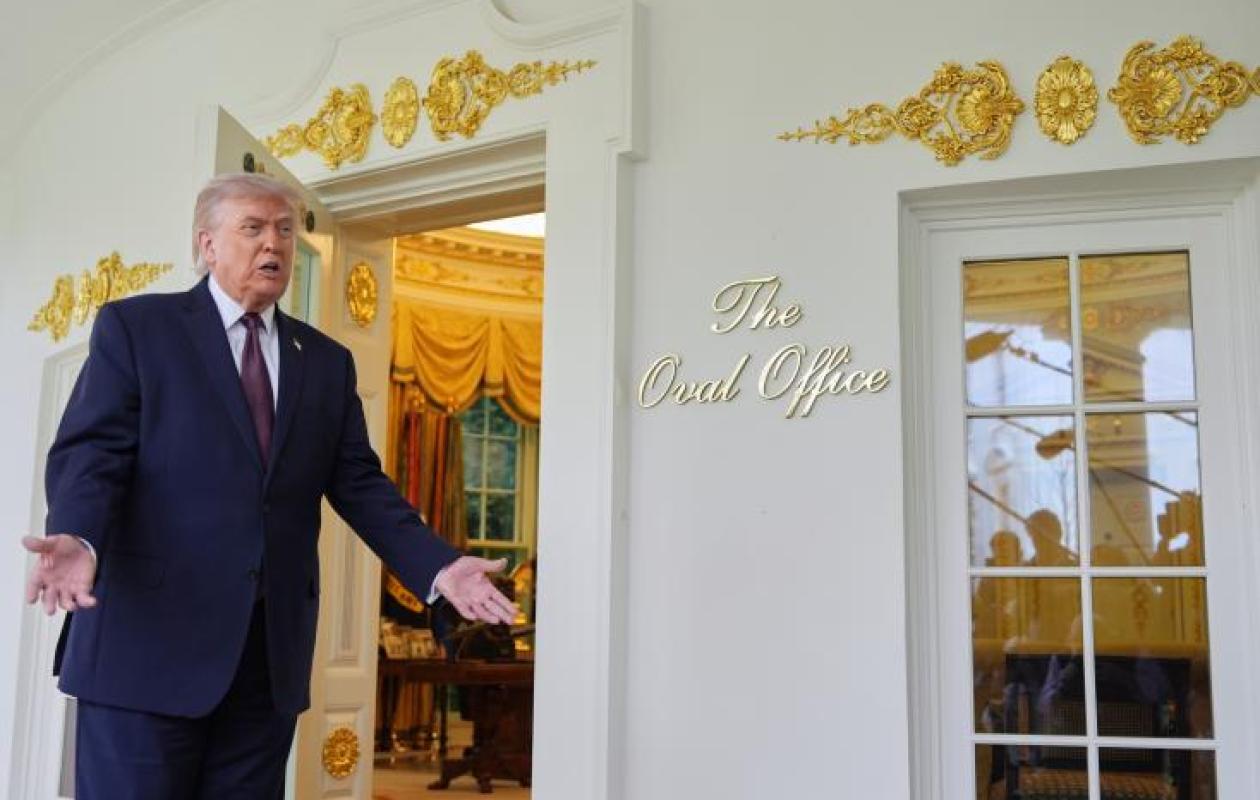
Donald Trump announced a resumption of dialogue with Iran on Monday, which was later denied by Tehran, which asserted that there were no ongoing negotiations in this war that has been dragging on for five months now.
The American president had threatened a few days ago to "strike hard" the Islamic Republic, before once again reversing course and announcing the suspension of his plans for massive bombings.
"Of course they don't want to be attacked. They knew the scale of this attack because they saw it taking shape," he said Sunday night in his presidential plane.
"What we are doing now is talking with them in the form of negotiations," Mr. Trump added, specifying that these discussions were to begin Monday afternoon, without further details.
This scenario has been repeated several times in recent weeks, as the leader seeks a way out of this unpopular conflict in the United States, which has caused oil prices to soar and shaken the global economy.
Iran's response came during the Iranian Foreign Ministry's weekly press briefing: "We are not negotiating with the United States at the moment. We are negotiating with Oman to secure passage through the Strait of Hormuz," stated Esmail Baghai.
The day before, the spokesman had already spoken of an agreement close with Oman to reopen this crucial route for global hydrocarbon trade, which had been locked again since the US-Iranian memorandum of understanding collapsed in early July.
Iran, which does not want a return to the pre-war situation, is currently only allowing one route along its coasts.
The Omani sultanate, which triggered Tehran's anger in June by opening an alternative route through the strait, has not yet made a statement.
"We are on the verge of reaching an agreement on a route acceptable to both parties - neither the northern route nor the southern route - respecting the sovereign rights of each country and guaranteeing our national interests and our security," Esmail Baghai assured on Sunday.
These apparent gains were followed by a fall in oil prices on Monday morning, with Brent crude, the global market benchmark, falling by more than 5% to trade around $82 a barrel. It had briefly exceeded $100 at the end of July.
Meanwhile, the situation in the Strait of Hormuz remains tense: an explosion near an oil tanker was reported there on Sunday night by the British maritime safety agency UKMTO.
Donald Trump had conditioned the announced suspension of US strikes on the swift conclusion of an agreement with Tehran, particularly on the strait, and had mentioned diplomatic progress.
The hostilities, which began in late February with an American-Israeli offensive on Tehran, largely ceased in April before resuming in early July.
According to US media, Washington was considering new massive bombings over the weekend: CBS News notably mentioned the possibility of strikes against oil refineries and power plants, carried out by the United States but also Israel, which would have been a first in two months.
Donald Trump said he had abandoned this new attack at the request of countries in the region, who according to him "think we have an agreement": "there is an agreement on Hormuz, and there will then be an agreement on nuclear, we could even say on the denuclearization of Iran."
He claimed that the request came from Saudi Arabia, the United Arab Emirates, Qatar and Iran itself - which Tehran also denied, calling it "another lie" from the American president.
According to the official Saudi press agency, Crown Prince Mohammed bin Salman, a key ally of Washington in the region, called on Donald Trump to "prioritize dialogue in order to reduce tensions."
The war has recently expanded, with a new front in the Red Sea, where the Iranian-backed Houthi rebels in Yemen announced a blockade of Saudi ports and have since claimed responsibility for attacks on the kingdom's oil tankers and facilities.




















Commentaires (3)
Participer à la Discussion
Règles de la communauté
💡 Astuce : Utilisez des emojis depuis votre téléphone ou le module emoji ci-dessous. Cliquez sur GIF pour ajouter un GIF animé. Collez un lien X/Twitter, TikTok ou Instagram pour l'afficher automatiquement.
Se connecter
Commentez avec votre profil, votre photo, et soyez averti des réponses.