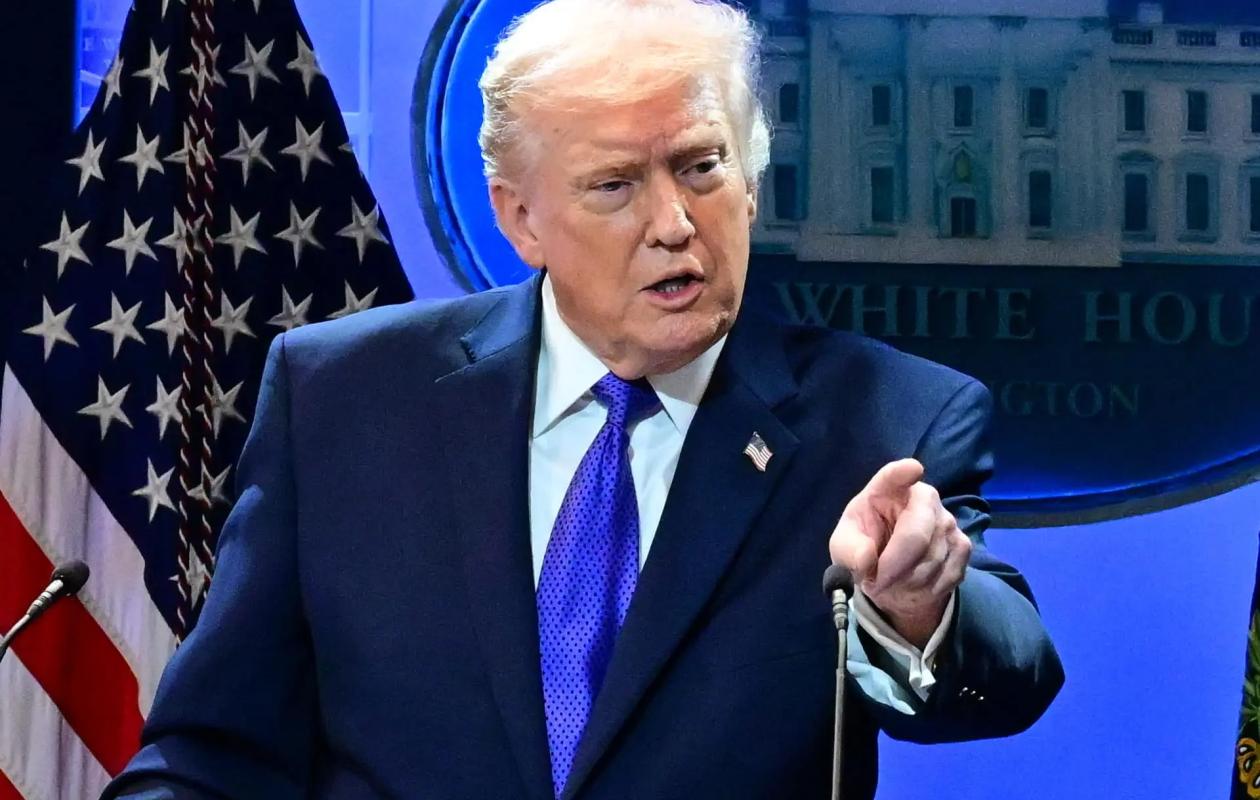
Washington lance une nouvelle salve de droits de douane contre une soixantaine d'économies
After Canada and Brazil, some sixty economies are in turn targeted by new customs duties, as the temporary surtaxes put in place by Donald Trump in February come to an end.
Since Friday 00:01 (04:01 GMT), these countries have seen a surcharge of 10% or 12.5% applied to a number of their products entering the United States.
Those already en route to the world's largest economy will not be affected if they arrive at their destination before July 28 at 00:01.
China, one of dozens of countries hit with a 12.5% tariff, said it "opposes" these new tariffs as well as any "trade war".
The European Union, to which the 10% tax applies, welcomed with relief a result "in line with US commitments" contained in the trade agreement concluded last year between Brussels and Washington, according to the European Commission.
Australia, Japan and New Zealand – three US allies in Asia – have also denounced these new customs barriers, which have also been condemned by Norway.
These tariffs replace the temporary 10% tariffs imposed in February by the Trump administration after the Supreme Court struck down most of the tariffs enacted since his return to the White House.
The new measures are the result of an investigation, launched in mid-March by the United States Trade Representative (USTR), Jamieson Greer, to determine whether the United States' trading partners had completely eliminated products made with forced labor from their supply chain.
"We are seeking to end the trade in these types of products," Mr. Greer explained on CNN. "If you allow the importation of goods produced with forced labor, it creates unfair competition against your own products. We want all countries to have the same types of protections," he added.
Countries with legislation deemed incomplete by the United States are now subject to a 10% tariff on some of their products. Besides the EU, this includes the United Kingdom, Mexico, and Canada.
The forty or so other countries targeted will see their products taxed at 12.5%. China, Japan, Switzerland and South Korea are examples of those affected.
However, energy and raw materials not produced in the United States should be excluded from the list of affected products.
According to Greta Peisch, a lawyer specializing in international trade, the objective is "to maintain control and keep the pressure on countries to continue to implement the trade agreements that have been signed, and perhaps negotiate others in the future."
"There is this common thread, even if customs duties vary greatly and change their justification in the meantime," she added.
"The president recognized that the American market is a major asset that he can use with these countries to achieve the goals he desires," a US official told the press.
The White House hopes that these new surcharges will not suffer the same fate as those put in place last year.
To ensure their viability, the USTR relied on the same law that has so far justified sectoral tariffs on steel and aluminum, copper, construction timber, and automobiles, among other things, and which had not been overturned by the Supreme Court.
Other investigations are underway based on this, particularly concerning possible industrial overcapacity. The EU is involved in this investigation.
Shortly before its latest salvo, the US government had announced additional tariffs targeting Brazil, which has been hit since Wednesday with 25% tariffs on nearly half of its exports to the United States.
On Monday, Canada was targeted with an additional 50% surtax, which is due to take effect in one month.
In both cases, the US government has changed its strategy: rather than targeting all products from these countries, the tariffs only apply to a portion of them.




















Commentaires (1)
Participer à la Discussion
Règles de la communauté
💡 Astuce : Utilisez des emojis depuis votre téléphone ou le module emoji ci-dessous. Cliquez sur GIF pour ajouter un GIF animé. Collez un lien X/Twitter, TikTok ou Instagram pour l'afficher automatiquement.
Se connecter
Commentez avec votre profil, votre photo, et soyez averti des réponses.