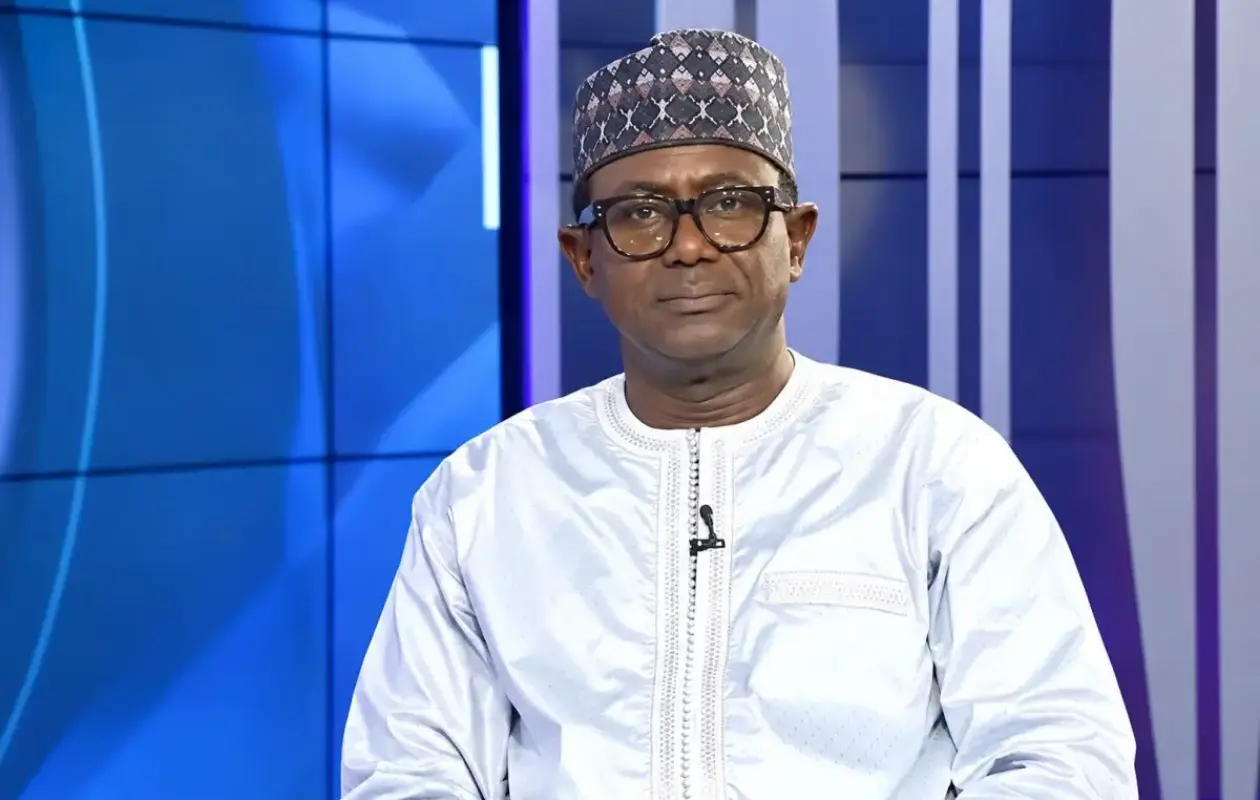
PLFR, dette, subventions… Seydou Diouf alerte : « Il faut remettre l’économie au cœur du débat »
The draft supplementary budget law (PLFR) highlights the new constraints facing the Senegalese state. Invited to the program "Point de vue" on RTS, former member of parliament and former chairman of the National Assembly's Finance Committee, Seydou Diouf, offered his analysis of the main budgetary trade-offs, debt, energy subsidies, and the revival of private investment.
The figures in the supplementary budget bill reflect a particularly constrained budgetary context. The deficit, initially projected at 5.4% of GDP, is now expected to reach 7.6%. At the same time, revenues have been revised downwards to 5,848.7 billion CFA francs, 340 billion less than the initial forecasts. Expenditures, meanwhile, reach 7,583.9 billion CFA francs, an increase of 150 billion.
Faced with this situation, investment spending is reduced by 555 billion CFA francs, while energy subsidies are increased to 790.3 billion.
For Seydou Diouf, these decisions must be assessed in light of the maturity and urgency of the projects. He believes that some investments can be postponed if they do not yet have sufficiently advanced feasibility studies. Others, already mature and deemed priorities, should, however, be preserved.
Beyond budget cuts, the former parliamentarian places the issue of debt at the heart of his concerns. He favors a comprehensive approach to debt management, one that goes beyond simple restructuring. Among the possible mechanisms, he cites rescheduling of maturities, reprofiling of repayments, moratoria, modification of initial terms, and refinancing at more favorable rates.
The objective, he explains, is to reduce the pressure exerted by debt servicing in order to allow the State to continue to finance its other priorities, particularly in the agriculture, health and education sectors.
In this context, Seydou Diouf places great importance on dialogue with the International Monetary Fund (IMF). According to him, the validation of Senegal's economic strategy could help facilitate discussions with the country's various financial partners.
But for the former chairman of the Finance Committee, debt management alone cannot be the answer to economic difficulties. It must go hand in hand with a broader reflection on the drivers of growth and the role of the private sector.
The 790.3 billion CFA francs allocated to energy subsidies also constitute an important point in his analysis. Seydou Diouf argues for better targeting of these resources. He questions, in particular, the wisdom of applying the same level of support to consumers with very different consumption levels.
His idea, he said, would be to focus aid more on the categories that really need it, while simultaneously strengthening social protection mechanisms. His approach therefore does not involve eliminating subsidies, but rather better directing public resources in order to increase their effectiveness.
For Seydou Diouf, all these reforms must above all help to restore a climate conducive to investment. "The economy is first and foremost a question of confidence. We must restore confidence in our economic space," he affirms.
The former parliamentarian thus calls for particular attention to be paid to both Senegalese and foreign investors. He does not question the imperatives of oversight, transparency, and accountability, but believes that these must be implemented within an environment that does not discourage economic actors.
He believes that taxation and regulations should also be considered in order to make the business climate more favorable to investment.
In his argument, the state cannot sustainably drive investment and growth on its own. The private sector must also contribute to wealth and job creation. "If no wealth is created, there is no growth, no VAT collected, no customs duties collected, so where will the state get the resources?" he asks.
For Seydou Diouf, the development of private investment would thus broaden the tax base and give the State more room to maneuver to finance its missions.
The former parliamentarian also discusses the role of the administration and the officials responsible for implementing economic policies. He particularly highlights the experience of certain officials at the Ministry of Finance involved in the debt management strategy, noting that they have worked under several different regimes.
Ultimately, Seydou Diouf connects several key issues: budget revision, debt, energy subsidies, private investment, and the confidence of economic actors. For him, the trade-offs imposed by the current situation must primarily serve to create the conditions for a recovery in investment and growth driven more by wealth creation.
















Commentaires (5)
Ils n'aiment pas le Sénégal
Comme y'a plus personne derrière lui. Il veut que le président l'appelle comme tous les réformés de Rufisque
Participer à la Discussion
Règles de la communauté
💡 Astuce : Utilisez des emojis depuis votre téléphone ou le module emoji ci-dessous. Cliquez sur GIF pour ajouter un GIF animé. Collez un lien X/Twitter, TikTok ou Instagram pour l'afficher automatiquement.
Se connecter
Commentez avec votre profil, votre photo, et soyez averti des réponses.