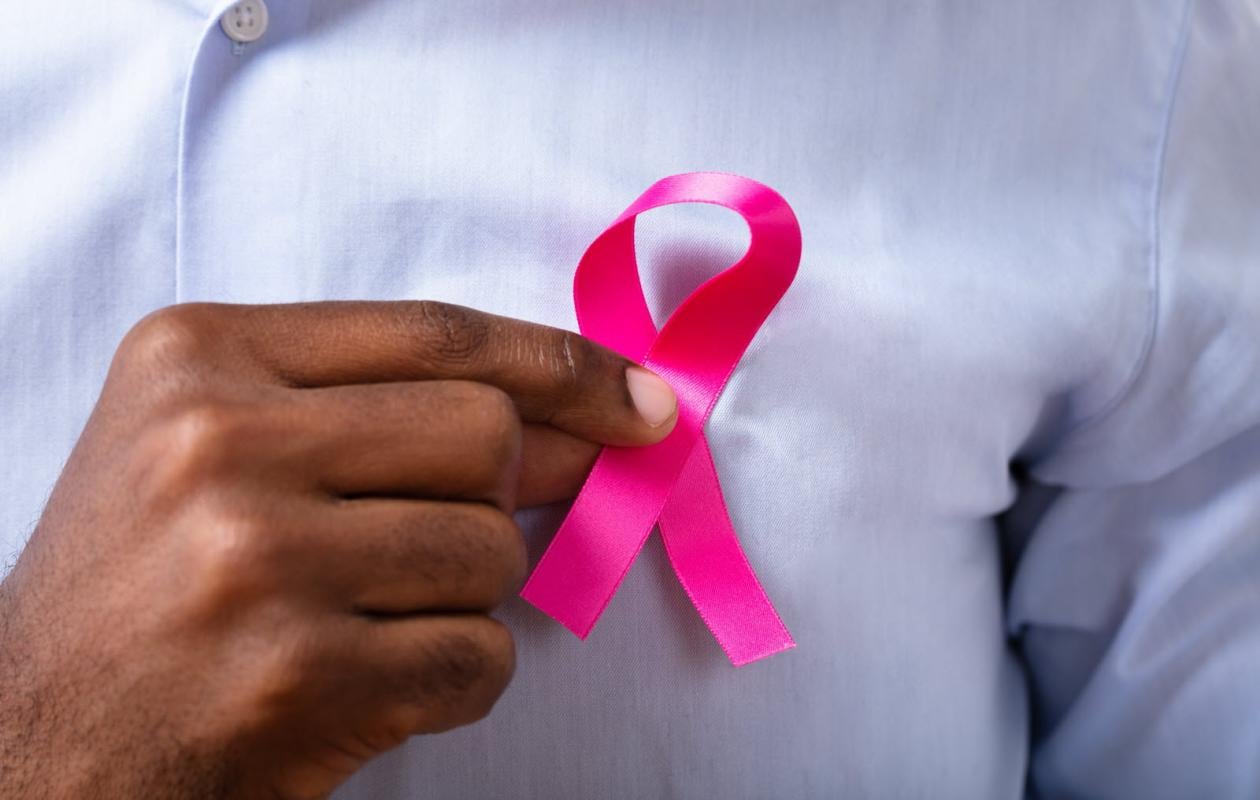
Cancer du sein chez l’homme : Symptômes, facteurs de risque et éclairages de deux experts
Often perceived as an exclusively female disease, breast cancer also affects men in nearly 1% of cases. In Senegal, the rarity of the disease and the lack of specific data fuel a taboo that delays diagnosis. Between a lack of awareness of symptoms, genetic or hormonal risk factors, and inadequate medical care, Drs. Daba Diop and Kanta Ka are sounding the alarm: in both men and women, a painless lump should absolutely prompt a medical consultation.
Breast cancer is not exclusively a women's disease. Although it accounts for less than 1% of breast cancers diagnosed in men in the United States, it can also occur in men, generally at an older age. While little known to the general public, it remains a medical reality that deserves greater visibility, particularly in Senegal, where detailed national data on male cases are lacking. During Breast Cancer Awareness Month (October), attention is primarily focused on women, who constitute the vast majority of those affected. Men are rarely targeted by prevention messages, even though they too possess breast tissue that can develop into cancerous tumors. This low incidence can contribute to delayed recognition of symptoms. A lump in the breast is sometimes mistaken for a fatty deposit or a benign abnormality. Other men may hesitate to seek medical help due to embarrassment, fear of the diagnosis, or simply because they are unaware that breast cancer can affect them. In Senegal, figures released by the Senegalese League Against Cancer (LISCA) indicate approximately 2,220 new cases of breast cancer per year and more than 1,300 deaths. These figures encompass all those affected, with a very clear predominance of women. In the absence of detailed national statistics broken down by sex, the number of men affected remains difficult to determine. Dr. Daba Diop, a gynecologist-obstetrician and breast specialist at the Philippe Maguilène Senghor Health Center, emphasizes the importance of recognizing warning signs and seeking medical help promptly.
A painless lump, the first warning sign
In men, breast cancer most often manifests as a lump located behind or near the nipple. Generally painless, it may be hard and relatively immobile. The absence of pain should not be reassuring: a tumor can develop without causing any particular discomfort in its early stages. Other signs should also raise concern: a nipple that retracts inward, unusual discharge, sometimes bloody, a persistent sore, or a change in the skin. The skin may become red, pitted, wrinkled, or take on an orange-peel appearance. The presence of a lump under the armpit can also indicate lymph node involvement. These symptoms do not necessarily mean that it is cancer. Gynecomastia, characterized by a benign enlargement of male breast tissue, can cause breast swelling. A lipoma, composed of fatty tissue, can also form a lump under the skin. Only a medical examination can distinguish between these different conditions. Faced with a new or persistent anomaly, it is therefore preferable to consult quickly rather than waiting for a possible spontaneous disappearance or resorting to self-medication.
Age , genetics, and hormonal imbalances
Several factors can increase the risk of developing male breast cancer. Age is among the main ones: the disease is usually diagnosed in older men, often between 60 and 70 years old, although it can occur earlier. Family history also plays a significant role. Men with a close relative who has had breast cancer may have an increased risk, particularly when several family members are affected. Certain inherited genetic mutations, notably those of the BRCA2 and BRCA1 genes, are also associated with an increased risk, with BRCA2 being particularly implicated in men. Hormonal imbalances are another factor to consider. Increased exposure to estrogen or a relative decrease in androgen activity can promote the development of the disease. Klinefelter syndrome, a rare chromosomal abnormality, is notably associated with a higher risk.
Obesity can also play a role, as fatty tissue is involved in the conversion of certain hormones into estrogen. Liver diseases, particularly cirrhosis, can disrupt hormone metabolism. Other contributing factors include a history of chest radiation and, depending on the situation, the use of hormone therapy. The presence of these factors does not necessarily mean that cancer will develop. Conversely, the disease can affect a man without any clearly identified risk factors. The key is to be aware of the warning signs and to consult a doctor promptly if you notice any unusual changes.
Appropriate vigilance , without systematic screening
Unlike campaigns aimed at women, there is no general recommendation for systematic breast cancer screening for all men. Vigilance relies instead on paying attention to changes in the breasts and seeking prompt medical attention when a symptom appears. Men with a known genetic mutation or a significant family history may, however, require individualized monitoring. The monitoring plan should then be determined with a healthcare professional, based on the level of risk. When a man consults a doctor for an abnormality, the doctor begins by gathering information about the symptoms and medical history, then performs a physical examination. Depending on the results, a mammogram or ultrasound may be prescribed. If a tumor is suspected, a biopsy is performed to take a tissue sample for laboratory analysis to determine if the lesion is cancerous. If the diagnosis is confirmed, further tests are conducted to assess the extent of the disease and guide treatment. Treatment is based on the same general principles as for women: surgery, radiotherapy, chemotherapy, hormone therapy, or targeted therapies, depending on the characteristics of the tumor. The prognosis depends in particular on the stage at which the cancer is diagnosed, its biological characteristics, and the response to treatment. When detected early, the possibilities for curative treatment are generally greater. However, the small volume of male breast tissue can facilitate spread to the skin or chest wall, which underscores the importance of prompt consultation.
Breaking the silence surrounding male breast cancer
In Senegal, raising awareness remains crucial. The rarity of the disease, preconceived notions about the male body, and the embarrassment that a breast abnormality can cause are all factors that can delay seeking medical attention. Breast Cancer Awareness Month campaigns can help correct these perceptions by reminding people that breast cancer is not exclusively a female issue. Healthcare professionals, the media, and associations all have a role to play in disseminating clear information without fueling undue fear. The goal is not to suggest that all men are at high risk, but to empower them to recognize the symptoms and know when to seek medical help. It is also important to improve the collection of national data to better document the number of male cases, the circumstances of diagnosis, and any difficulties in accessing care. For Dr. Daba Diop, a gynecologist-obstetrician and breast specialist at the Philippe Maguilène Senghor Health Center, the prevention message should remind men that a lump in the breast, a change in the nipple, or unusual discharge warrants medical attention, without waiting for pain to develop. Self-medication should be avoided, as it can delay diagnosis. Rare, but very real, male breast cancer must be brought out of the shadows of awareness campaigns.
Risk factors , manifestations, treatment: Dr. Kanta Ka's comparative diagnosis in both sexes
Breast cancer makes no distinction between men and women. While women remain the primary victims of this disease, men can also be affected, with specific risks and sometimes delayed diagnoses. Dr. Kanta Ka emphasizes the importance of vigilance and early consultation. According to the doctor, approximately 1% of breast cancers occur in men. Yet, this reality remains largely unknown to the general public. It is often thought of as an exclusively female disease. However, breast cancer also affects men. Dr. Kanta Ka, an oncologist, states that this is why warning signs can be overlooked, leading to delayed diagnoses and more difficult treatment. "People tend to think that when we talk about breast cancer, it only concerns women," he points out, reminding us that the disease can affect anyone, regardless of gender or social background.
Risk factors that differ according to sex
In men, the risk of developing breast cancer increases with age, particularly between 60 and 70. Genetic predisposition is also a significant factor. The doctor specifically mentions mutations in the BRCA1 and BRCA2 genes, with BRCA2 being particularly implicated in male breast cancers. Hormonal imbalances can also contribute to the development of the disease. Increased exposure to estrogen, a relative decrease in androgens, or certain testicular dysfunctions can alter hormonal balance and contribute to tumor development. Certain genetic conditions, such as Klinefelter syndrome, as well as liver cirrhosis and obesity, are among the factors that can increase the risk.
In women, breast cancer is much more common, primarily due to biological and hormonal factors. However, risk factors are not limited to hormones: age, family history, and certain genetic predispositions must also be considered. Warning signs can be similar in both sexes: a lump in the breast, a change in the nipple, or discharge, sometimes bloody. Contrary to popular belief, breast cancer does not necessarily cause pain in its early stages. Therefore, a painless lump should never be ignored.
Delayed diagnosis: a major obstacle to recovery
For Dr. Kanta Ka, one of the main challenges in Senegal remains the delayed access to healthcare facilities. Lack of information, the initial reliance on traditional treatments, and difficulties accessing specialists all contribute to delayed diagnosis. Adding to these obstacles are long waiting lists at some facilities, insufficient equipment, and a limited number of pathologists, essential for analyzing samples and confirming the nature of a suspicious lesion. The diagnostic process relies on clinical examination, followed by imaging, particularly ultrasound or mammography, depending on medical indications. If a suspicious abnormality is present, a biopsy is performed to collect a tissue sample for laboratory analysis. The doctor emphasizes that the delays accumulated at each of these stages can compromise the chances of recovery. He also mentions the high cost of examinations, treatments, and follow-up care, as well as difficulties accessing certain medications and therapeutic equipment.
Similar treatment , essential vigilance
Breast cancer treatment, in both men and women, relies on several options: surgery, chemotherapy, radiotherapy, and hormone therapy. The choice of protocol depends in particular on the stage of the disease and the biological characteristics of the tumor. Dr. Kanta Ka advises men not to dismiss a lump in the breast or nipple. Because breast tissue is less developed in men, an abnormality may be more easily visible. Women are also urged to remain attentive to any unusual changes. He therefore emphasizes prevention, adopting a healthy lifestyle, engaging in regular physical activity, preventing excess weight, and consulting a doctor promptly for any abnormality. Self-examination can help detect a change, but it does not replace a medical examination or the screening tests recommended according to age and risk level. According to the doctor, awareness campaigns must target both sexes. Because, when it comes to breast cancer, a lack of awareness of the symptoms and a delay in seeking medical advice can have serious consequences. Early diagnosis remains one of the best ways to improve the chances of treatment and survival.





















Commentaires (0)
Participer à la Discussion
Règles de la communauté
💡 Astuce : Utilisez des emojis depuis votre téléphone ou le module emoji ci-dessous. Cliquez sur GIF pour ajouter un GIF animé. Collez un lien X/Twitter, TikTok ou Instagram pour l'afficher automatiquement.
Se connecter
Commentez avec votre profil, votre photo, et soyez averti des réponses.