Koungheul : Le « forokh thiaya », le goût qui fait marquer une pause aux voyageurs
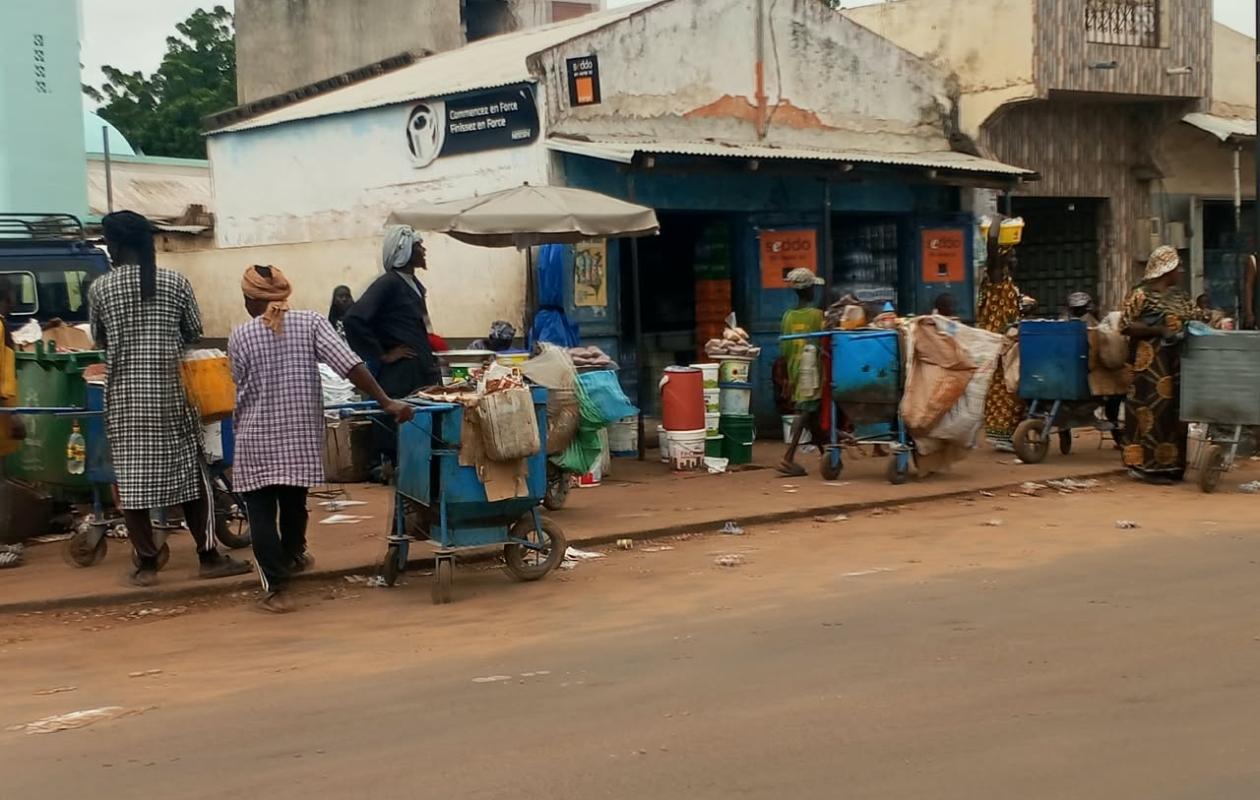
The sun is at its zenith. In Koungheul, the heat settles in the city center. Along the national highway, vehicles follow one another. Some continue on their way, others slow down before stopping for a few moments.
Just a few meters from the road, the meat vendors are already at work. Standing behind their rickshaws, they cut, prepare, and serve customers. Travelers get out of the vehicles, choose their cuts, and sometimes leave a few minutes later with their bag of meat. Here, one name keeps coming up in conversations: "forokh thiaya."
This meat, highly prized in Koungheul, attracts both locals and travelers using the national highway between Dakar, Tambacounda, and Kédougou. For many, passing through Koungheul without stopping to buy "forokh thiaya" has become a habit.
An almost unmissable stop
A vehicle has just stopped. A few passengers get out. They approach the rickshaws, look at the pieces of meat, and chat with the vendors. Some buy to eat there, others prefer to take their meat with them for the rest of their journey.
El Hadj is one of these regulars. He travels to Tambacounda. When his vehicle stops in Koungheul, he takes the opportunity to refuel.
“I’m going to Tambacounda. Our car stopped here, and I’m taking the opportunity to buy some food. That’s why I’m buying ‘forokh thiaya’,” he explains. He knows this rest stop well and almost never misses the chance to stop there.
“Koungheul is very well known for this. I usually buy some whenever I pass through here. When it’s really good and delicious, you really appreciate it,” he adds.
Sheep and goats monitored by veterinary services
Behind this popular activity lies an entire chain that begins with livestock. In Koungheul, vendors primarily deal in mutton or goat meat. Livestock intended for consumption is monitored by veterinary services, which ensure compliance with sanitary standards before it is placed on the market.
This oversight is important for both sellers and consumers. It helps ensure that animals intended for consumption are inspected before being sold. For customers, this health and safety aspect reinforces confidence in a product that is part of their eating habits and is a staple for travelers.
Long days under a blazing sun
But behind this activity, popular with travelers, lie difficult days. Mamadou Diallo sells "forokh thiaya." Standing for long hours, he must remain attentive to customers and his merchandise. "It's not easy to stand for long periods," he confides.
The heat makes the work even more difficult. "When we're working in the heat, we sometimes have to stop until the temperature drops. But if we have to continue, we get back to work," he explains. Here, you have to be resilient. When a customer arrives, the salesperson has to be ready. And when customers are scarce, you have to be patient.
A trade between profits and risks
The sheep and goat trade remains a volatile activity. Before selling the meat, the livestock must be bought, often at a high price. And there's no guarantee that reselling will yield a profit. "You can buy for 45,000, 50,000, or 60,000 CFA francs," explains Woury Diallo.
When the sale goes well, the profit can reach 5,000, 8,000 or even 10,000 CFA francs. But some days are much less favorable.
Woury said that on that day he bought a sheep for 80,000 CFA francs. At the time of his testimony, the merchandise had not yet been sold.
All he can do now is wait and hope. "For the moment, I haven't sold the merchandise yet. I'm simply praying that everything goes well and that God blesses my work," he confides. During holidays or the Magal pilgrimage, however, business can pick up.
“When there is a lot of work, we can sell two or three sheep or goats. But sometimes, in an hour, we only sell one,” explains Woury Diallo.
A trade passed down from father to son
For some vendors, the "forokh thiaya" is also a family affair. Mamadou Diallo recounts that when he started in the business, he found his father already working there. Today, his younger siblings are also involved. The income is shared among family members.
“I don’t really know any other job. This is the one I know and the one I do,” he says. His work allows him to contribute to his household expenses and support his family. With the day’s earnings, he has to think about the household’s needs. And when some of the meat isn’t sold, it sometimes ends up in the family pot. “When there’s something left over after selling, my wife and I can share it and make mafé,” he explains.
A designated space, a long-standing grievance
While the vendors are dedicated to their work, they also want to be able to operate in better conditions. Specifically, they are requesting a space that remains close to the market and their customers. "We're not necessarily asking for something very large. We simply want a place where we can work and sell our products," explains one of them. Location is crucial. A large portion of their clientele consists of travelers who stop for a few minutes before continuing their journey. Some come from Dakar, others from Tambacounda or Kédougou. Many are already familiar with this rest stop and know where to find the vendors.
An activity that spans generations
In Koungheul, the meat trade is nothing new. Vendors say their parents were already involved in it. "We've been here since colonial times. This place existed before independence, and our parents sold their products here," one of them explains. Generations of traders have thus succeeded one another in this sector.
Even today, it's the same old story: buy the sheep or goats, prepare the meat, wait for customers and negotiate prices.
Throughout the day, vehicles continue to pass. Some stop. Passengers get out, buy their meat and quickly get back on the road.
The taste of a stopover
For locals and travelers alike, the "forokh thiaya" has become part of the Koungheul landscape and a familiar sight for those who travel this route. Behind each piece sold, however, lies the work of a man, a family to support, and sometimes the risk of ending the day with little profit. Under the blazing sun, the vendors persevere nonetheless.
They are waiting for the next vehicle, the next customer, the next sale.
In Koungheul, on this road which links Dakar to the east of the country, the "forokh thiaya" continues to support the vendors and attract passing travelers, while being part of an activity where livestock control and sanitary requirements play an important role.



















Commentaires (4)
Rien que le Forokh Thiaya devrait justifier l'aménagement de Koungheul comme site touristique!!!
Participer à la Discussion
Règles de la communauté
💡 Astuce : Utilisez des emojis depuis votre téléphone ou le module emoji ci-dessous. Cliquez sur GIF pour ajouter un GIF animé. Collez un lien X/Twitter, TikTok ou Instagram pour l'afficher automatiquement.
Se connecter
Commentez avec votre profil, votre photo, et soyez averti des réponses.