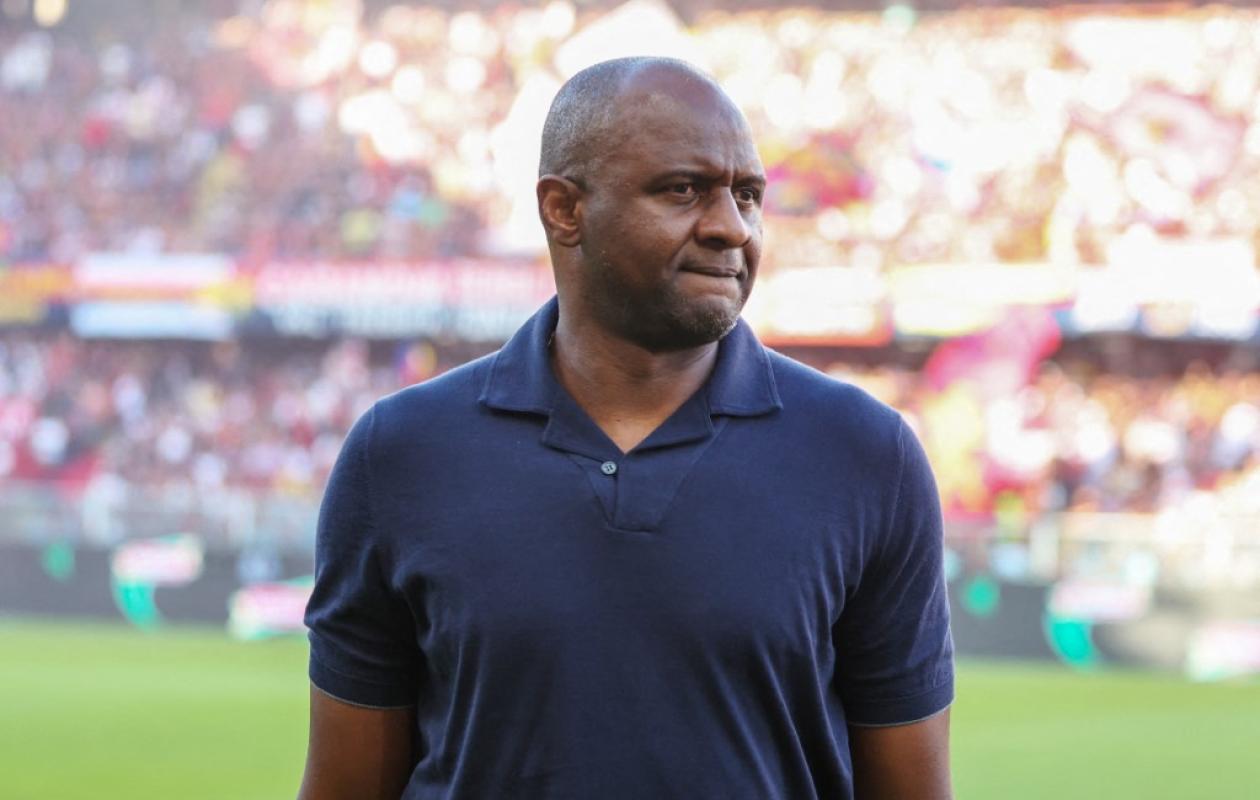
[Décryptage] Lions : Nouveau système, hiérarchie bousculée... Ce qui va changer sous l'ère Vieira
Patrick Vieira will make his debut as coach of the Senegalese national team in a few days. The French manager will take charge of the Lions on Friday in Maputo against Mozambique, before a trip to Ethiopia on September 29, followed by a friendly match against Comoros on October 4 in Marseille. These three matches will allow the new coach to lay the foundations of his project and, above all, to give a first glimpse of his tactical choices.
What system for Vieira?
For several years, Senegal has relied primarily on two tactical formations: the 4-3-3 and the 4-2-3-1. These two systems have enabled the Lions to achieve their best results and have also formed the basis of Pape Thiaw's work during the 2025 Africa Cup of Nations in Morocco and the 2026 World Cup.
Under Thiaw, Senegal displayed more attractive spells of play, despite a World Cup campaign that didn't end as hoped. Will Vieira maintain this continuity or will he seek to quickly make his mark?
The choice of system will be one of the first indicators of the French coach's philosophy. With his club experience and his profile as a coach committed to a balance between ball control and intensity, Vieira might be tempted to make some adjustments. It remains to be seen how far he will go with these changes.
A reshuffling of the cards?
The new coach has plenty of reasons to rethink his strategy. For the first two matches of the 2027 Africa Cup of Nations qualifiers, several key players will be unavailable. Ismaïla Sarr and Iliman Ndiaye, in particular, will be absent, while other players such as Sadio Mané, Jakobs, Krépin Diatta, and Édouard Mendy are not included in the squad.
These absences naturally place more responsibility on some regulars, but also create an opportunity for newcomers. Vieira will therefore have to balance the players who already know the demands of the national team with those who will be experiencing the Senegalese international environment for the first time.
The coach therefore has an opportunity to test new combinations and, perhaps, to modify certain hierarchies.
In terms of goals, a new hierarchy needs to be established.
The goalkeeper position will be under particular scrutiny. With Édouard Mendy's international retirement, Senegal must now identify his new number one.
In the previous hierarchy, Mory Diaw held the position of backup. Will Vieira follow this logic or will he decide to completely reshuffle the cards?
Yehvann Diouf's recent performances have certainly fueled the debate. The Nice goalkeeper made seven saves in last week's 2-1 victory against Lille, strengthening his candidacy in what promises to be a wide-open competition. Behind him, Ngagne Demba Thiam, who plays for Monza in Italy, and Mamour Ndiaye, from Saint-Étienne in Ligue 2, are both newcomers to the national team. These two players will have the opportunity to establish themselves in the new hierarchy.
Is defense the priority project?
It is probably in this area that Vieira's first decisions will be most closely watched. The Senegalese defense showed some weaknesses during the World Cup, notably due to the lack of match fitness of some players, such as Kalidou Koulibaly, but also the lack of immediately available alternatives at the highest level.
Faced with this situation, the new coach may be forced to experiment. The squad called up has a particular feature. Of the nine defenders selected, seven are central defenders, including Nobel Mendy, Malang Sarr, Sadibou Sané, and Arona Sanganté, among others. Conversely, only two true full-backs are included in the squad: El Hadji Malick Diouf and Lamine Sy.
This setup inevitably raises the question of how well the players complement each other. The versatility of certain players could be called upon to balance a defensive line that lacks specialists on the flanks.
The middle ground, continuity above all
In midfield, Vieira should have fewer changes to make. Aside from the absence of Pathé Ciss and the return of Rassoul Ndiaye, the French coach has retained most of the players who featured at the World Cup. The core of the squad is therefore already known. The work may focus more on the team's attacking play than on the players themselves.
Vieira could therefore maintain a three-man midfield in a 4-3-3 formation or opt for a double pivot in a 4-2-3-1. In both cases, the challenge will be to find the complementary skills that allow Senegal to maintain its balance while giving more freedom to its attacking players.
In attack, the cards need to be reshuffled.
This is certainly the area that will see the most changes. Without Sadio Mané due to injury, Ismaïla Sarr (suspended), and Iliman Ndiaye, Vieira will have to rebuild an attack that is significantly different from the one used by his predecessors. In this context, Nicolas Jackson appears to be one of the possible focal points of the new system. It now remains to be seen which players will partner him. The competition looks wide open among Assane Diao, Ibrahim Mbaye, Abdallah Sima, Boulaye Dia, Issa Soumaré, Mamadou Diakhon, and Pape Moussa Fall.
For some, it will be about confirming their status. For others, like the newcomers, the goal will be to seize their opportunity immediately.
Three matches to lay the first foundations
Mozambique, Ethiopia, then Comoros, Patrick Vieira's first three trips as head of Senegal will begin to answer the many questions surrounding his appointment.
Vieira has a squad that already knows some of its bearings, but also includes several new faces. His initial choices will therefore be scrutinized both for their results and for the trends they reveal.
In Maputo, Senegal will not only launch its AFCON-2027 qualifying campaign. The Lions will also open a new chapter in their history, with a new coach tasked with building his own team.














Commentaires (9)
Il faudrait peut-être rappeler que le sélectionneur n’est pas un monarque isolé. Derrière lui, il y a une Fédération, un directoire national et une responsabilité institutionnelle qui ne doivent surtout pas être relégués aux oubliettes.
Le rôle du directoire devrait être précisément de définir une véritable philosophie de jeu pour les Lions, une identité et une vision à long terme, puis de choisir un entraîneur capable de les mettre en œuvre.
Depuis la disparition de Mawade Wade, qui avait compris l’importance d’une véritable politique technique nationale, avons-nous réellement conservé cette culture de la réflexion, de la planification et de la continuité ?
Patrick Vieira vient d’arriver. Il mérite d’être jugé sur son travail, pas condamné avant même d’avoir commencé. Mais il ne faudrait surtout pas lui faire porter seul les responsabilités qui relèvent de la Fédération et de son directoire.
Un entraîneur peut changer une équipe. Une politique technique cohérente peut changer durablement le football d’un pays.
Alors, plutôt que de répéter « Patrick Vieira » à longueur de journée, posons la vraie question : où est passée la vision du football sénégalais ? 🇸🇳⚽
Participer à la Discussion
Règles de la communauté
💡 Astuce : Utilisez des emojis depuis votre téléphone ou le module emoji ci-dessous. Cliquez sur GIF pour ajouter un GIF animé. Collez un lien X/Twitter, TikTok ou Instagram pour l'afficher automatiquement.
Se connecter
Commentez avec votre profil, votre photo, et soyez averti des réponses.