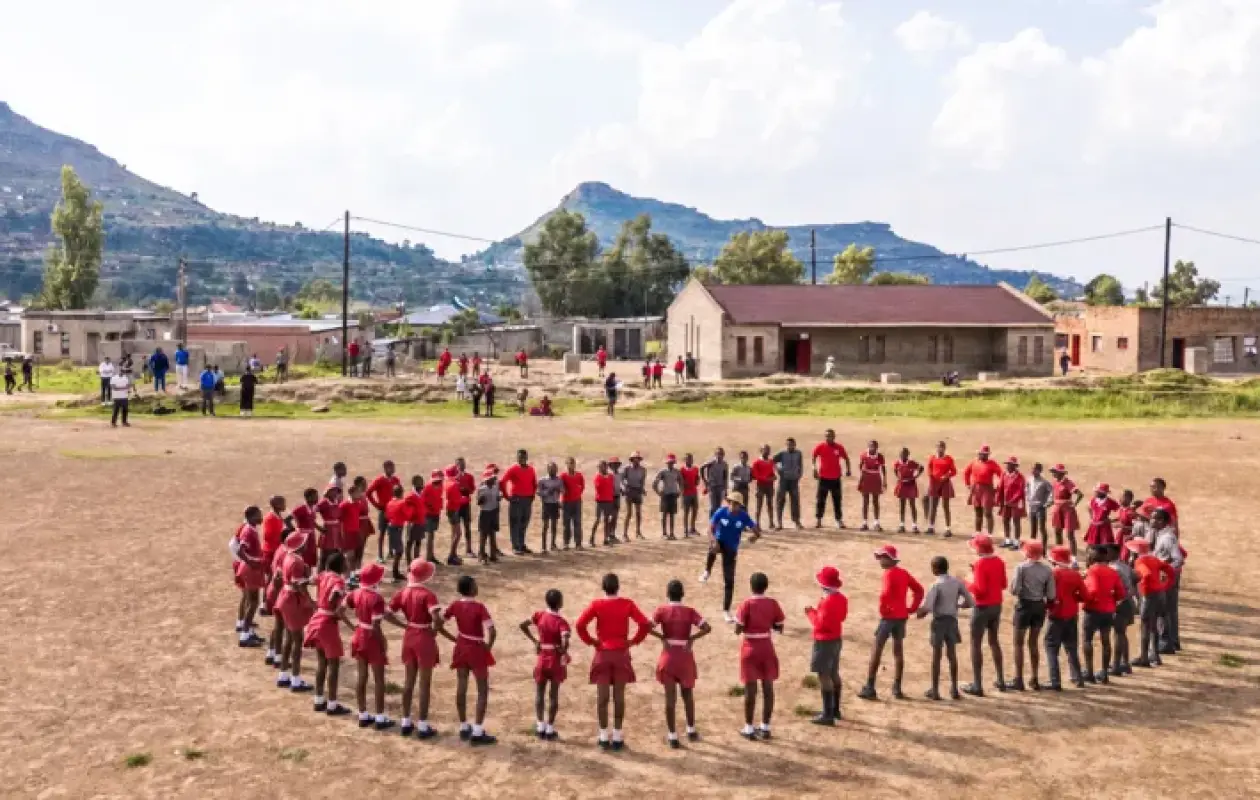
Sport en Afrique : Un potentiel économique encore largement inexploité
African sport is not just about major competitions, athlete performances, and international events. It also represents an economic sector with largely untapped opportunities. This is one of the key findings of the report presented in Dakar this Wednesday by the French Development Agency (AFD), the International Olympic Committee (IOC), and the World Bank, on the occasion of the Dakar 2026 Youth Olympic Games, the first Olympic event to be held on the African continent.
Manufacturing and marketing of sports equipment, coaching, infrastructure management, competition organization, media, tourism and related services: the sports economy encompasses a diverse range of professions and businesses. However, a significant portion of these activities remains informal or is carried out by small local organizations, whose economic contribution remains difficult to measure.
The report thus highlights that the development of this economy could be an important lever for job creation, particularly for young people, provided that skills are strengthened, local businesses are supported and the emergence of sustainable economic models is encouraged.
For Thomas Melonio, chief economist at the French Development Agency (AFD), the study's results confirm the existence of considerable economic potential. "This study on the sports economy shows that there is real potential to be exploited on the African continent," he emphasizes.
The example of Senegal illustrates this reality. According to data presented by the economist, approximately 10% of Senegalese households have at least one person employed in a sport-related job. Across the continent, nearly two-thirds of the population participates in some form of sports activity.
However, this strong demand is still hampered by a lack of facilities. Approximately 37% of sports activities take place in public spaces that are not specifically designed for sports. Nearly 20% of activities are practiced at home.
For Thomas Melonio, these figures highlight the urgent need to invest more in sports infrastructure in order to provide people with suitable conditions for practicing sports.
Training is another priority area. The economist cites the example of BEM, the management school where the meeting was held, which, with French support, provided training programs to prepare for the Youth Olympic Games. This illustrates how major sporting events can foster skills development and open up new career opportunities.
To document the sector's potential, the AFD, the IOC and the World Bank partnered with Ipsos, which conducted a survey of 6,000 people in eight countries: Morocco, Egypt, Senegal, Nigeria, Rwanda, Cameroon, Kenya and South Africa.
The people interviewed were questioned in particular about their sporting habits, the disciplines practiced, the places of exercise and the obstacles encountered.
Football, athletics, and speed walking are among the most popular activities. However, lack of time, insufficient infrastructure, and travel constraints all hinder more accessible participation in sports.
The study also highlights differences between countries in terms of club structure. Egypt, South Africa, and Kenya, in particular, have more developed sports club ecosystems, generating jobs in coaching, training, and supporting athletes.
In Senegal, despite significant sports participation, the structuring of clubs remains a challenge. However, this situation is gradually changing.
From the International Olympic Committee's perspective, this initiative aligns with the vision of Olympism 365, which aims to make sport an instrument for sustainable development. Maureen Rosita Ojong-Ebwabisong, manager of the Olympism 365 program at the IOC, points out that the collaboration with the French Development Agency (AFD) and Laureus Sport for Good, which began nearly three years ago, seeks to position sport as a lever for action in the areas of education and employability.
"Major sporting events provide opportunities to create jobs, stimulate the economy, but also promote urban transformation and the development of a country's infrastructure," she explains.
Through this report, the AFD, the IOC and the World Bank invite public decision-makers, investors and actors in the sports movement to consider sport as a fully-fledged economic sector.


















Commentaires (3)
Participer à la Discussion
Règles de la communauté
💡 Astuce : Utilisez des emojis depuis votre téléphone ou le module emoji ci-dessous. Cliquez sur GIF pour ajouter un GIF animé. Collez un lien X/Twitter, TikTok ou Instagram pour l'afficher automatiquement.
Se connecter
Commentez avec votre profil, votre photo, et soyez averti des réponses.