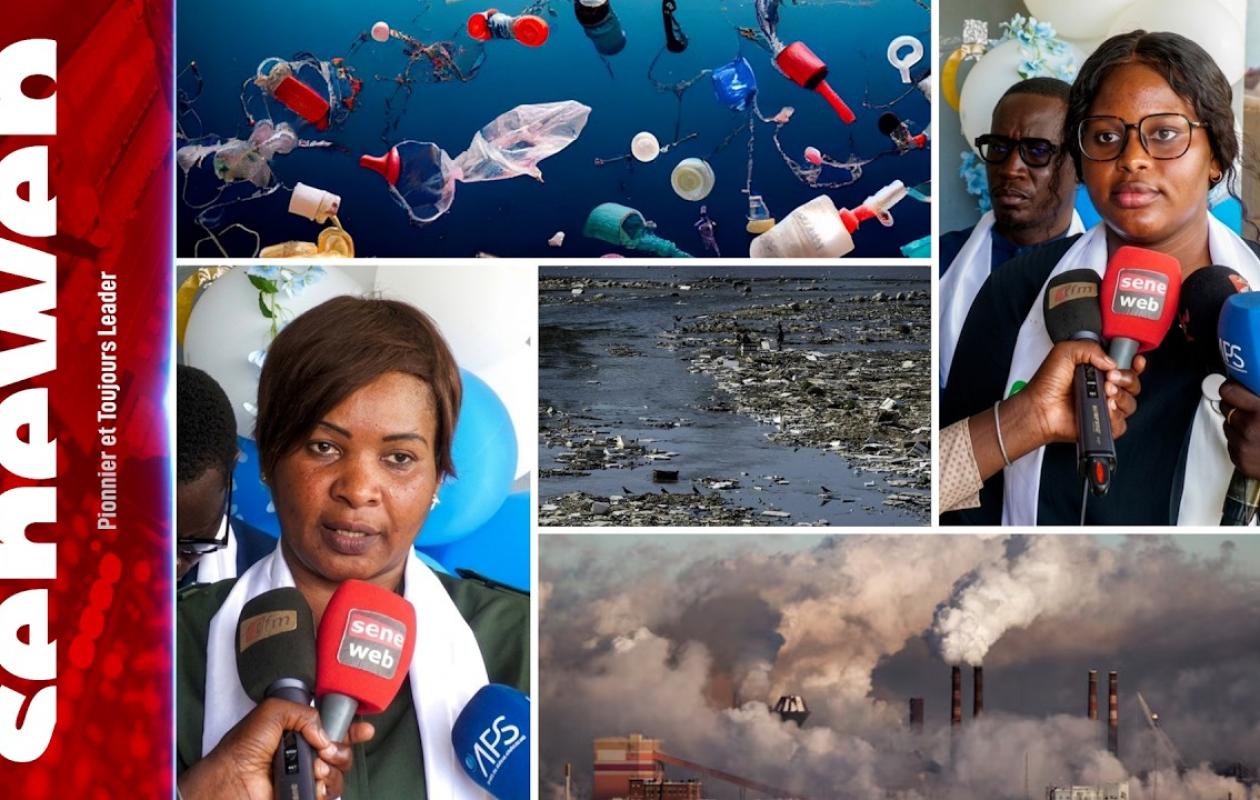
Raréfaction de l'eau et dégradation des écosystèmes : l'université de Thiès sonne l'alerte
Faced with the scarcity of water resources, the degradation of ecosystems and the increasingly visible effects of climate change, the Iba Der Thiam University of Thiès (UIDT) has chosen to place the challenges of sustainable development at the center of its 72 scientific hours organized by the Water and Environment Club of the Hydroscience and Environment department.
Placed under the theme "Acting for water, the environment and biodiversity: from awareness to scientific action", this meeting aims to go beyond observations by promoting scientific reflection and the search for concrete solutions to environmental challenges.
The issue of water is now one of the world's major challenges. Driven by the combined effects of population growth, urbanization, climate change, and pressure on natural resources, water needs are constantly increasing while available reserves are gradually dwindling. This situation challenges both policymakers and the academic community, who are called upon to propose research-based and innovative solutions.
“As young people called upon to meet the challenges of tomorrow, it is our duty to find solutions to environmental problems. The environment is everyone’s business. Through these events, we want to move from raising awareness to scientific action,” declared Adja Gana Faye, president of the Water and Environment Club. According to her, all stakeholders were mobilized to conduct discussions likely to lead to solutions accessible to the population and beneficial to the community.
Over these three days, students, researchers, experts, and partners will exchange ideas on how to better manage water resources, preserve biodiversity, and promote environmentally friendly practices. Discussions will also focus on public policy, waste management, ecosystem protection, and the contributions young people can make to achieving the Sustainable Development Goals.
The director of the Faculty of Sciences and Technologies at UIDT, Professor Mouhamadou Thiam, emphasized the importance of the chosen theme, stating that the issue of water is a major global challenge today. "Water resources are dwindling while populations are growing. Water needs are increasing exponentially. If we do not take the initiative to manage this resource, which is essential to our existence, we will face serious difficulties," he warned.
He stressed that efforts must focus not only on mobilizing water resources, but also on their conservation, rational exploitation, and optimal use. "The pressure exerted by human activities on water resources is increasing. The consequences could be disastrous if we do not act now, because it is simply impossible to live without water," Professor Thiam concluded.
The head of the Hydroscience and Environment department at the Faculty of Sciences and Technologies, Professor Seydou Ndao, urged students to put their skills to use for development. "We expect the students we have trained to become true agents of development," he stated.
Beyond the academic framework, these 72 hours of scientific activity aim to foster dialogue among various stakeholders in order to transform scientific knowledge into practical solutions that benefit communities. They serve as a reminder that environmental challenges demand collective action, where research, innovation, and citizen engagement are essential levers for building sustainable development.
Placed under the theme "Acting for water, the environment and biodiversity: from awareness to scientific action", this meeting aims to go beyond observations by promoting scientific reflection and the search for concrete solutions to environmental challenges.
The issue of water is now one of the world's major challenges. Driven by the combined effects of population growth, urbanization, climate change, and pressure on natural resources, water needs are constantly increasing while available reserves are gradually dwindling. This situation challenges both policymakers and the academic community, who are called upon to propose research-based and innovative solutions.
“As young people called upon to meet the challenges of tomorrow, it is our duty to find solutions to environmental problems. The environment is everyone’s business. Through these events, we want to move from raising awareness to scientific action,” declared Adja Gana Faye, president of the Water and Environment Club. According to her, all stakeholders were mobilized to conduct discussions likely to lead to solutions accessible to the population and beneficial to the community.
Over these three days, students, researchers, experts, and partners will exchange ideas on how to better manage water resources, preserve biodiversity, and promote environmentally friendly practices. Discussions will also focus on public policy, waste management, ecosystem protection, and the contributions young people can make to achieving the Sustainable Development Goals.
The director of the Faculty of Sciences and Technologies at UIDT, Professor Mouhamadou Thiam, emphasized the importance of the chosen theme, stating that the issue of water is a major global challenge today. "Water resources are dwindling while populations are growing. Water needs are increasing exponentially. If we do not take the initiative to manage this resource, which is essential to our existence, we will face serious difficulties," he warned.
He stressed that efforts must focus not only on mobilizing water resources, but also on their conservation, rational exploitation, and optimal use. "The pressure exerted by human activities on water resources is increasing. The consequences could be disastrous if we do not act now, because it is simply impossible to live without water," Professor Thiam concluded.
The head of the Hydroscience and Environment department at the Faculty of Sciences and Technologies, Professor Seydou Ndao, urged students to put their skills to use for development. "We expect the students we have trained to become true agents of development," he stated.
Beyond the academic sphere, these 72 hours of scientific activity aim to foster dialogue among various stakeholders, transforming scientific knowledge into practical solutions that benefit communities. They serve as a reminder that environmental challenges demand collective action, where research, innovation, and civic engagement are essential drivers for building sustainable development.






















Commentaires (1)
Participer à la Discussion
Règles de la communauté
💡 Astuce : Utilisez des emojis depuis votre téléphone ou le module emoji ci-dessous. Cliquez sur GIF pour ajouter un GIF animé. Collez un lien X/Twitter, TikTok ou Instagram pour l'afficher automatiquement.
Se connecter
Commentez avec votre profil, votre photo, et soyez averti des réponses.