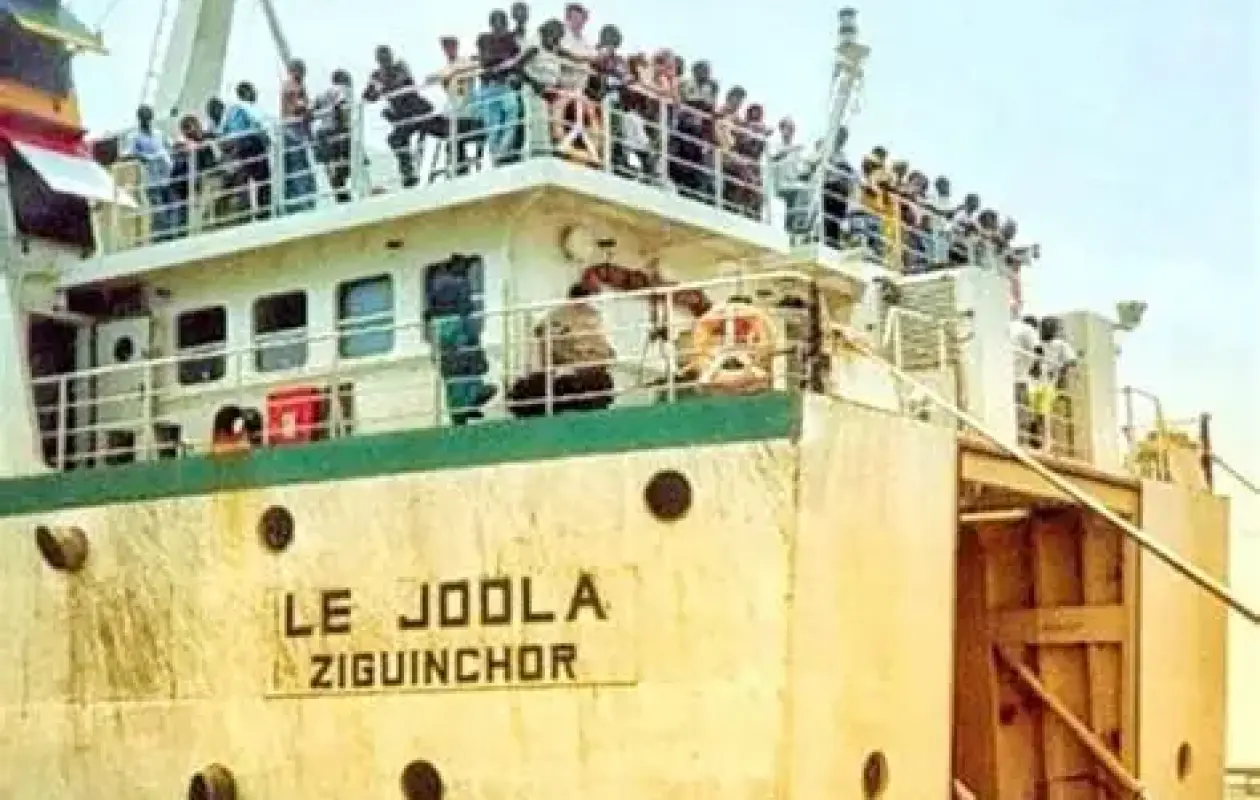
24 ans après le Joola, nos mauvaises habitudes flottent toujours !
Twenty-four years after the sinking of the Joola, Senegal remembers. Prayers, reflection, tributes… The country lowers its voice to honor its dead. But it only takes leaving the ceremony for our old habits to return. As if memory stopped at the cemetery.
The Joola had sunk under the weight of negligence, overloading, and irresponsibility. Twenty-four years later, some of these bad habits haven't aged a day. They're even running at breakneck speed.
On our roads, overloaded vehicles defy the rules, the police, and sometimes simply… common sense. A vehicle designed for fifteen passengers carries nineteen, sometimes more. In the "Cheikhou Charifou," getting on board is like playing the lottery: you take your ticket, say a little prayer, and hope the driver hasn't mistaken the steering wheel for a PlayStation joystick.
As for the "Jakarta" cars, some have become veritable mobile coffins. Without helmets, at high speed, they slalom between trucks, buses and cars, as if the road were a racetrack and life a game that could be restarted.
And the accidents? Always more violent. Always more victims. Always the same speeches afterwards: "We need to strengthen controls", "we need to punish", "never again".
Then a few days pass… and we start again.
The most terrible thing about the Joola tragedy is perhaps not just what we have forgotten. It is what we claim to have learned.
We mourn our dead admirably. But to spare them, perhaps we should begin by respecting the living.














Commentaires (2)
Participer à la Discussion
Règles de la communauté
💡 Astuce : Utilisez des emojis depuis votre téléphone ou le module emoji ci-dessous. Cliquez sur GIF pour ajouter un GIF animé. Collez un lien X/Twitter, TikTok ou Instagram pour l'afficher automatiquement.
Se connecter
Commentez avec votre profil, votre photo, et soyez averti des réponses.