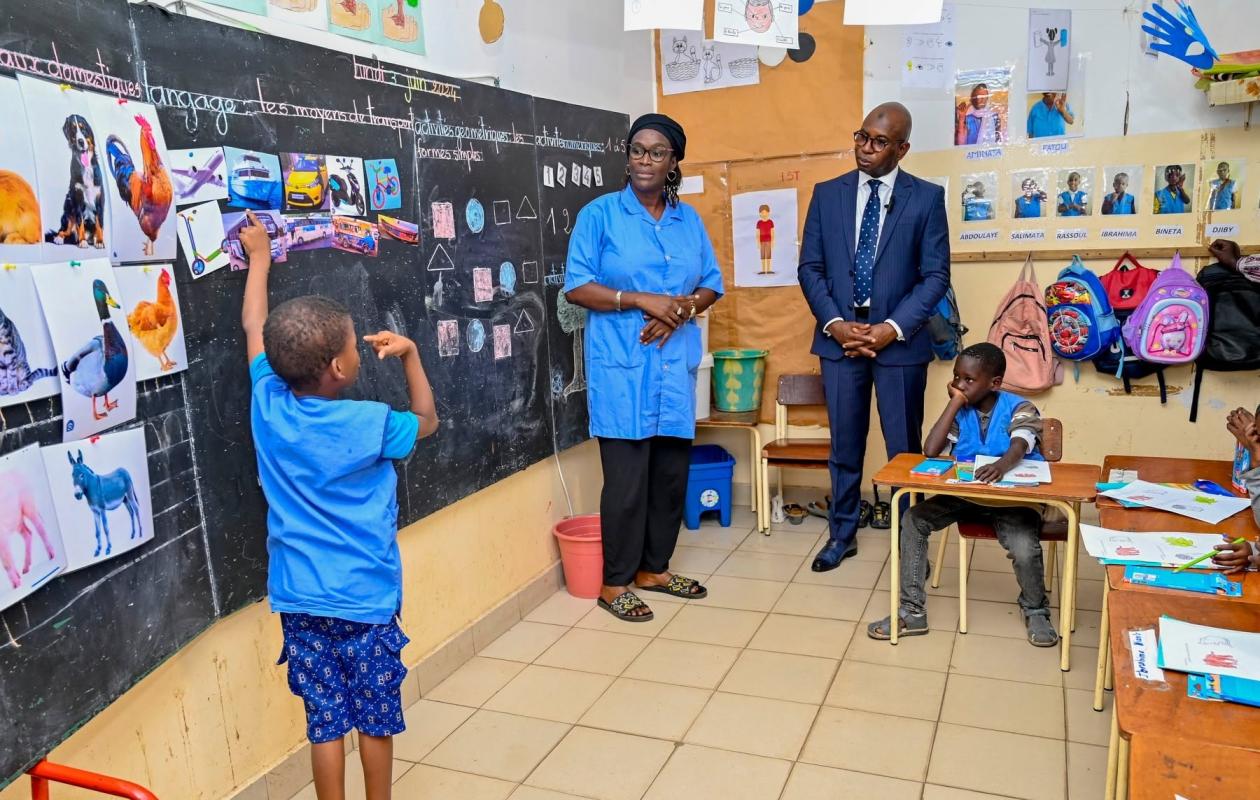
L'école sénégalaise sacrifiée sur l'autel de la rigueur (par Adama Sy)
The budget for the Ministry of National Education is reduced from 990.8 billion to 959.5 billion CFA francs in the 2026 supplementary budget bill, a decrease of 31.3 billion. At the same time, the payment appropriations from the Presidency of the Republic are increasing from 204.5 billion to 223.8 billion. This contrast is striking, given that Senegalese schools are facing a teacher shortage, the continued use of temporary classrooms, and labor disputes that could disrupt learning.
In a context of significant constraints on public finances, these developments raise a crucial question: what priorities does the State intend to protect when it reviews its spending? The increase in funding for the Presidency does not mean that the sums cut from the Ministry of Education have been directly transferred to it. Nevertheless, it raises questions about the budgetary choices made, given the ongoing needs of the education system.
On the ground, teacher shortages, makeshift shelters, and inadequate infrastructure continue to negatively impact learning conditions. Adding to these difficulties are the demands of teachers' unions, particularly those championed by the G7, which raise concerns about further disruptions to classes. In this context, any budget revision concerning education warrants careful consideration.
Which spending areas will be affected by this reduction? Will teacher recruitment, classroom construction, and programs designed to improve the quality of learning be maintained? What commitments is the government making to prevent financial constraints from leading to a decline in teaching conditions?
To obtain more details on the budget items concerned and the possible consequences of this revision, we tried to contact the services of the Ministry of National Education, without managing to obtain a response at the time of writing this contribution.
A decrease in funding does not necessarily mean an immediate reduction of all resources available to schools. However, it does call for explanations regarding the choices made and their potential consequences. The authorities must be transparent and specify how they intend to preserve investments and programs essential to education.
Read also: "G7 strike: Guirassy calls for a truce until after the Youth Olympic Games"
The state's financial constraints are real, as is the burden of debt. But they do not negate the needs of schools, the expectations of teachers, or, even less so, the right of children to learn in good conditions. Budgetary rigor cannot absolve the state of its responsibilities towards education.
A debt can be rescheduled, a budget revised, but the learning time lost by a child is difficult to make up. Beyond billions and compromises, the challenge is to preserve the conditions for quality education. Every day of school counts. Senegalese schools must not become the scapegoat for the state's financial difficulties.

















Commentaires (11)
Nos états se fouttent des priorités et des urgences de la population. On tue la santé, l'éducation pour grossir des fonds de voleurs après on nous raconte des salades. C'est pas serieux . c'est une déception que moi j'ai . Je comprend les difficultés avec la grosse dette que Macky nous a légué mais il y a de ces actes et orientations que je pensais fini mais erreur c'est encore le système.
et coome la FIG est géré par la presidence , le budget augment naturellment .
ces 30 millards ne sont pas laissé à le guise du PR .
Vous etes de mauvaise foi , vous n'avez meme pas essayé de lire la LFR .
Participer à la Discussion
Règles de la communauté
💡 Astuce : Utilisez des emojis depuis votre téléphone ou le module emoji ci-dessous. Cliquez sur GIF pour ajouter un GIF animé. Collez un lien X/Twitter, TikTok ou Instagram pour l'afficher automatiquement.
Se connecter
Commentez avec votre profil, votre photo, et soyez averti des réponses.