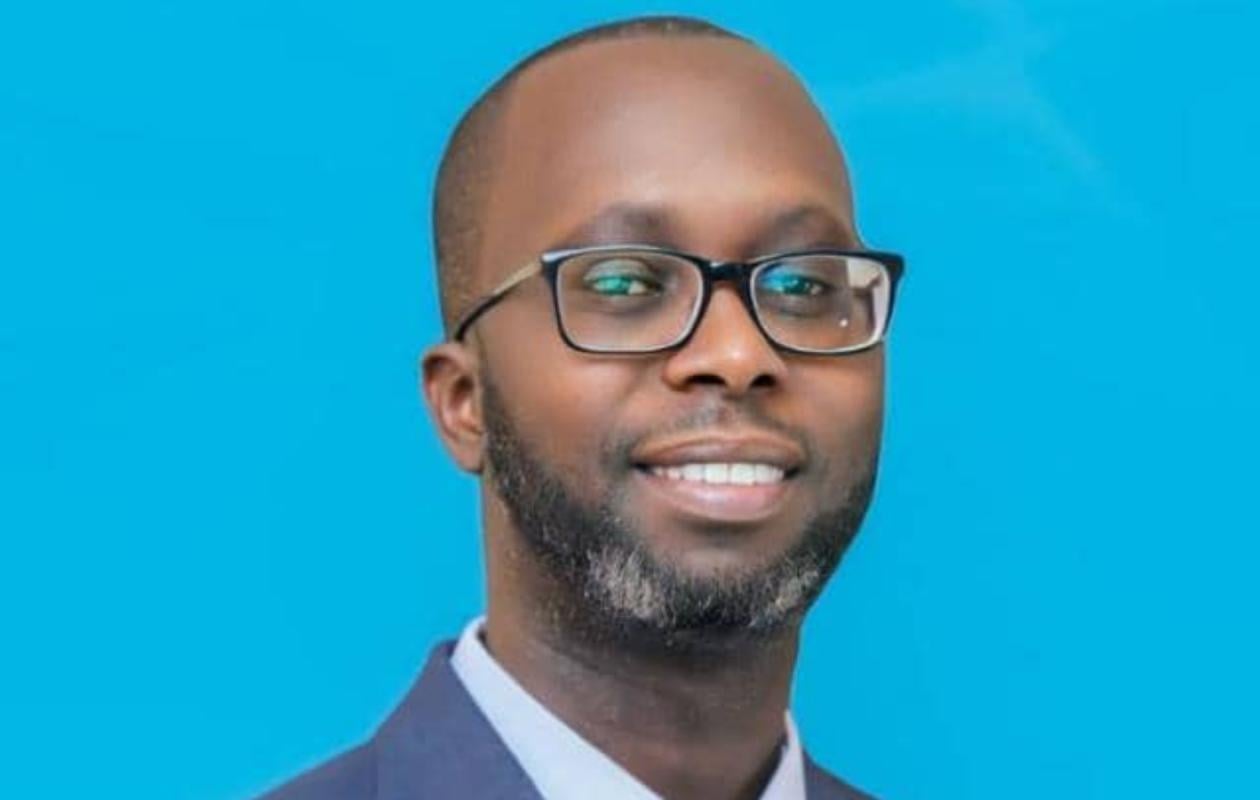
LE PASTEF FACE AU MIROIR DE SES CONTRADICTIONS (Par Made Codé Ndiaye)
"By rejecting the 2026 Finance Law, Ousmane Sonko's party is challenging measures that it itself conceived, defended, and implemented while in power."
There are times when politics ceases to be a debate of ideas and becomes an exercise in pure opportunism. The rejection of the 2026 Amending Finance Law (LFR) by PASTEF unfortunately falls into this category. Behind the grand speeches and accusations leveled against the government lies a reality that is difficult to ignore: PASTEF is now fighting against what it defended yesterday, disavowing what it itself implemented, and attempting to justify the unjustifiable at the cost of blatant political inconsistency.
The most troubling aspect is not that PASTEF opposes it. Every democracy needs a strong, vigilant, and demanding opposition. The most troubling aspect is that the arguments invoked to reject this amending finance law are in total contradiction with the actions taken by the same party when it held the reins of power.
WHEN CONVICTIONS CHANGE ACCORDING TO POLITICAL INTERESTS
First example: energy subsidies.
For two years, Ousmane Sonko and his government explained to the Senegalese people that the model of widespread subsidies had become unsustainable. Before the National Assembly, the former Prime Minister himself warned of the exorbitant burden these expenditures placed on public finances, a burden exacerbated by international shocks and geopolitical tensions.
Even better, the PASTEF government had made "targeted subsidies" one of the pillars of its economic doctrine. According to its own explanation, it was necessary to put an end to costly and inefficient mechanisms in order to concentrate public aid on the most vulnerable segments of the population.
How then can we understand that the same officials are now denouncing a direction that they presented yesterday as a national necessity?
The truth is simple: what was presented as a courageous reform when they were in power suddenly became a mistake as soon as they no longer control the political narrative alone.
Such a contradictory position is no longer a matter of democratic debate. It is a matter of political calculation.
FAMILY STOCK EXCHANGES: VIRTUOUS YESTERDAY, SUSPECT TODAY
The same bad faith appears in the debate on family security grants.
When these programs were included in the Sonko government's budget guidelines, they were presented as a tool for social justice, national solidarity, and the fight against poverty. No one within PASTEF saw this as an electoral ploy at the time.
But today, some officials from the same party claim that these devices would be used by President Diomaye Faye to create new voters.
How can a social policy change in nature without its principle changing?
Was it republican when it was supported by PASTEF and clientelist when it is pursued by others?
This logic leads to an absurd conclusion: a measure is no longer judged on its usefulness to the population, but on the political identity of the person who applies it.
This is a dangerous view of public action.
SPECIAL FUNDS: MORALITY WITH VARIABLE GEOMETRY
But it is probably on the issue of special funds that the contradiction reaches its peak.
For years, Ousmane Sonko built part of his political discourse on denouncing opaque state management practices. He demanded greater transparency and did not hesitate to describe certain financial governance mechanisms as incompatible with the requirements of good governance.
However, revelations following his departure from the Prime Minister's office established that these special funds, despite being criticized, were used during the years 2024, 2025 and 2026 without their framework having been reformed beforehand.
Therefore, one question remains unanswered:
Why use for three years a mechanism that one oneself presented as morally and politically questionable?
Principles are only valuable when they also apply to those who proclaim them. Otherwise, they cease to be principles and become mere instruments of political communication.
A PRE-PLANNED REJECTION
Even more worrying, everything suggests that the opposition to the 2026 Finance Law was decided even before the text was debated on its merits.
Before his presentation before the National Assembly, Ousmane Sonko had already announced his intention to wait for the government "at the foot of the wall", clearly implying that he intended to subject it to the same treatment that he felt he had suffered through the appeals before the Constitutional Council.
In other words, the problem may not have been the content of the LFR.
The problem was political.
The rejection seemed to stem less from an analysis of the proposed measures than from a desire to organize a power struggle and settle political scores.
Such an attitude is worrying. Because when a political party prioritizes revenge over consistency, the nation becomes the main victim of its calculations.
While politicians argue, the Senegalese wait.
The tragedy is that this power struggle comes at a time when Senegalese people are facing major challenges.
Families continue to bear the burden of the high cost of living.
Thousands of young people are looking for a job.
Farmers expect more investment and support.
Hospitals and schools need additional resources.
These are the real emergencies facing the country.
What the Senegalese people need is not a permanent political war. Nor do they need an opposition that supports a measure on Monday only to condemn it on Tuesday, depending on its current institutional position.
They expect leaders capable of transcending their immediate interests to serve the common good.
PATRIOTISM IS MEASURED BY COHERENCE
Ultimately, the issue of the 2026 Finance Law goes beyond a simple budgetary debate. It raises the question of political credibility.
Can one claim to embody change while fighting today against the reforms advocated yesterday?
Can one invoke public morality while freeing oneself from the demands one imposes on others?
Can one present oneself as the voice of the people while blocking measures designed to address their most urgent concerns?
The Senegalese people deserve better than opportunistic posturing. They deserve a political class guided by consistent convictions, not by fluctuating interests.
Because true patriotism is not proclaimed in rallies or press conferences. It reveals itself when partisan interests clash with the greater good of the nation.
And it is precisely in these moments that everyone is confronted with their history, their responsibilities, and their consistency. Today, by rejecting the 2026 Finance Law based on arguments it itself contradicted yesterday, PASTEF unfortunately gives the impression of having chosen political battles over the national interest.
Alas, the die is cast, it must be cast, Alea jacta est!
Made Codé Ndiaye
Telecommunications Engineer
Founding member of KIIRAAY - LPR




















Commentaires (13)
Analysons. Il rejoint quelqu'un qui a trahi, et il œuvre pour que la trahison triomphe. Un africain, un musulman, qui se bat pour que les valeurs humaines, qu'il avait érigé en standard, échouent. Sérieusement, vous pensez que ce sénégalais n'a pas un ressort cassé quelque part ?
Participer à la Discussion
Règles de la communauté
💡 Astuce : Utilisez des emojis depuis votre téléphone ou le module emoji ci-dessous. Cliquez sur GIF pour ajouter un GIF animé. Collez un lien X/Twitter, TikTok ou Instagram pour l'afficher automatiquement.
Se connecter
Commentez avec votre profil, votre photo, et soyez averti des réponses.