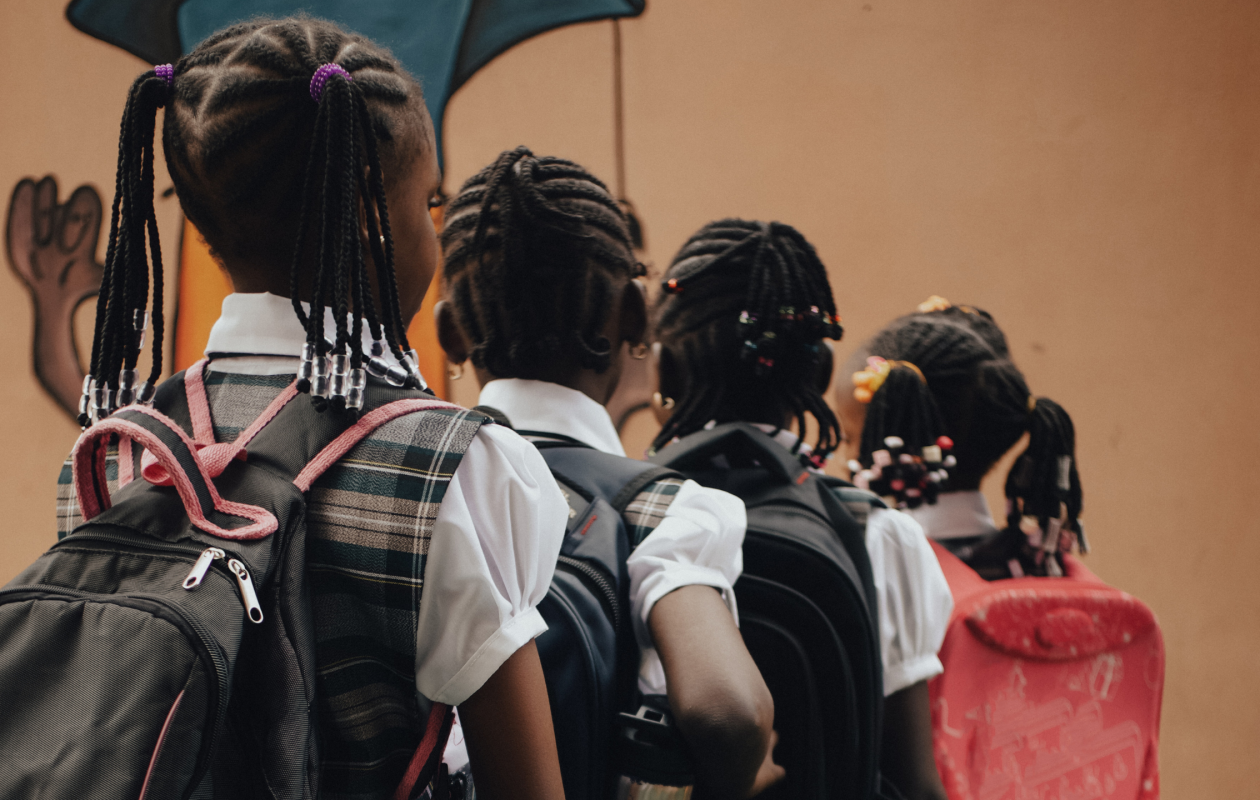
"130 000, 150 000, jusqu'à 300 000 FCFA..." : Écoles privées, le grand racket de la rentrée (1/2)
As the 2026-2027 school year approaches, the cost of schooling is proving particularly high for many families. In some private schools, registration fees reach 125,000, 130,000, 150,000, or even 300,000 FCFA for two children. But behind these amounts lies a much higher bill: monthly tuition, supplies, uniforms, meals, transportation… Seneweb spoke with parents facing this financial pressure. Between sacrifices, difficult choices, and compromises, their stories paint a picture of a tense back-to-school season.
Ms. Seck has two children, aged 2 and 5, who attend private school. For their registration, she paid a total of 290,000 FCFA: 150,000 FCFA for the younger child and 140,000 FCFA for the older one. Then there are the monthly tuition fees, which alone amount to 1,665,000 FCFA per year.
And that's just part of the bill. For the youngest, the supplies cost 63,000 FCFA. For the eldest, the expense is around 70,000 to 75,000 FCFA. School lunches are another expense.
“It’s excessive,” Ms. Seck stated. She said she didn’t understand why families had to set aside such sums right from the start. For her, the problem wasn’t just the amount to be paid, but the accumulation of expenses that accompanied each new school year.
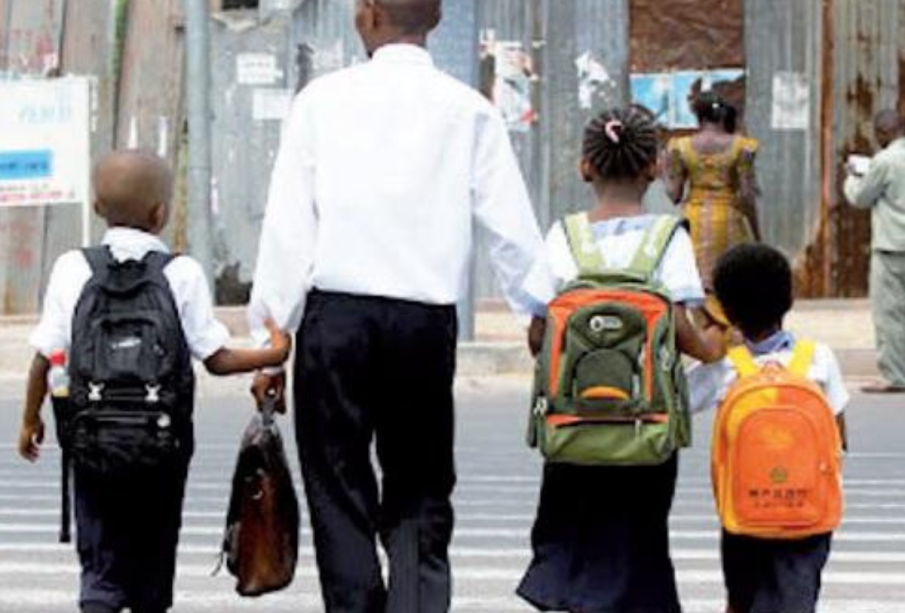
The mother is therefore calling for more regulation of private establishments and more visible state intervention on the prices charged.
But her choice of private school wasn't made lightly. She says she finds certain guarantees there that she feels aren't sufficiently found in the public system, particularly regarding childcare, continuity of education, and supervision. These concerns stem from her experience and perception, but they explain, in her view, why she continues despite the cost.
At Ms. Fall's house, the same scenario is repeated, with a bill that grows heavier with each expense item.
Her 3-year-old child is starting preschool. To take this first step, you already have to pay 125,000 FCFA for registration.
Then comes the annual tuition: 445,000 FCFA for the year, excluding registration fees and other expenses. In addition, there are 20,000 FCFA for uniforms, 17,000 FCFA for the canteen, and at least 25,000 FCFA per month for transportation, depending on the area.
In other words, the amount shown at registration is only the first bill. Once the various charges are added, the start of the school year quickly takes on a whole new dimension for families.
Ms. Fall also considers the fees high. She believes that choosing a private school should not mean that parents have to accept any level of expense.
She therefore calls for more control by public authorities and suggests in particular strengthening the preschool offering in large public schools, in order to offer more alternatives to families.
But behind the figures and expense charts, there are also life stories. The story of a widowed mother, in particular, perfectly encapsulates the brutality of the choices some families face.
Her three children were enrolled in private school. This year, she has to transfer them to public school. Since her husband's death, she has been solely responsible for part of the family's expenses and can no longer keep up with school costs.
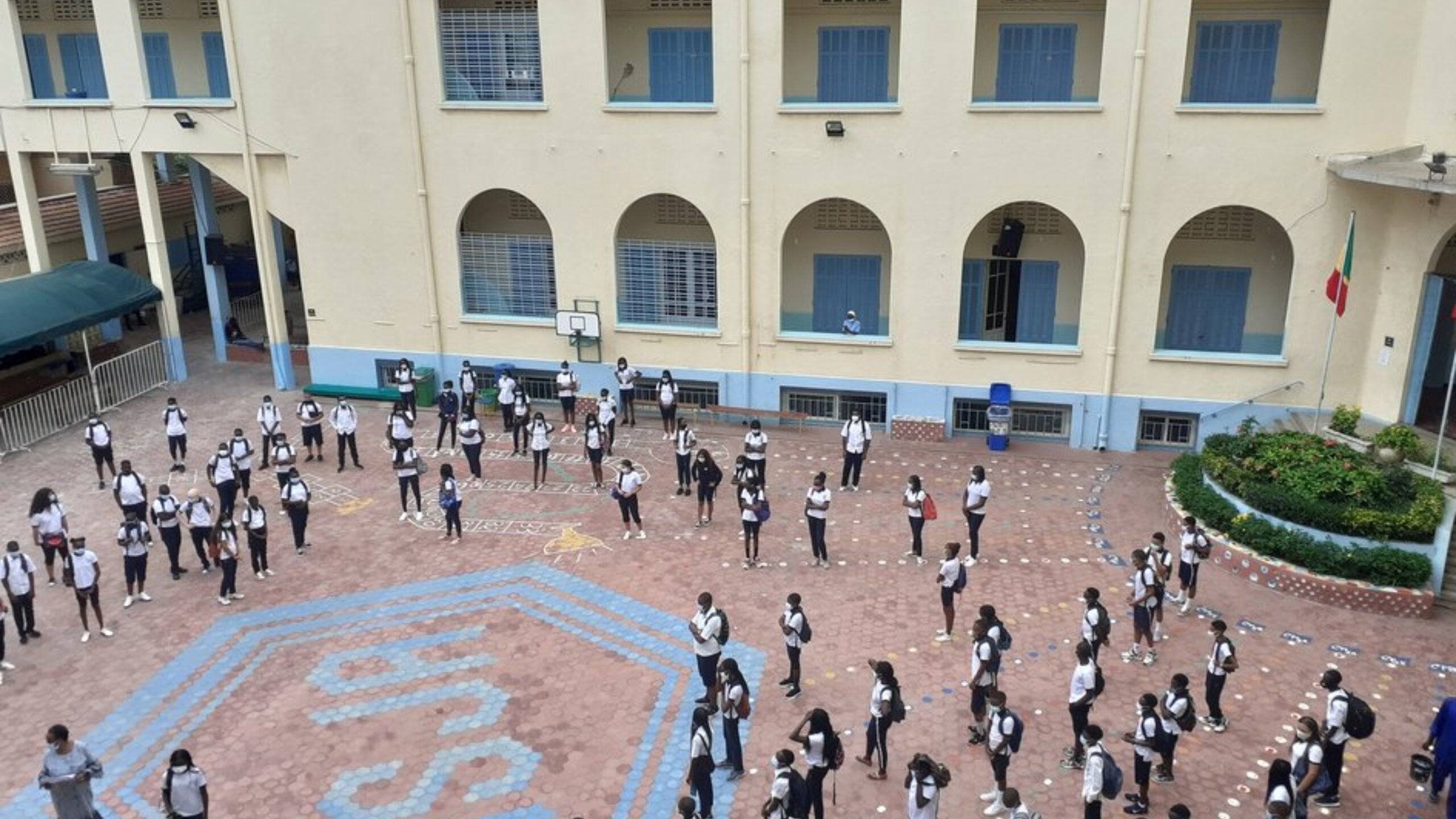
For her daughter who was due to start primary school, the school was demanding 130,000 FCFA just for registration.
“This year, my daughter is going to switch to public school. They’re asking me for 130,000 francs just for registration. It’s too expensive. It’s impossible,” she confides.
In his voice, the conclusion is unequivocal. What was once an acceptable expense has now become an impossible burden to bear.
With three children and daily expenses to cover, she says she no longer has the financial resources to spend several hundred thousand francs on schooling.
“Life is expensive. Purchasing power is not there,” she summarizes.
Her wish is simple: greater understanding from institutions, but above all, stricter regulation of fees. She calls on public authorities to take responsibility so that low-income families are not forced to forgo private education solely for financial reasons.
Another father interviewed by Seneweb also illustrates the financial burden of back-to-school expenses. For two children aged 3 and 5, he has already spent 300,000 FCFA on registration fees alone.
And this is just the beginning. Monthly fees, supplies, uniforms, canteen meals, transportation, and other expenses that add to the school bill will still need to be financed.
Throughout the testimonies, a single observation emerges: the true cost of private school is not limited to registration fees. It builds up month after month, expense after expense, until it becomes a significant burden for households.
For some parents, this means making difficult choices. Cutting other expenses. Looking for solutions. Or, like this widowed mother, completely changing the school system.
The parents interviewed by Seneweb do not question the existence of private education. They primarily demand greater clarity regarding fees, transparency about the amounts charged, and oversight of the schools' practices.
But this concern now extends beyond the families interviewed by Seneweb. Teachers, union members, and parent representatives are also questioning the level of fees charged in private schools.
For Prof Immature, a teacher and content creator, this surge can be explained by three factors.
“First, school has become a prestige business. Paying 150,000 FCFA for registration is not a need, it’s a message: ‘We don’t take everyone.’ We’re no longer selling education, we’re selling social distinction.”
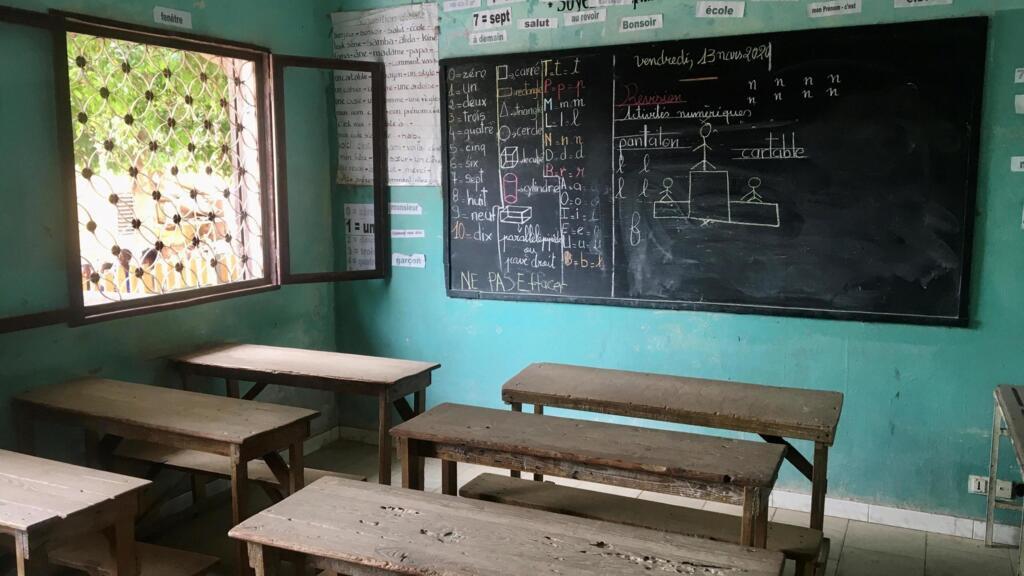
Next, there's the complete lack of regulation. Everyone sets their own price. The state has turned a blind eye. And since demand is high—because public schools are bursting at the seams with classes of 80 students—private schools are taking advantage.
Finally, the high cost of living has become an excuse. Yes, everything has gone up, but that doesn't justify going from 25,000 to 150,000 FCFA in 3 years.
For him, the threshold of excess is also linked to the amount of the minimum wage.
“My rule is simple: it’s excessive when it exceeds the minimum wage. The minimum wage in Senegal is 64,000 FCFA. When you ask for 100,000 or 150,000 FCFA just to submit a registration form, before even starting a class, you’re not enrolling a child, you’re eliminating a family.”
Regarding regulation, Prof Immature distinguishes between monthly payments and registration fees.
“I agree on one point: the State should not set the monthly tuition fees. If a school invests in labs, air-conditioned buses, and well-paid teachers, it has the right to charge 50,000 or 80,000 FCFA per month. That's the freedom to conduct business.”
But the State MUST intervene regarding registration fees. Registration is not an investment. It's an administrative act. It doesn't cost 150,000 FCFA to enter a name into a computer.
The limit is there: freedom regarding the quality of education, but strict control over the barriers to entry. The State can and must say:
Registration fees cannot exceed 50% of a monthly payment.
Obligation to itemize the invoice.
It is forbidden to charge the same price for re-registration as for new registration.
Even a private school fulfills a public service mission. The state is not a client, it is the arbiter.
The teacher and content creator also claims a role as a spokesperson for his community.
“I know my responsibility. When 1,500,000 people follow you, you can no longer just make videos to complain. You become a mouthpiece. My responsibility is to transform the parents' cry into a case.”
To the promoters of private schools, he says: "You have the right to earn a living, but not to enrich yourselves on the distress of September. A parent crying in front of your office is not a good customer, it's a failure."
He asks the parents:
"Don't stay silent any longer. Ask for a detailed receipt. Don't be ashamed to say it's too expensive. I'm here to amplify your voice."
And to the authorities and the Ministry of Education:
“Get out of your air-conditioned offices in September. Go to the schools. With 1.5 million people behind me, I'm telling you that families have had enough. We're not asking you to subsidize private schools, we're asking you to regulate them.”
His proposal to the Ministry of National Education is also clearly formulated. For this new school year, Prof Immature is calling for an immediate measure: capping registration and re-registration fees in private schools, while also imposing transparency on the fees charged.
“A single measure, applicable from this school year.”
Mr. Minister, issue a simple decree: cap registration and re-registration fees in all private schools at a maximum of 30,000 FCFA throughout the country, and require the mandatory and detailed display of prices in front of each school.
A single measure. Inexpensive. But it will bring relief to millions of families and show that the State has chosen its side: that of the parents.
On the union side, the question is also being raised insistently. Ibrahima Kambi, deputy general secretary of Sels Authentique, is directly appealing to the Ministry of National Education.
“This is a question we are asking the Ministry of Education: do private institutions still fall under its jurisdiction or are they now under the jurisdiction of the Ministry of Commerce? Because today, each institution seems to set its own rates, with very high registration fees, even though the economic context is not conducive to this.”
What's happening in some private schools looks more like a school business, where everyone is trying to maximize their profit at the expense of the parents. The ministry needs to clearly explain its responsibility and take action.
The Authentic Salts deplores with the utmost energy the level of registration fees charged in private schools.
"This is unsustainable and we urge them to lower the registration fees."
According to the union representative, these rates "are not justified in light of the law and the economic context in which we live."
He also believes that the Ministry of Education has the necessary means to regulate fees, as it does in the public sector.
“The right to education is a universal right. Every state must ensure the education of its children. Public school is free. Private institutions are an extension of public school. Whatever investments they make, they must not profit excessively from their mission.”
The appeal from Sels Authentique is therefore addressed directly to the Ministry of National Education.
“We are asking him to regulate the sector. If some want to make huge profits, let them go to other sectors of activity. We cannot accept the privatization of education.”
On the ground, this financial pressure is also not leaving parents' organizations indifferent.
For Abdoulaye Fané, president of the National Union of Parents of Students of Senegal (UNAPES) and permanent secretary of the International Federation of Parents of Students, the start of the school year has become a source of anxiety for many families.
"The start of the school year is a real source of anxiety for all parents of students, from preschool to university, and particularly at the level of private schools."
According to him, this situation reflects a worrying development in the sector.
“We are realizing more and more each day that education is being commodified. There are education merchants who are opening institutions to enrich themselves.”
Abdoulaye Fané points out that a symposium held in 2026 had already addressed these issues. However, he says, decisions are still slow in coming, particularly regarding tariffs.
“There was a symposium organized during the 2026 school year, and these issues were raised. However, the State is truly slow to make decisions regarding price standardization.”
According to the president of UNAPES, private establishments should also be subject to a labelling system allowing families to better navigate the options.
“Private schools must be certified, like hotels, so that parents know which private schools to choose. If it is recognized, if it truly meets with satisfaction, the State is encouraged to do this, also in coordination with parental organizations.”
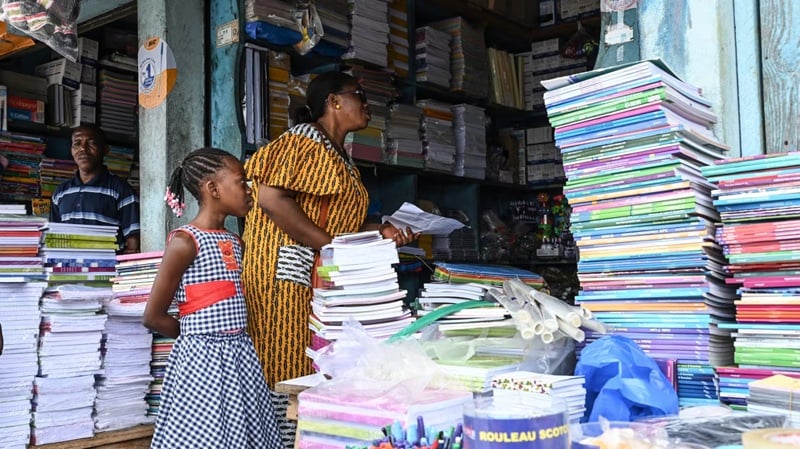
At the heart of UNAPES' concerns, the issue of tariffs remains central. Abdoulaye Fané denounces an increase that he considers difficult to justify in the current context.
“We believe that, indeed, the prices are outrageous, and we really need to call on the State to resolve this issue. It’s an inexplicable increase.”
He also emphasizes the accumulation of expenses that accompanies registration fees.
“They really need to take into account the other expenses: clothing, supplies, school transport… All of this is in addition to the registration fees and must be paid within a very short period of time.”
His appeal is ultimately addressed to the various ministerial departments concerned with education and training.
“This is an invitation we are sending to the State, particularly to the ministries in charge of education, higher education and even vocational and technical training, to make decisions regarding this.”
Behind the initial 125,000, 130,000, 150,000, or 300,000 FCFA payments lies an entire family economy that must be organized. How far can the pricing freedom of private institutions go, and where does the duty to protect families begin?
Parents, teachers, union representatives, and parent-teacher associations have shared their figures, their difficulties, and their proposals. Now, the authorities' response is needed: who sets the fees, what do the registration fees actually cover, and what controls are in place for private schools?
After the outcry from families and the appeals from stakeholders in the sector, it is now time for the response from the Ministry of National Education.



















Commentaires (59)
Avant c’était les recalés qui étaient dans les écoles
En attendant une solution structurelle avec l'Etat qui, jusque là n'est responsable de rien dans ce pays, il faut commencer par s'organiser soi-même en bannissant toutes les dépenses inutiles et de prestige (habillement superflu, fêtes à n'en plus finir, événements de tous ordres...)
Donnez nous les résultats du concours général en plus des statistiques des différents examens académiques du privé par rapport au public.
Les privés majoritairement recrutent des apprenants déjà bien voire excellents tandis que le public perfectionne les meilleurs et rend meilleurs les plus faibles.
Il faut arrêter ce complexe et rendre hommage à l'école publique qui fournit la meilleure crème aux administrations (publiques comme privés)
il faudrait plutot demander quel est le pourcentage moyen de réussite lors des examens entre le privé et le public?
D'un autre côté l'état doit travailler d'avantage sur les conditions de travail et le contrôle des enseignants de l'école publique afin de rendre ce dernier plus attractif aux yeux des parents.
Les meilleurs élèves sortent de l'école publique.
Ceux qui s'y adonnent en paieront le prix quels qu'ils soient.
Les écoles privées, vrais arnaque ces dernières années.
Certaines écoles ont mis en place une vraie mafia pour voler les parents. C'est la mafia des uniformes qui coûtent dans les 50000 Cfa ou même plus et qu'ils imposent aux parents de changer chaque année alors qu'un élève de l'école peut garder son uniforme des années précédentes. Il y'a aussi la mafia des fournitures et des livres qu'il faut renouveler chaque année. L'école va négocier des prix avec les éditeurs de livres et les imprimeurs pour les cahiers et ensuite venir les imposer aux parents. Il y'a la mafia de la restauration avec des vendeurs de sandwichs et de repas au sein de l'école qui sont en général des proches du chef d'établissement et souvent les propriétaires de ces restaurants sont le chef d'établissement ou les autres responsables de l'école. Il y'a la mafia dans le transport. Les parents sont saignés jusqu'à la dernière goutte de sang.
En plus des frais d'inscription, il faut payer les 1ère et dernière mensualité de Juillet, ce qui alourdit très fortement la facture.
Il ne faut pas hésiter à citer les noms des écoles privées qui font du commerce et qui rackettent les parents. Les sénégalais doivent savoir quelles sont ces écoles privées et les boycotter.
L état doit sévir
Moi j ai fait mon enseignement elementaire dans le publique mais j ai trois enfants tous dans le privé . Tout cet argent si notre system etait bon je pouvais l épargner et l utiliser pour construire une maison , etc.
Le fond du problème est qu il faut regler l enseignement elementaire, moyen et secondaire . Ces écoles privées en profitent et nous prennent en’otage.
Maintenant l enseignement supérieur celui qui veut peut mettre son enfant dans le privé.
Pourquoi un parent s'échine-t-il à mettre son enfant dans une école privée alors qu'il lui est offert de pouvoir le mettre dans une école que l'Etat met à disposition ? Juste une question de prestige comme quelqu'un ou certains l'ont dit avant moi ici.
Je ne suis ni acteur de l'éducation ni parent d'élève. Je voudrais simplement que chacun soit logique.
Si on veut pouvoir dire que son enfant fréquente telle école privée précise et en tirer une fierté, il faut simplement accepter les conditions financières fixées. On ne peut pas vouloir le "meilleur" pour son enfant en désirant que le bien désiré pour son élève ne soit pas en contrepartie de la satisfaction de celui de qui on attend ce meilleur. Tout est forcément proportionnel. Une concession d'une baisse du coût devra proportionnellement aller avec une baisse du package de prestations éducatives de l'enfant, ça va de soi, c'est une évidence, d'où l'inutilité du débat récurrent, en prélude à chaque rentrée des classes.
Personne par exemple n'entend poser de débat de baisser les prix dans les restaurants de luxe ou des buffets dans les hôtels etc. Ceux qui peuvent y aller y vont le plus naturellement du monde, et tous ceux se savent ne pas être financièrement à la hauteur ne pensent même y aller faire un tour, il se font la réalité des choses et fréquentent le plus normalement du monde les restos populaires et sen trouvent bien.
Hé bien, c'est exactement la même chose avec les écoles privées, ou on peut financièrement y mettre son enfant et on le fait ou bien on n'en fait du tout une fixation vu ses capacités financières et on fait avec l'offre du public où les élèves y réussissent aussi. Tout au moins on choisit du privé en corrélation correcte avec ses moins financiers.
Cet débat inutile doit s'arrêter
Avant c’était les recalés qui étaient dans les écoles privées.
Après les écolers privées , ce seront et ce sont déjà ,les universités privées qui ont des accords et des conventions avec les multinationales ,le réseautage etc...
Si l'Etat ne fait rien pour garantir une bonne éducation dans le public,c'en sera fini de l'idéal de l'équité et de la méritocratie avec la naissance de nouvelles castes d'élites fortunées qui se reproduiront ,comme en France et qui accapareront définitivement les hautes sphères .....Il faut sauver l'école publique (une véritable mission ,un sacerdoce, une volonté politique) pour permettre aux parents d'y garder leurs enfants.
Participer à la Discussion
Règles de la communauté
💡 Astuce : Utilisez des emojis depuis votre téléphone ou le module emoji ci-dessous. Cliquez sur GIF pour ajouter un GIF animé. Collez un lien X/Twitter, TikTok ou Instagram pour l'afficher automatiquement.
Se connecter
Commentez avec votre profil, votre photo, et soyez averti des réponses.