Contrôle des flux ou repli identitaire : Le Sénégal est-il en train de perdre sa Teranga ?
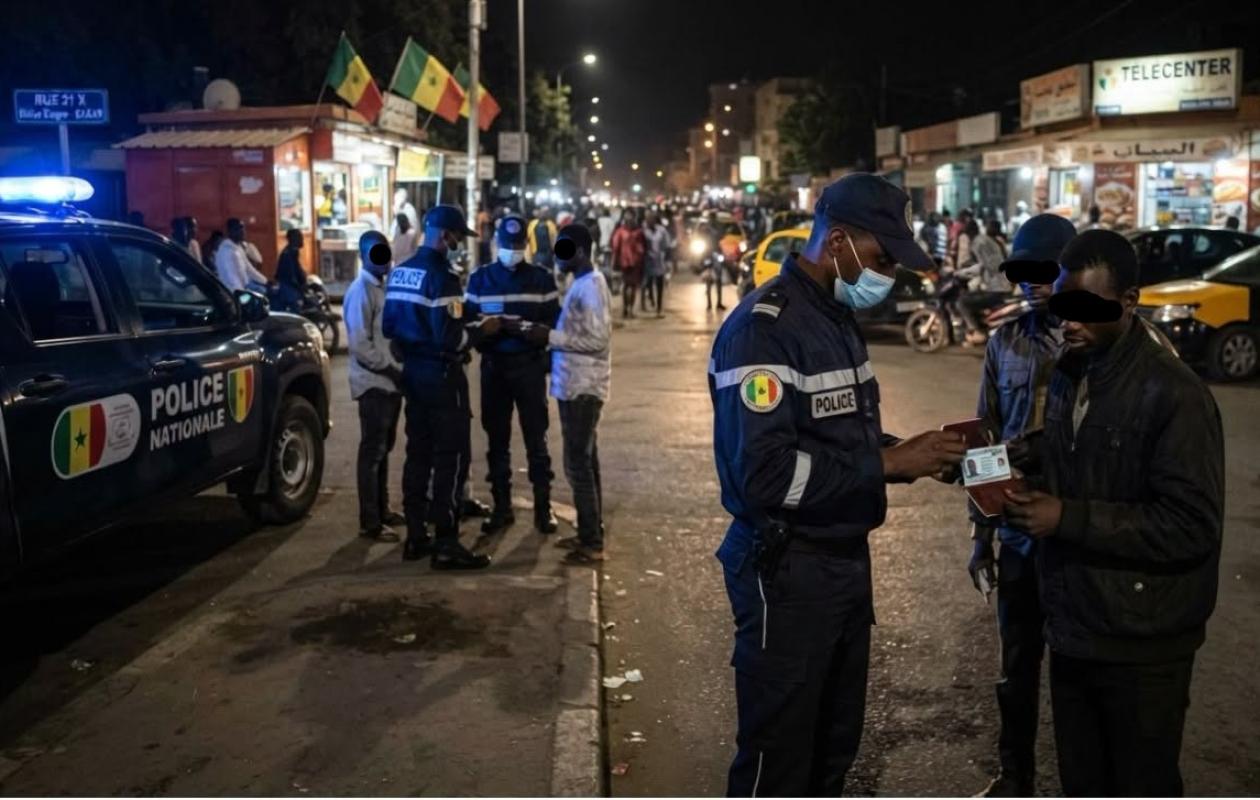
In Senegal, the debate surrounding the presence of foreign nationals and the regularization of migration flows has abruptly entered the public sphere. With targeted calls for expulsion on social media and increased controls on civil status records, the land of the legendary Teranga now finds itself caught between preserving its tradition of hospitality and the imperatives of national security.
To understand this national debate in all its complexity, it is necessary to analyze without filter the testimonies of everyday life, the alerts from citizens and parliamentarians, as well as the indispensable insights of human rights specialists.
In an environment where virtual discourse is becoming increasingly tense, the reality on the ground offers a striking contrast between professional opportunities and local identity tensions.
A peaceful economic collaboration
Based in Dakar for nearly five years, Yanice Yeba Iwembe runs an online pizzeria launched a year and a half ago. In managing his business, this foreign entrepreneur collaborates daily with local service providers, particularly Senegalese delivery drivers. "They are respectful and know how to do their job very well," he testifies with satisfaction.
However, as social media erupts and stigmatization recurrently targets the Fulani community—particularly the Fouta Fulani—rejection spills out of the virtual sphere and impacts daily life. It was in this tense atmosphere that Aïcha Ba, a young Fulani woman, had a bitter experience of this gratuitous hostility during a bus journey.
While carrying luggage and simply trying to hand money to a passenger to buy her a ticket, the man looked at her disdainfully before snapping, "Go buy your ticket yourself." Trying to avoid escalation, Aisha approached the conductor, but the man tried to cut in front of her. When she politely asked him to respect the queue, he launched into a tirade of insults and personal attacks.
For several long minutes, the young woman remained silent before finally saying, "I'll leave you with God." Just before going downstairs, after receiving a phone call with bad news, her attacker, suddenly calmer, came to ask for her forgiveness. Despite his apologies, the bitterness remained raw. "He's no more Senegalese than I am," lamented Aïcha, deeply affected by the senseless nature of such violence in a society that prides itself on living together in harmony.
Faced with these abuses, voices within civil society are calling for restraint and a sense of responsibility. While the legitimacy of demands concerning the regularization of foreigners is not contested, the emphasis is placed on preserving the values of empathy and solidarity.
A source is raising the alarm and urging Senegalese citizens to be cautious, even though they have the right to request regularization for certain foreigners. "It's important to understand that Senegalese people are scattered throughout Africa. Wherever they are, for the most part, they are well-treated and respected. We mustn't destroy this positive relationship," the source emphasized.
Regarding foreign beggars, the same source explains: “Most of them come from war-torn countries. They often leave their countries out of necessity… We should be much more humane and supportive of these people. No one wants to go to another country and live in precarious conditions with their children.”
This reminder to the collective conscience underlines a major diplomatic and human risk: exposing foreign communities or stigmatizing minorities in Senegal amounts to weakening, by reciprocity, the hundreds of thousands of Senegalese living abroad.
This public warning comes at a time when targeted attacks are multiplying online. Activists claiming to be nationalists have increased their hate speech and issued explicit ultimatums targeting the Fulani community of Guinean nationality, threatening their businesses and calling for expulsions.
Seized by the seriousness of these actions, MP Mbaye Dione of the XVth Legislature officially called upon the Minister of the Interior and Public Security as well as the Minister of African Integration and Foreign Affairs.
“As a member of the National Assembly, I strongly condemn these actions, which stem from unjustified hatred. Senegal and Guinea are bound by free movement agreements within ECOWAS. Any removal measure falls under the sole jurisdiction of the State and must be carried out in accordance with the law and conventions… These actions pose a real risk of public disorder and reprisals against our compatriots, while tarnishing the image of our country, a land of hospitality,” he stated.
The parliamentarian is calling for firm instructions to the defense forces to protect people and property, the mobilization of cybersecurity to stop the instigators of hate, and awareness campaigns to prevent any xenophobic shift.
Legal experts' analysis : Security sovereignty and anti-fraud safeguards
For lawyer Mᵉ Demba Ciré Bathily, the legendary Senegalese Teranga should in no way be used as a pretext for administrative laxity nor become a flaw in the national security system.
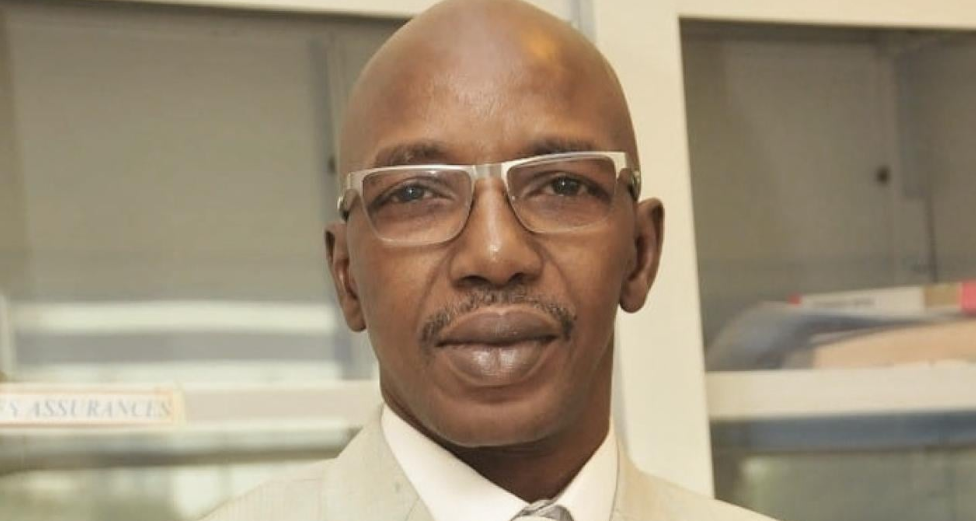
“Our traditions of hospitality, based on our legendary teranga (hospitality), must not become a security vulnerability that threatens to destabilize national cohesion. Whether in our relations with neighboring countries or the sub-region, the free movement of people and goods is a neighborhood imperative that must be preserved, but this cannot include permanent settlement and residence outside the bounds of laws and regulations.”
Mr. Bathily denounces the recurring fraud involving civil status documents and the illegal granting of Senegalese nationality, describing it as a veritable "invasion" of fraud. According to him, nationality should derive strictly from blood, marriage, or a legal naturalization process. He advocates for the mandatory implementation of a foreigner's identity card and strict regulation of the labor market to eradicate the uncontrolled informal sector, migrant smuggling, begging, and street prostitution. He argues that rigorous enforcement of the law is a matter of republican security, not xenophobia.
The light of human rights
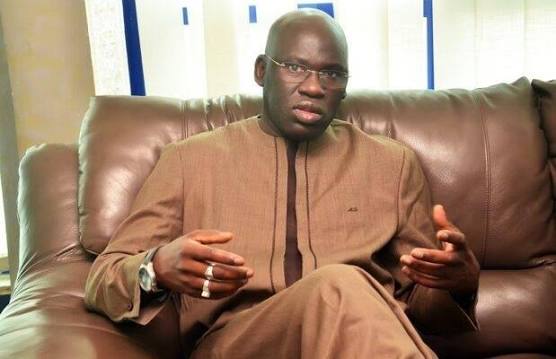
For his part, Mouhamadou Moustapha Diagne, a lawyer specializing in international human rights law and a program officer at Amnesty International Senegal, warns of the boundary between legitimate regulation and collective stigmatization.
“The problem arises when what should have been a calm debate on the state’s public policy on migration turns into collective stigmatization. We stop talking about rules applicable to everyone and instead single out communities as responsible for unemployment, the chaotic occupation of public space, or insecurity. Thus, instead of remaining focused on regulation, we create a scapegoat. We now find ourselves in a worrying gray area. The tipping point hasn’t been reached yet, but the warning signs are there,” he said, concerned.
From an international legal perspective, Mr. Diagne reiterates the three essential pillars of a migration policy that complies with the law:
The general principle: Rules governing residence established objectively and applicable to all, without distinction of nationality or ethnicity (in accordance with the ICCPR and the African Charter).
Proportionality: Any restrictive measure must be provided for by law, pursue a legitimate objective and remain strictly proportionate.
The prohibition of incitement to hatred: The strict prohibition of any call for discrimination, hostility or violence.
Regarding the 1979 ECOWAS Protocol, it is worth noting that it guarantees a right of entry and stay of 90 days without a visa. Rights of residence and establishment depend on national legislation, but any removal measure must be individual and lawful, as collective expulsions are strictly prohibited by international law.
Finally, on the notion of Teranga, he notes that while the value of hospitality remains alive on a daily basis, it suffers a marked deterioration on social networks, under the effect of digital urgency and the amplification of indignation.
🚨 May Allah protect us from this, but Senegal today fulfills all the conditions and presents all the signs of a conflict against foreigners.
The rise of xenophobia and public stigmatization is causing great sadness and deep fear… pic.twitter.com/6S1wlyqTCg
— Mansour Dasylva (@MansourDasylva)



















Commentaires (42)
Le Sénégal doit revoir ses politiques migratoires ; l'évolution des dynamiques sous-régionales, incluant la pauvreté, la guerre et les tensions intercommunautaires, impose la vigilance. Le pays doit réagir de manière proactive, en s'adaptant à ces changements et à la nouvelle réalité engendrée par des facteurs extérieurs.
Au Sénégal, par exemple, le système scolaire traditionnel n'est pas orienté vers la formation professionnelle et reste en décalage avec le marché du travail ; de même, le système d'enseignement religieux (les *Daras*) souffre de lacunes comparables en matière d'employabilité. Par conséquent, les emplois accessibles à ces jeunes se limitent à des métiers informels peu qualifiés. Malheureusement, ce flux massif d'étrangers se fait sentir dans les métiers disponibles dans ce secteur qui sont actuellement envahis par des migrants de la sous région, créant une concurrence féroce avec la jeunesse locale. Cette situation se caractérise par des comportements de groupe et une entraide visant à monopoliser certains secteurs par ces nouveaux venus, en s'appuyant sur une main-d'œuvre à bas coût qui fait chuter les salaires sur les chantiers et dans le commerce de détail ; cela s'accompagne et se caractérise souvent de conditions sanitaires précaires et de frais de fonctionnement dérisoires, les locaux commerciaux servant également de lieux de couchage, etc. Malgré les doléances exprimées par la jeunesse sénégalaise, le gouvernement a tardé à réagir face à cette situation inédite et inacceptable. Ces emplois informels qui offrent une première opportunité d'activité et permettent aux jeunes non qualifiés de constituer un capital de départ, devraient être réservés exclusivement à la jeunesse sénégalaise, plutôt que d'être ouverts à quiconque arrive de l'extérieur. Une telle situation ne fait qu'attirer au Sénégal des jeunes de toute la sous-région, au détriment de la jeunesse du pays.
Ce pays est devenu une passoire et les gens ont peur à cause du banditisme de certains étrangers.
Le mal est déjà profond.
Je suis là depuis 15 ans.
Je connais très peu de gens qui sont reellememt ami à un senegalais sans etree senegalais, africain y compris.
Le senegalais a plein de pression spciale et religieuse en plus il est jaloux et profiteur
Allez em afrique de l'est voir cest quoi de la teranga
téranga mo bordel deugeu
na rang yi dioup respecter les lois
Téranga bordel deugeu dans notre beau pays
Ils avaient essayé avec la religion,ça n a pas marché
Ils ont essayé avec le communautarisme ethnique,ça n a pas marché
Maintenant,ils essaient avec une autre méthode.
Faire respecter les lois par tous,c est très bien
Mais pointer tout le temps le doigt a une ethnique,c est pour créer les divisions qui ont couté chères a des pays voisins du Sénégal,alors faut pas tomber dans le piège,d autant plus que des millions de sénégalais sont aussi partout dans ce monde.
Zemmour s en prend a des gens ,plus français que lui,comme Yahirou Sarr,dont lui aussi les parents viennent de Mauritanie.
Il y a des gens qui vivent dans ce pays avant même qu il soit Senegal,c est à dire,du temps des royaumes.
Donc Yahirou aussi doit retourner en Mauritanie,ce Hardaan de teint sombre et maléfique.
J’ai également eu la chance de voyager dans plusieurs pays d’Afrique. Et ce que j’ai pu constater, c’est qu’en Afrique, de manière générale, on ne cherche pas forcément à compliquer la vie aux étrangers. La police peut vous interpeller pour un contrôle, mais lorsque vos documents sont en règle, vous êtes généralement rapidement relâché. Il y a une certaine considération et surtout cette valeur d’hospitalité qui fait partie de nos cultures.
Bien évidemment, il faut reconnaître que cette hospitalité n’est pas toujours facile à maintenir, car certains étrangers en profitent pour faire n’importe quoi ou pour se comporter de manière irresponsable. C’est justement cela qui est déplorable.
la teranga doit rester une valeur, mais elle doit aussi s’accompagner du respect des lois, des règles et du pays qui nous accueille.
Vous vous rendrez compte tu as des problémes de chômage et les étrangers viennent disputer les emplois précaires
Maintenant continuons avec notre teranga au Sénégal l'étranger est roi il ne paye rien ils saliss
le point d'orgue a été connu suite aux événements ayant opposé le Sénégal et la Mauritanie. Cette dernière a exploité le "filon" pour solder son problème interne en blanchissant le pays. Alors, quand Trump renvoie, nous crions. Quand la France renvoie, nous vociférons. Quand l'Algérie, la Tunisie, le Maroc et la Libye tuent, nous ne disons rien. En tout cas aussi fort que si c'était la France. Posons-nous et réfléchissons un peu sur la condition de l'homme NOIR. Avons-nous un destin commun, un objectif commun, une ambition commune? Sommes-nous plus forts réunis ou pas? que voulons-nous réellement? a qui profite notre désunion? Etc. etc. etc.
Participer à la Discussion
Règles de la communauté
💡 Astuce : Utilisez des emojis depuis votre téléphone ou le module emoji ci-dessous. Cliquez sur GIF pour ajouter un GIF animé. Collez un lien X/Twitter, TikTok ou Instagram pour l'afficher automatiquement.
Se connecter
Commentez avec votre profil, votre photo, et soyez averti des réponses.