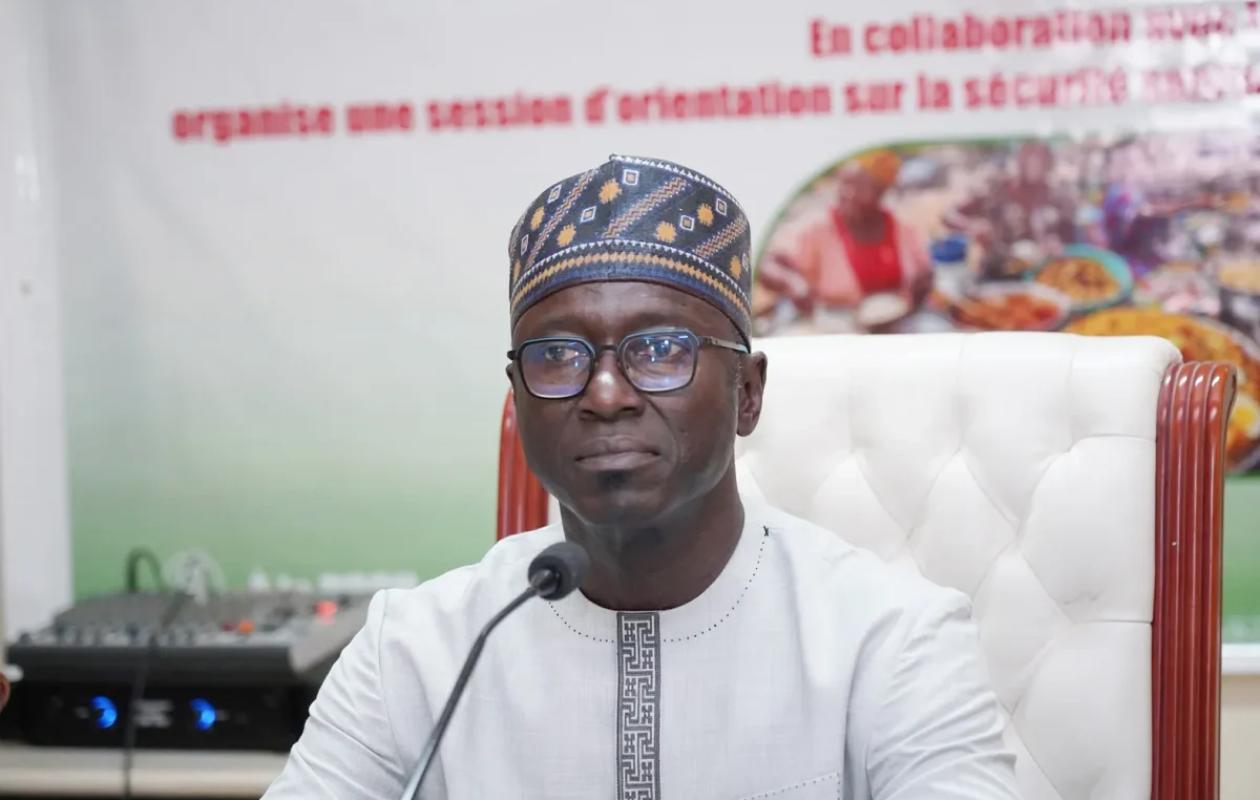
Dr Mamadou Ndiaye sur les risques liés à l’hygiène : « le fardeau est beaucoup plus lourd chez les enfants de moins de 5 ans »
Dr. Mamadou Ndiaye, an international food safety consultant with the FAO sub-regional office, provided an overview of the street food situation in Senegal in this interview. He discussed hygiene risks, the actions undertaken by the FAO in Dakar, Thiès, and Kaolack, and called for the mobilization of all stakeholders—vendors, consumers, and authorities—to reduce a health burden that particularly affects children under five.
What is meant by "street food" and what are the main food categories involved in Senegal?
Street food encompasses everything prepared outside the street, or prepared and sold on-site. This includes many types of food. In Senegal, we identified four main categories. First, cooked dishes like thiéboudiène and mafé; second, local juices; third, hot drinks; and finally, grilled food. These four categories are primarily sold on the street. In terms of composition, it's a complex preparation process involving the choice of raw materials, the preparation techniques, and also the issue of preservation.
What are the main hygiene messages you want to convey to stakeholders and consumers?
The first essential message concerns water. The water used by restaurant staff for food preparation, and the water used by those who produce juices. A significant effort is needed. The second aspect concerns personal hygiene. We must understand that over 70% of foodborne illnesses are bacterial in origin. Poor hygiene can transfer these bacteria into our food. Therefore, we must wash our hands much more frequently. The second message is that the utensils we use must be as clean as possible. The third message is that the individual themselves must be healthy. Furthermore, we must consider the environment in which food is handled, whether at home or in markets. When we see a garbage dump next to a fruit or vegetable stall, a consumer should not buy those products. This is the best way to ban them. No matter how much we ban something, people will come back, but every time there are buyers, the vendor will be there to sell. It is therefore essential to raise consumer awareness so that, in addition to price, they factor hygiene into their purchasing decisions. You don't need to be a rocket scientist to know that meat should be red, or that fresh produce should smell good. A putrid odor is a sign of spoilage. If we follow these basic guidelines, we can hope to reduce the risks.
What is the role of official control and how should it evolve?
Official oversight is a call to action. Everyone has a role to play: the producer, the consumer, but also the official oversight body, which encompasses several specialties. Veterinarians have their place, as do agronomists, as well as the trade department, the hygiene department, and the environmental department. These departments need to communicate better with each other. Currently, we have several competent authorities, but each remains isolated. We need more communication between the various official services. Another extremely important aspect is data generation. We have identified four priority sectors based on consumption data. Similarly, we need to produce scientific data on contamination levels to prioritize risks and decide, for the coming years, where to invest most effectively. We must move beyond the rigid approach where the inspector wakes up in the morning and says, "I'm going to the market to conduct an inspection." We need an oversight plan that effectively manages the limited resources available. This is the moment to prioritize in order to make the limited resources at our disposal more effective and efficient.
Is the health impact significant? And who is most vulnerable?
Yes, the impact is extremely significant. The burden related to food quality is heavy. In 2015, we went from 600,000 deaths to 1,520,000. That's enormous. We went from one in ten people getting sick each year to one in nine. And above all, the burden is much heavier for children under five. This is extremely serious. As parents, we are all implicated. That's why I'm calling for a global mobilization of authorities, stakeholders, consumers, and researchers so that we can win this battle for food safety.
Are efforts already underway in Senegal? Are they sufficient?
Efforts are being made, and we must not overlook them. For the past four years, the Faculty of Medicine, Pharmacy, and Dentistry has organized a scientific conference dedicated to food safety. This is an extremely important first step that deserves recognition. The Rector has promised to make it a regular event, and this year, the university itself organized it. This is a welcome step, but it is far from sufficient. We need an authority that guides us toward national priorities and validates the relevance of the control and monitoring plans developed by the regulatory authorities. We must also sustain this momentum, as Ms. Bintou Stéphane Chikaya, the representative and coordinator of the sub-regional office, stated. In fact, during the signing of the agreement, she found the initial budget insufficient and sought to increase the commitment. I believe these three days of work on food safety in Senegal are an important achievement, especially since I've been in this field for over 40 years. But it's just a start. We now need to build on this and scale it up, because while we worked in three cities—Dakar, Thiès, and Kaolack—that doesn't represent all of Senegal. The message needs to reach every region.
Kaolack is a pilot city. What is its specific role in this project?
Kaolack is an extremely important crossroads city. Many people travel there and have no other option but to eat on the street. And it's important to understand that this isn't a choice dictated by taste. People eat on the street out of necessity. In this city, I've seen some vendors make remarkable efforts, like one hot drink vendor. They should be held up as examples. Others still need to make an effort. It's not about attending a two- or five-day training course and then returning to do the same thing. What we're looking for are genuinely committed actions, vendors who are aware that they can be dangerous through their behavior or the quality of the product they offer. Official oversight has a responsibility. Inspections must be organized in such a way as to identify those who, despite training and equipment, make no effort, and be stricter with them. But I prefer that we focus more on those who are making an effort, because cleanliness isn't impossible. It's an individual investment, and then a collective one. Cleanliness is not linked to gender, ethnicity, or race; it is inherent to humanity.





















Commentaires (1)
Participer à la Discussion
Règles de la communauté
💡 Astuce : Utilisez des emojis depuis votre téléphone ou le module emoji ci-dessous. Cliquez sur GIF pour ajouter un GIF animé. Collez un lien X/Twitter, TikTok ou Instagram pour l'afficher automatiquement.
Se connecter
Commentez avec votre profil, votre photo, et soyez averti des réponses.