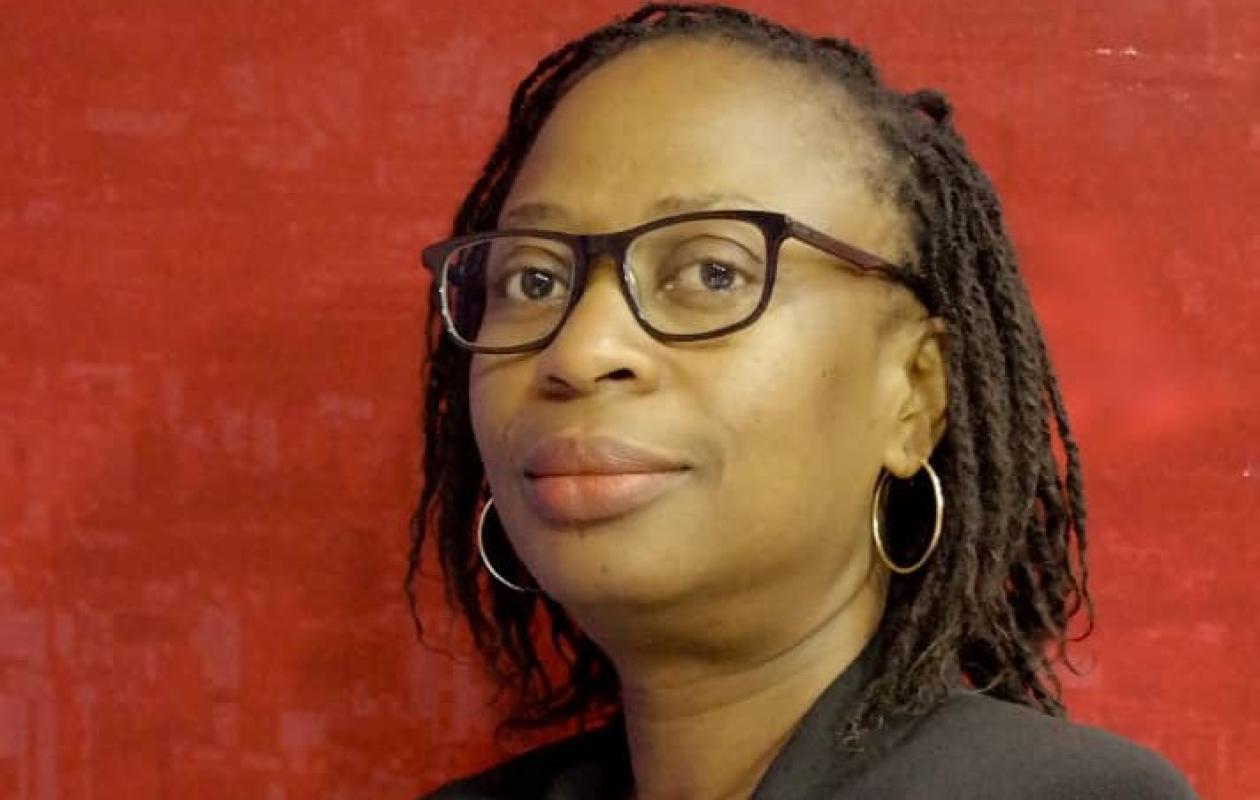
Fatoumata Bernadette Sonko : « L’univers politique sénégalais est régi par la règle du boys club »
A lecturer and researcher at the Center for Studies in Information Science and Technology (CESTI/UCAD), author of the seminal work *Women Silenced in Senegal: A Factory of Patriarchy*, and co-founder of the news platform Mousso.sn, Fatoumata Bernadette Sonko offers an uncompromising analysis of the place of women in the Senegalese public and political sphere. Interviewed following the formation of the transitional government led by Prime Minister Ahmadou Al Aminou Lo—which includes only 4 women out of 30 members—she deciphers the underlying causes of the recent controversies surrounding the physical appearance of the Minister of Youth and Sports, Djirèye Clotilde Coly. Between sexist double standards, competence bias, limitations of the parity law and the persistence of "boys club" codes at the top of the State, the academic calls for the deconstruction of moral and patriarchal norms that still confine women to predefined constraints.
Criticism of the Minister of Youth and Sports quickly shifted from questions of competence to focus on her physical appearance, hairstyle, and clothing choices. What does this focus on her body and style say about the current state of our society?
The political world is governed by the rule of the boys' club. The term "boys' club" evokes a world of men, made by men, for men, thus excluding women. Beyond the violence of the narrative and its representation, this controversy aims to raise a broader question: the transformation of relations between women and men. This change is difficult for some to accept, as they see female visibility in politics as a transgression of the patriarchal stronghold, especially when it is not confined to a subordinate role, which exacerbates sexist stereotypes.
In politics, women are often reduced to clichés of femininity that focus on their bodies. These bodies are subject to very strict social control, even more so in public spaces. Any failure to conform to traditional expectations of femininity therefore unleashes passions. This leads to baseless comments that relegate their competence to the background, reflecting their perceived place in society.
Victims of a double standard, they are scrutinized and judged on their physical appearance: their way of speaking, dressing, styling their hair, etc. This form of violence, amplified by social media, discourages many. The aim of this strategy is to delegitimize those who enter politics in order to better establish power dynamics.
"The example of Minister Djirèye Clotilde Coly perfectly illustrates the objectification of women's bodies in the public sphere."
In Senegal, certain lifestyle or aesthetic choices made by women—such as shaving their heads or even smoking—remain heavily associated in the popular imagination with a form of marginality, defiance, or moral deviance. Beyond the political debate, isn't Minister Djirèye Clotilde Coly bearing the brunt of this trial by "respectability"? How can we dismantle these deeply ingrained prejudices in society?
The "women's body" remains a source of obsession for the patriarchal regime. This "other" body must be subjugated and controlled socially, politically, and religiously, from birth to menopause. And women, who have no rights over their own bodies, suffer this dispossession through a barrage of moral injunctions. The example of Minister Djirèye Clotilde Coly perfectly illustrates the objectification of women's bodies in the public sphere. A comprehensive educational effort is needed to question the institutions that legitimize knowledge and confine women within predefined constraints. The time has come to break free from this form of "respectability" and redefine these ossified norms. For women will not earn respect with carefully chosen words.
It is noticeable that a large number of harsh criticisms and value judgments also originate from female profiles on social media. How do you explain this active participation of women in denigrating other women who have risen to power?
Women internalize, through socialization, sexist stereotypes deeply rooted in our society and perpetuate them. Codes like hairstyles, with which most Senegalese women identify, seem to be subverted by the choice of the Minister of Sports, who demonstrates that another form of femininity is possible. The uninhibited image she projects is bound to be unsettling. Otherwise, nothing can justify such virulent attacks, which are a continuation of patriarchal ideology, except perhaps the "cultural" insecurity into which it plunges women.
The dynamics of women's inclusion in the political sphere have always been peripheral. They promote values still built on traditional foundations, enshrining only publicly acceptable stances according to established norms. This virtual lynching, fueled by groupthink, is not surprising. Visible women constantly face harassment and intimidation for stepping outside the established framework. Hence the importance of seeing some women raise their voices in the public sphere. Indeed, it is with this in mind that the Mousso.sn news platform was launched, to bring these voices out of the shadows.
Following the disciplinary action taken against a CESTI student for remarks deemed disparaging towards the minister, the debate has crystallized around the defense of freedom of expression and the protection of human dignity. Where, in your opinion, should the line be drawn between legitimate political criticism and sexist speech in a democracy?
Defending freedom of expression and protecting human dignity go hand in hand. I believe that freedom of expression should not be used as a cover to attack people in any way. We have reached a point where private and public life are intertwined on social media. This blurring of boundaries challenges the ethical foundations to which we are bound. This can be problematic, especially considering that ethical standards evolve over time.
With only 4 women out of 30 members in the government formed by Prime Minister Ahmadou Al Aminou Lo, several feminist leaders are calling it an "unacceptable" step backward. Do you share this assessment of regression, or is it a symptomatic step in a political transition that is struggling to embrace female representation?
This is not unprecedented in our political history. The marginalization of women is systemic. They have always been in a very small minority in all governments and have often held minor portfolios, with the exception of the two female prime ministers. Such a situation should come as no surprise in a society riddled with misogyny and the dehumanization of women. Moreover, an uninhibited male clique at the highest levels of government makes decisions that continue to relegate nearly half the population to the sidelines. Such is the way of the times.
"Politics has always been a male-dominated and exclusive field in our country. And, considering the results of public affairs management since 1960, I honestly doubt the competence of men themselves."
To defend this low representation, some invoke the exclusive primacy of "competence" over gender. What is your response to this objection?
This is a false debate. On what basis are competence criteria determined? Who determines them? And for what purpose? From the answers, we can already see that politics has always been male-dominated and exclusive in our country. And, considering the results of public affairs management since 1960, I honestly doubt the competence of men themselves. Who can show me data proving that men are more competent than women?
Several biases permeate the political lives and representation of women. While efforts have certainly been made with the parity law of 2010, dismantling the mechanisms built up by patriarchal history over the years will take longer.
Isn't the problem the very profile of the women who get involved? The image of some female members of parliament, often associated with highly polarized verbal sparring, raises questions. Doesn't this climate of ultra-controversial confrontation ultimately disqualify women's political voices and discourage those with more expertise and technocratic profiles?
The problem lies in focusing solely on the actions of certain female members of parliament, ignoring all the work they do in an environment based on power dynamics, confrontation, and polarization. Those who master the tools of this environment are automatically stigmatized because the role assigned to them in the political sphere is built on subordination, placing less emphasis on their competence. It is often forgotten that these parliamentarians are elected based on a political party's platform, not on women's issues. Therefore, this is not an image that is revolutionary but, above all, one that reinforces stereotypes.
"The parity law doesn't go far and remains essentially quantitative."
Former minister Ndioro Ndiaye suggested that women should not focus solely on ministerial positions, but should also invest in other areas of power such as agency directorships or ministerial offices. Is this an effective pragmatic strategy or a concession that renders women invisible at the highest levels of government?
You know, the title of minister is considered a crowning achievement. A position that gives you a certain visibility, and is therefore more attractive. The idea of expanding positions of power to women is interesting. It will allow us to reconfigure the circles of power and decision-making bodies. But it remains insufficient. Who makes the appointments? Mostly men, who co-opt and protect each other. Hence the importance of paying more attention to appointment procedures, which must be based on fair criteria and free from any partisan or sexist bias. And this is possible with political will, but the root of the problem is still too deep.
Faced with the persistence of this cultural and political resistance, the parity law in Senegal seems to show its limitations when it comes to the non-elected executive branch. Should we rethink our legal mechanisms of enforcement?
This example can sometimes illustrate the disconnect between certain laws and the lived experiences of the population. In their speeches, politicians make equality between women and men a fundamental value. But in reality, it's a very hostile environment for women, who are penalized by the very workings of politics. So, while the parity law is important, it doesn't go far and remains essentially quantitative. Behaviors and attitudes have changed little regarding the place and role of women, and sexist media coverage fuels the perception of their incompetence.
Interview conducted by Adama Ndiaye
















Commentaires (34)
Participer à la Discussion
Règles de la communauté
💡 Astuce : Utilisez des emojis depuis votre téléphone ou le module emoji ci-dessous. Cliquez sur GIF pour ajouter un GIF animé. Collez un lien X/Twitter, TikTok ou Instagram pour l'afficher automatiquement.
Se connecter
Commentez avec votre profil, votre photo, et soyez averti des réponses.