Comment l’Ukraine parvient à mener des frappes en profondeur sur le territoire russe
Over a thousand kilometers: that's the distance separating the Russian city of Nizhnekamsk from the Ukrainian border. Yet, Ukrainian drones have managed to strike sites there, and this is not an isolated incident. Kyiv now regularly attacks oil facilities, military bases, weapons factories, and other strategic targets located deep within Russia. How does Ukraine manage to bypass Russian air defenses and conduct strikes so far away?
In the public imagination, a drone most often resembles a small quadcopter. To reach targets located more than a thousand kilometers from its borders, Ukraine uses aircraft of a completely different nature. Those that penetrate deep into Russian territory fly for hours to deliver an explosive payload to their drop point.
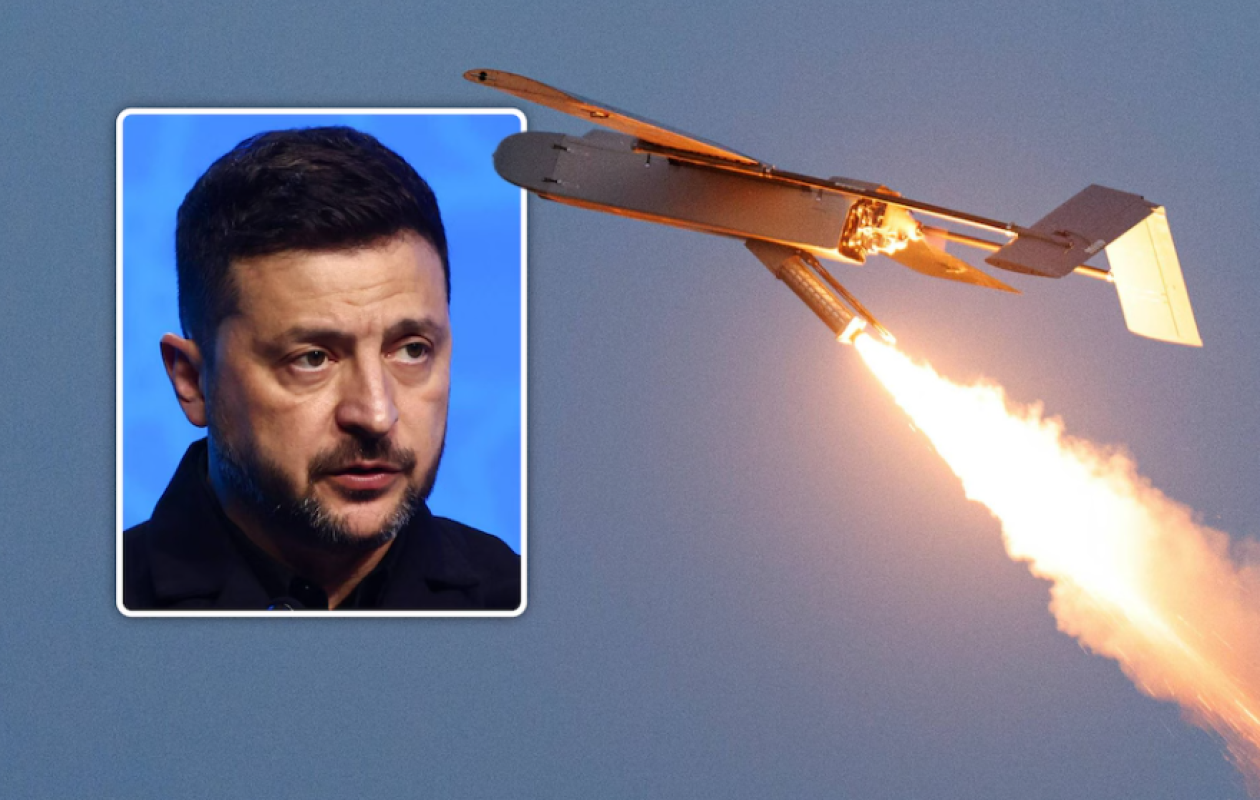
Among the devices most frequently used by Kyiv are those from the Ukrainian company Fire Point. Some are equipped with a jet engine and can carry up to 60 kilograms of explosives. Priced at around €46,000 each, they are relatively inexpensive for destroying facilities worth millions of euros.
Elite units in command
These operations are conducted by the Unmanned Systems Forces (USF), a branch created in 2024 and specializing in drone warfare. “On the front lines, a regular soldier can pilot a drone,” explains former Colonel Roger Housen. “But for long-range operations, you need specially trained teams.”
One of these units is called Raid. It works closely with the army, the SBU security service, and the GUR intelligence service. While one service conducts the attack, another diverts the attention of Russian radar. When interviewed by British media, a commander compared this collaboration to an orchestra. “Each instrument has its own role, but it is only together that they make music.”
The most dangerous phase of these operations begins even before takeoff. Because a launch reveals the position of Ukrainian troops, Raid uses temporary sites. Each site is used only once. As soon as the drones are airborne, the team packs everything up and disappears as quickly as possible.
Every second counts, as Russia constantly searches for these launch sites using reconnaissance drones in order to retaliate immediately. Several teams have already been eliminated in this way.
Once airborne, many long-range drones fly largely automatically. This is made possible by enhanced GPS navigation, based on pre-entered coordinates. “It works a bit like your car's navigation system,” explains Roger Housen. But this technology is vulnerable, as Russia jams GPS signals on a large scale, and it's impossible to develop foolproof electronic protection.
The most modern drones use a smart alternative, with a kind of integrated Google Maps. “The device recognizes the terrain and thus flies autonomously to its destination, without depending on GPS.”
Using Russian cell towers
If a drone pilot wants to control their device live during the flight, Ukraine theoretically uses the Starlink satellite network, but it is blocked over Russia.
To circumvent this difficulty, Kyiv is now using the Russian mobile network itself. The drones connect to Russian 4G and 5G base stations via local SIM cards. “This allows an operator (drone pilot, ed.) located hundreds of kilometers away to continue piloting the aircraft in real time,” explains Roger Housen.
But this method is akin to a perilous game of cat and mouse, as Russia can shut down the local mobile network as soon as a drone approaches. Since such a flight lasts several hours, drone pilots take turns during the journey.
Flying a drone a thousand kilometers is one thing. Making it traverse Russian airspace for hours without sustaining any damage is quite another. While Russia certainly has a vast air defense network, the country is too large to provide complete coverage.
“Of course, a drone like this can’t remain invisible for a thousand kilometers,” Roger Housen points out. Ukraine is therefore exploiting the blind spots of Russian radar. “By flying just above the treetops and through valleys, we literally go undetected on the radar screen.” Digital maps of the terrain help the aircraft autonomously follow its route and slip through gaps in defenses.
If a route is secure, Ukraine then focuses on quantity. During large-scale operations, several drones are launched simultaneously. Not all of these devices have the same objective. Some serve solely as diversions to overwhelm Russian radar, allowing the explosive drones to reach their targets undetected.
“This is what we call airspace saturation,” explains Roger Housen. Cruise missiles can also approach simultaneously from different directions, at different altitudes, and at different speeds. “At some point, the system is overwhelmed and has to make a choice,” Housen clarifies. “And choosing always means losing.”
Deep strikes primarily target the infrastructure that enables the Russian war machine to function: refineries, factories, railways, airports, and so on. Even the warehouses of Wildberries—the Russian equivalent of Amazon—are targeted. “The Russians also use these commercial networks to transport uniforms, radios, and spare parts,” notes Roger Housen.
However, priorities are shifting. Due to the shortage of extremely expensive Western anti-aircraft missiles, prevention is also gaining importance. It's no longer a matter of waiting for a missile to be launched, but of destroying the launch site before it fires. “Our drones have thus become both offensive and defensive weapons,” a Ukrainian military officer from Raid told The Times. President Volodymyr Zelensky has therefore ordered an intensification of these preemptive attacks against launch sites.
Ukraine thus touches upon a fundamental weakness of Russia: its immense size. Unlike a small country like Israel, Russia cannot possibly cover its entire vast territory. “There are defensive positions around specific targets, but the rest is exposed,” explains Roger Housen. “We literally fall through the net.” This presents the Russian military command with a dilemma, because any air defense system tasked with protecting a refinery located deep within Russian territory is, by definition, not deployed to the front lines.






















Commentaires (5)
Une terrible catastrophe humaine quelque soit la position que l'on a sur les causes de cette guerre ultra meurtrière!
Participer à la Discussion
Règles de la communauté
💡 Astuce : Utilisez des emojis depuis votre téléphone ou le module emoji ci-dessous. Cliquez sur GIF pour ajouter un GIF animé. Collez un lien X/Twitter, TikTok ou Instagram pour l'afficher automatiquement.
Se connecter
Commentez avec votre profil, votre photo, et soyez averti des réponses.