Crise migratoire à Ceuta : solidarité avec l’Espagne, espace Schengen, contrôle des frontières… Ce qu’il faut retenir de la réunion d'urgence des ministres européens de l’Intérieur
European interior ministers met on Tuesday following the unprecedented influx of tens of thousands of migrants into Ceuta. According to Laurent Nuñez, criticism of the Schengen Area was dismissed, as member states agreed that the free trade zone was not the issue.
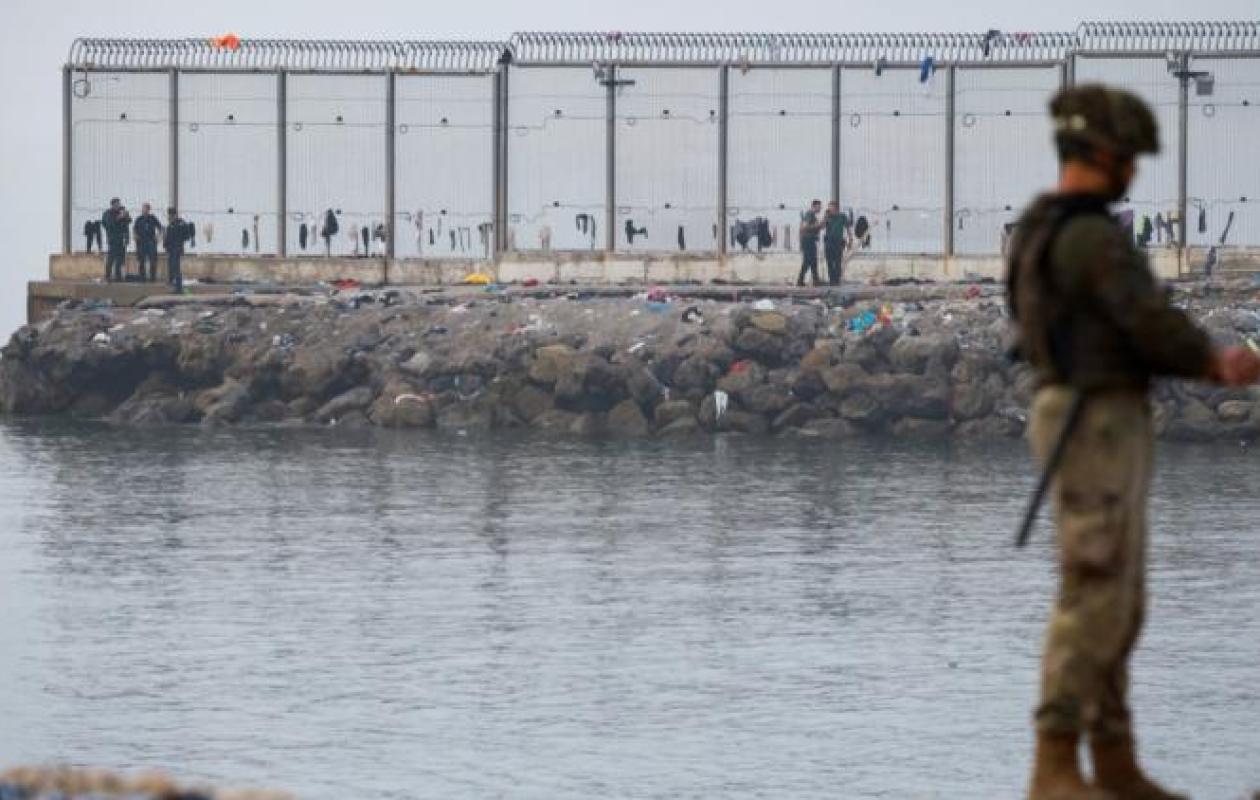
An emergency meeting to draw lessons from an unprecedented migration crisis. On Tuesday, August 4, the interior ministers of the European Union countries met by videoconference, at the initiative of Ireland, which holds the rotating presidency of the Council of the EU. At the heart of this discussion: the illegal arrival of tens of thousands of migrants from Morocco in the Spanish enclave of Ceuta on July 30.
During this informal exchange, member states expressed their "deep solidarity with Spain," paving the way for de-escalation after the diplomatic crisis triggered within the EU by the influx of migrants. It was acknowledged that communication during crises "could be improved" and "needed to be more consistent," according to an initial report of the meeting.
"Information interference" mentioned
Present at this meeting, Laurent Nuñez indicated that all participants deplored the "informational interference of foreign states" which used the images that were circulating massively "to criticize the European Union's migration management policy" and "try to divide the member states among themselves."
A certain dissension among the 27 member states did indeed emerge at the height of the crisis. Some European countries, including Italy and Denmark, had notably called for Spain to be suspended from the Schengen Area. During this videoconference, however, the European interior ministers agreed that the free movement zone was not the issue.
“Everyone agreed that the Schengen Area wasn’t really the problem, but rather the solution,” stated Laurent Nuñez. For his part, the Spanish Interior Minister asserted that the Schengen Area had not been “compromised in this crisis,” maintaining that it had “never been in danger, not even minimal danger.”
Denmark is satisfied with Spain's response
According to the latest estimates from Spanish authorities, at least 72,000 migrants have illegally entered the enclave of Ceuta. The Spanish Interior Minister has stated that 70,000 of them have already returned to Morocco. Denmark has praised Madrid's response to this migration crisis.
“I am very pleased that Spain reacted quickly, particularly by deploying the police and the army, and that many migrants have already returned to Morocco,” said Danish Minister for Immigration and Integration Morten Bødskov. “These events show that it is absolutely essential that we maintain control of the European Union’s borders,” he added in a statement released after the meeting.
Laurent Nuñez reminded member states that France was ready to assist the Spanish authorities "in supporting or reinforcing Frontex," the European Border and Coast Guard Agency. "We have decided to strengthen controls at the Franco-Italian border," the Prime Minister also announced.






















Commentaires (1)
Participer à la Discussion
Règles de la communauté
💡 Astuce : Utilisez des emojis depuis votre téléphone ou le module emoji ci-dessous. Cliquez sur GIF pour ajouter un GIF animé. Collez un lien X/Twitter, TikTok ou Instagram pour l'afficher automatiquement.
Se connecter
Commentez avec votre profil, votre photo, et soyez averti des réponses.