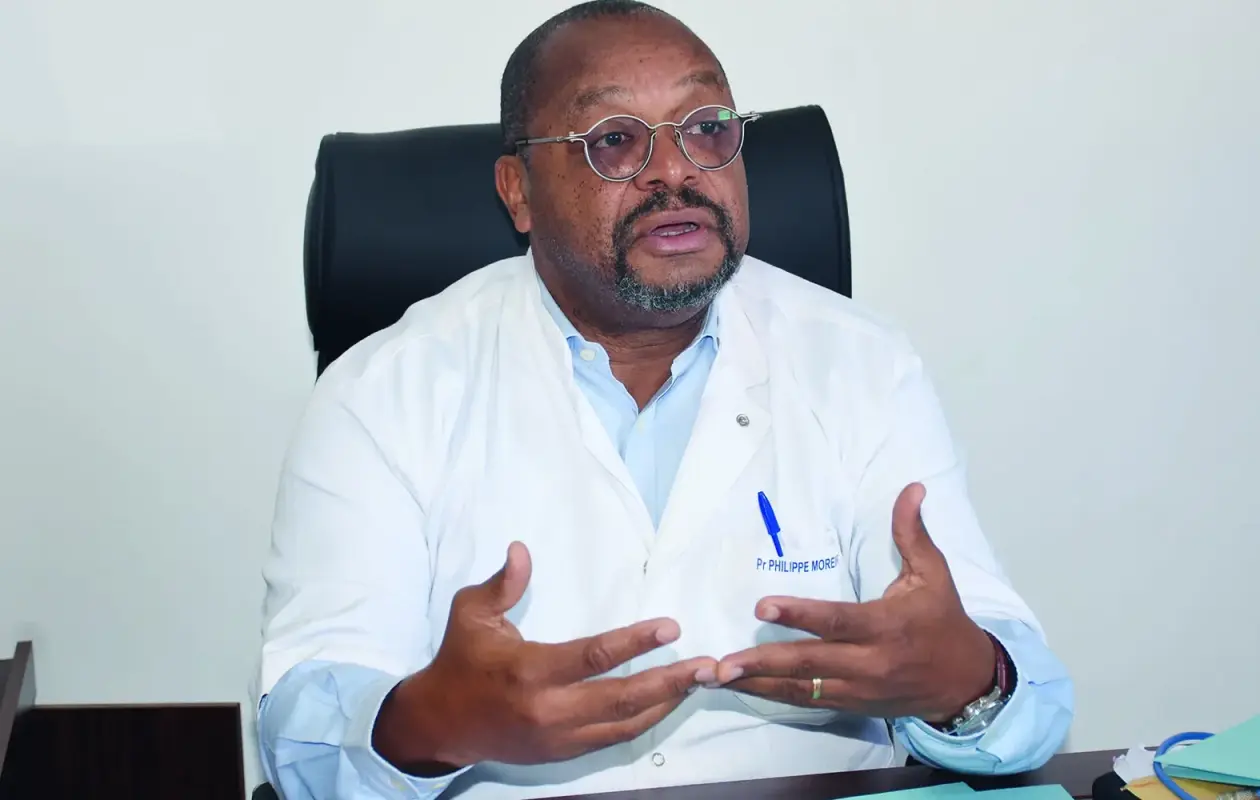
Horloge biologique et maternité : Ce que révèle le Pr Moreira sur les risques de repousser une grossesse
Faced with the progressive increase in the age of first pregnancy, information on reproductive health should no longer be a taboo subject reserved for women in their thirties. During a training workshop for health journalists in Dakar, Professor Philippe Marc Moreira, a specialist in gynecology-obstetrics and assisted reproductive technology, sounded the alarm. Referring to the decline in ovarian reserve as early as age 29 and the acceleration of difficulties after age 35, the doctor advocates for integrated fertility education starting in middle and high school to enable women to make informed life choices.
Female fertility remains surrounded by many misconceptions. Many women are still unaware that their chances of conceiving inevitably decline with age and that time is a determining factor in their plans for motherhood. For Professor Philippe Marc Moreira, a specialist in gynecology-obstetrics, medicine, and assisted reproductive technology, this biological reality must be explained with complete transparency.
The specialist was speaking at a capacity-building workshop for journalists organized by the Association of Journalists in Health, Population and Development, in partnership with the Directorate of Maternal and Child Health (DSME), focusing on the fight against infertility and its social implications.
An ovarian reserve that inevitably diminishes over time
Unlike men, whose sperm production is continually renewed, women are born with a limited stock of oocytes that gradually diminishes throughout their reproductive life.
Professor Moreira emphasizes that women should be informed about this physiological mechanism as early as possible. He places the beginning of fertility decline around age 29, with a more pronounced drop starting at age 35 and significantly increased difficulties in conceiving after age 40. Although these guidelines remain indicative—fertility varying from woman to woman—the specialist reminds us that postponing pregnancy for several years mechanically reduces the chances of natural conception.
Schools and universities: Strategic spaces for raising awareness
For practitioners, raising awareness of reproductive health should not only occur when the first difficulties with infertility arise within a couple. It should begin in adolescence, in middle schools, high schools, and universities.
The goal is not to impose a marriage or maternity calendar, but to equip young women with the essential knowledge to anticipate the effects of time. Professor Moreira emphasizes the shared responsibility of healthcare professionals and the media to disseminate reliable scientific information free from societal taboos.
Infertility: A comprehensive medical approach to risk factors
Beyond the biological clock, declining female fertility can be explained by complex pathologies: ovulation disorders, endometriosis, the after-effects of infections, or blocked fallopian tubes. A thorough medical evaluation is always necessary as soon as any delays in conception appear.
Through his communication, Professor Philippe Marc Moreira advocates for preventive fertility education and early medical support for couples, in order to prevent a lack of information from worsening already complex clinical or social situations.






















Commentaires (9)
L'horloge biologique de de Dieu n'est pas celui des hommes, s'il dècide qu'une femme enfantera à 50 ans, cela arrivera.
Participer à la Discussion
Règles de la communauté
💡 Astuce : Utilisez des emojis depuis votre téléphone ou le module emoji ci-dessous. Cliquez sur GIF pour ajouter un GIF animé. Collez un lien X/Twitter, TikTok ou Instagram pour l'afficher automatiquement.
Se connecter
Commentez avec votre profil, votre photo, et soyez averti des réponses.