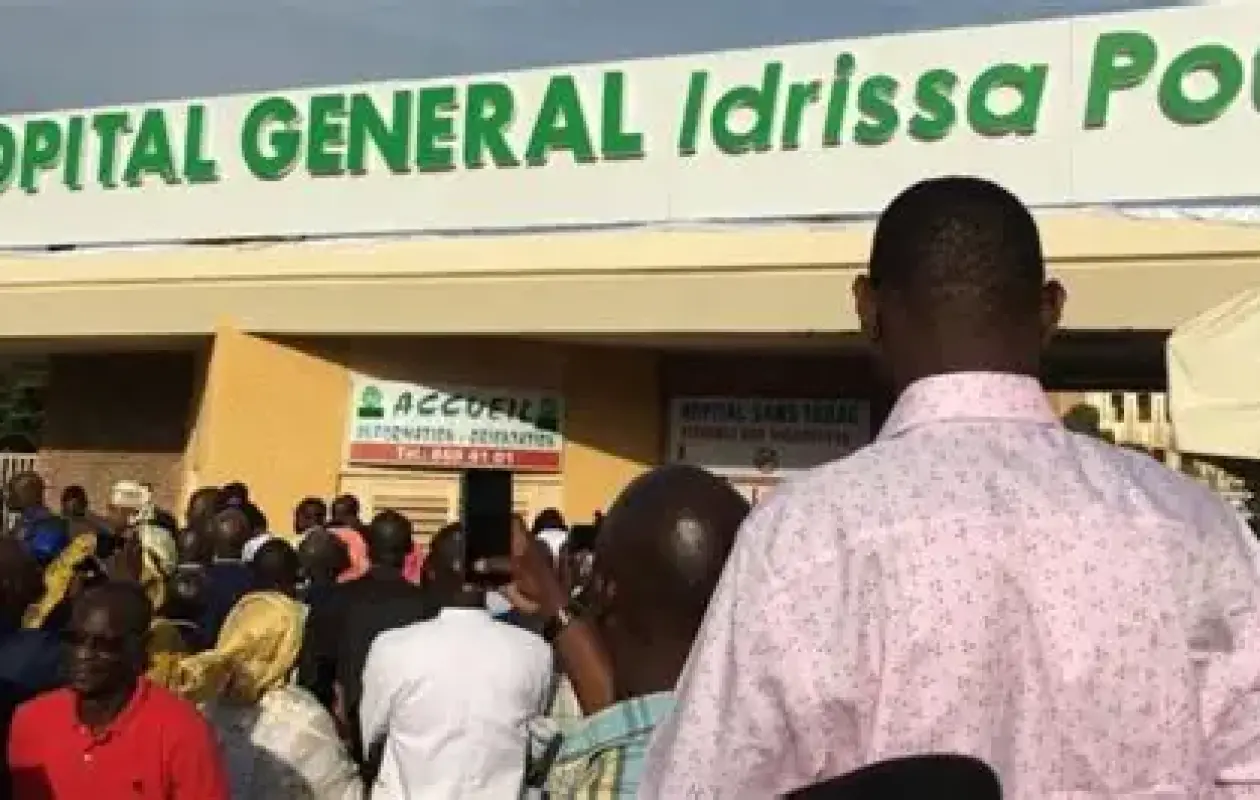
"Jusqu'à 18 000 FCFA d'amende" : Les vendeurs de rue sous pression face au contrôle sanitaire aux abords des hôpitaux
Near the Idrissa Pouye Hospital in Grand-Yoff and the Khadimou Rassoul Hospital in Mbao, street vendors feed hundreds of patients, their companions, local residents, and healthcare workers every day. But behind the dishes served directly on the sidewalk, food safety is hampered by a hostile environment: omnipresent dust, precarious facilities, food exposed to the elements, and, in the Mbao area, the persistent problem of sewage regularly overflowing onto the road.
After an initial immersion at the Beaux Maraîchers bus station focused on raising awareness among informal catering actors, the Association of Journalists in Health, Population and Development (AJSPD), supported by the FAO, continued its field investigation around the major health facilities in the capital.
On site, some vendors claim to make constant efforts to guarantee the cleanliness and quality of their food. However, they operate in precarious conditions where ambient dust, the lack of suitable equipment, and the exposure of food all constitute risk factors for public health.
Faced with this vulnerability, the hygiene brigade is strengthening its presence on the ground. Chief Warrant Officer El Hadji Moussa Diouf, head of the Mbao hygiene sub-brigade, reminds us that his agents are carrying out daily inspection visits, focusing on raising awareness, verifying the cleanliness of premises, protecting containers, and the strict requirement to hold a medical certificate.
When health guidelines are not followed, inspectors strictly enforce the regulations. The absence of a medical certificate or violations related to unsanitary conditions and inadequate food protection are punishable by fixed fines ranging from 9,000 to 18,000 CFA francs. In addition to routine daytime inspections, the hygiene department also conducts targeted nighttime operations to monitor stalls operating late into the night.
However, in Mbao, sanitation management goes beyond the simple individual responsibility of restaurant owners. Chief Warrant Officer Diouf emphasizes that the major problem in the area lies in the uncontrolled flow of sewage.
This phenomenon is explained by the presence of a shallow water table which leads to the rapid filling of septic tanks, which end up overflowing into the street, in the absence of a functional and extensive sewer network.
This situation creates a complex equation around hospitals: authorities strive to sanitize food served even as the immediate environment remains contaminated by significant liquid waste. Despite the monthly recording of reports and violations by the hygiene department, guaranteeing genuine health safety around hospitals will require a comprehensive approach to addressing urban sanitation deficiencies.




















Commentaires (4)
Participer à la Discussion
Règles de la communauté
💡 Astuce : Utilisez des emojis depuis votre téléphone ou le module emoji ci-dessous. Cliquez sur GIF pour ajouter un GIF animé. Collez un lien X/Twitter, TikTok ou Instagram pour l'afficher automatiquement.
Se connecter
Commentez avec votre profil, votre photo, et soyez averti des réponses.