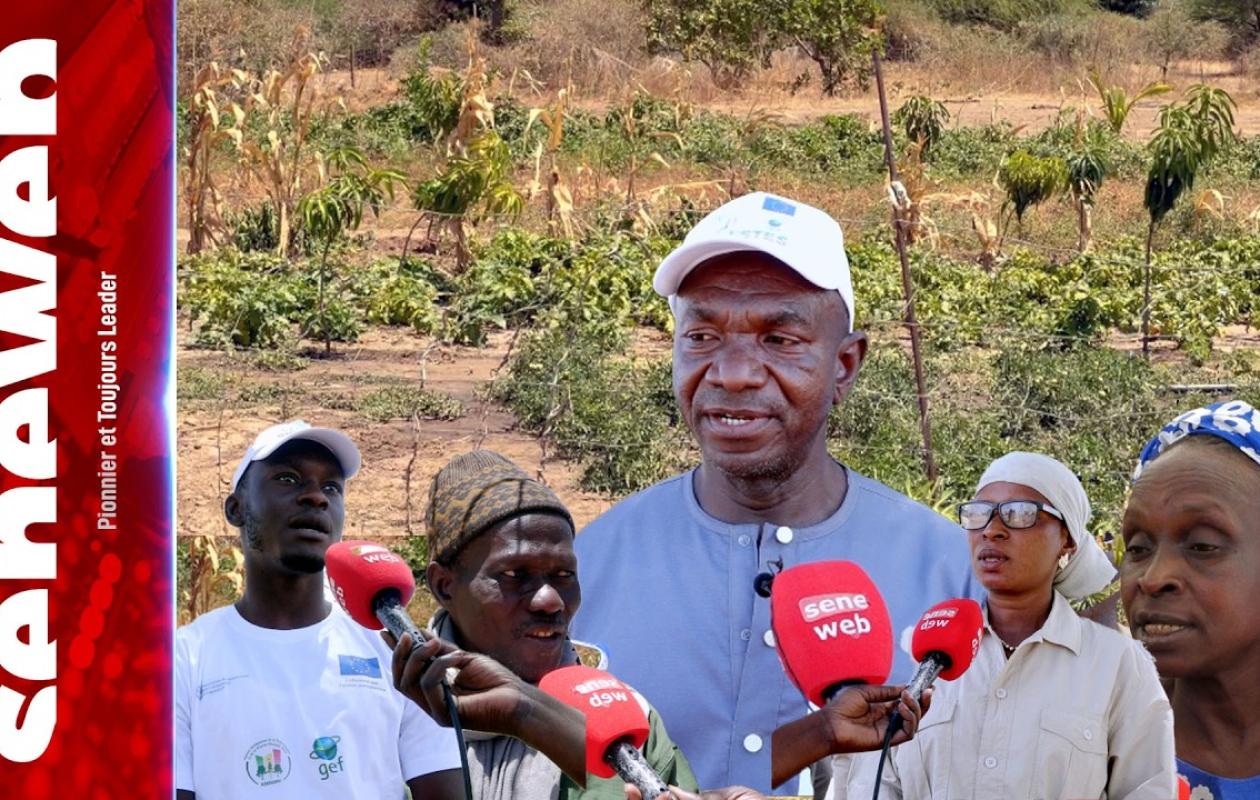
Commune de Ndiob : Un laboratoire vert entre résilience écologique et autonomie économique
In the heart of a six-hectare area swept by the hot winds of the peanut basin, some thirty young people from the "Xëyu Ndaw Ñi" program are working to revitalize the vegetation. Under the guidance of Assane Mbengue, the field manager, the team is conducting experimentation and biological regeneration. Faced with the alarming erosion of local biodiversity—where only 32 of the 48 listed traditional species remained known to the youth—the municipality has launched a large-scale reintroduction plan. Jujube trees, baobabs, moringa, ditakh, and citrus trees are thus being progressively replanted on the site.
Currently, two hectares are fully utilized for artificial regeneration and the preservation of endangered flora. The ambition of local officials is to expand the forest cover while creating direct economic opportunities for local residents.
Near the arboretum, the community nursery covers five hectares under the supervision of horticultural technician Aminata Ba. Combining market gardening, horticulture, and fruit tree cultivation, the site employs around one hundred young people daily, including 40 women. Despite the challenge of water and soil salinity, the team adapts its crops with the advice of agronomists who recommend better management of freshwater reserves at a depth of 15 meters and the development of agroecological practices.
This green initiative has an economic extension in the village of Loukoulouk, where the fifty or so women of the "Jàlki Jëg" group transform medicinal plants from the arboretum into handcrafted soaps. According to the group's president, Ndèye Dieng, these products are in high local demand. However, the lack of suitable equipment, training, and packaging hinders the group's access to regional and national markets.
The initiative is based on a political approach championed by the municipal team and its first deputy mayor, Omar Ba. The selection of species to be protected resulted from an inclusive consultation involving forestry professionals, community leaders, and traditional healers. The project also benefited from technical and material support from the Ripostes program for site security and the installation of drainage systems.
Although the local community still faces a lack of solar pumps, stray livestock and water constraints, the Ndiob model is gradually establishing itself as a reference in terms of adaptation to climate change, integration of young people and empowerment of women in rural areas.






















Commentaires (1)
Participer à la Discussion
Règles de la communauté
💡 Astuce : Utilisez des emojis depuis votre téléphone ou le module emoji ci-dessous. Cliquez sur GIF pour ajouter un GIF animé. Collez un lien X/Twitter, TikTok ou Instagram pour l'afficher automatiquement.
Se connecter
Commentez avec votre profil, votre photo, et soyez averti des réponses.